

Alan Longo is a high-performance psychologist with five years of experience coaching high-stakes poker players. Passionate about sports, he educates and empowers players with the tools to build their mental foundations, professional routines, and competitive planning for consistent, high-level performance. Find out more at his website.
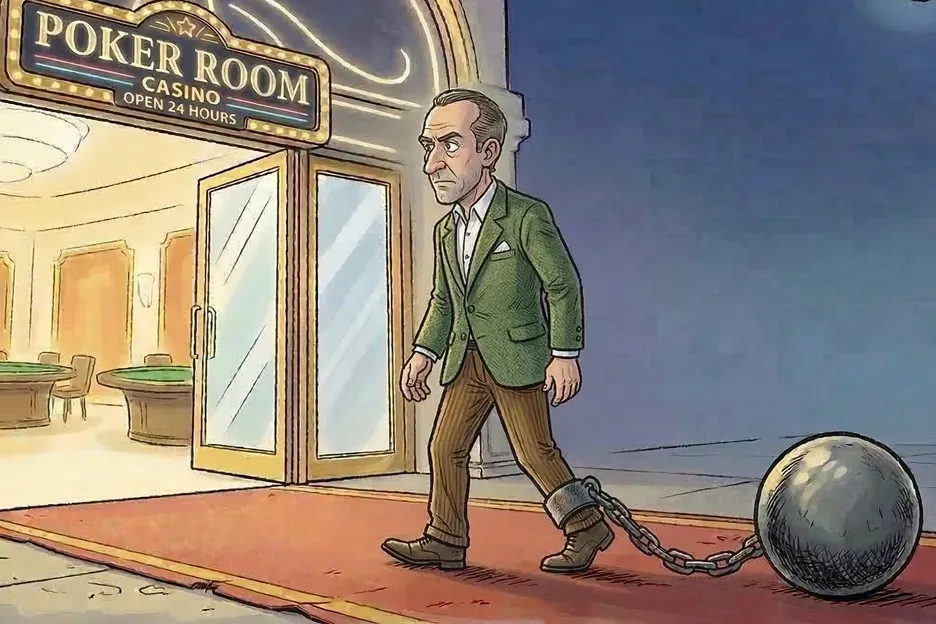
Every poker player faces invisible patterns that consistently undermine their game. These aren't just occasional bad sessions or variance, but systematic barriers — or 'performance holdbacks' — that prevent you from reaching and maintaining a consistent level of play.
It does not matter if you are the best in the world, a mid-stakes regular, a recreational player, or someone who plays only occasionally as a hobby. Because of the nature of poker, these mechanisms apply to you. If you are human, your game is subject to these holdbacks.
To understand how these patterns affect your game, we must look at the different performance levels you experience at the tables. Your A-game is where you effectively use your skills despite stress. In your B-game, holdbacks become more prominent, creating a clear gap between current play and your capabilities. Finally, in your C-game, holdbacks dominate your play, leaving your decision-making clouded and your focus fragmented.
Based on my experience as a performance coach, I have identified three distinct categories of 'performance holdbacks' that create a growing gap between your current execution and consistent performance.

1. 'Mental holdbacks'
These are the bottlenecks that disrupt your decision-making process. We focus on five core areas:
Confidence
This is the belief in your ability to perform under pressure. It isn't a feeling you wait for; it is earned through preparation and evidence. When confidence is low, you hesitate on thin value bets or over-fold to aggression, failing to 'capture value'.
Motivation
If you only play when you "feel" like it, you are leaving your progress to chance. Motivation is not a magical spark; it is something you cultivate through structure. Relying on inspiration rather than a system leads to inconsistent volume and stagnation.
Tilt management
'Navigating tilt' is about managing the system so that frustration doesn't dictate your actions. Emotions are part of the game, but when they aren't regulated, they cloud your logic. Effective 'tilt management' ensures that the 'heat' of a session stays under control.
Mindset
Your beliefs are the lens through which you see the world. If your perspective is biased, it affects how you interpret variance and skill. These beliefs can eventually limit your well-being and stop you from reaching consistent performance.
Stress regulation
Poker is naturally high-pressure. If you don't manage how your body and mind react to that pressure, you will burn out. Proper regulation allows you to handle the intensity of the game without it draining your energy or affecting your performance.









2. 'Routine holdbacks'
These are the foundational habits that support your professional life. Without them, your technical skill has no platform to stand on.
Study routine
A routine is fundamental for integrating what you learn. The brain is not effective if you only watch videos or take notes. To move a concept from theory to the heat of competition, you need multiple instances of engagement that allow the brain to fully integrate the information.
Sleep & Recovery
Both a lack of sleep and poor recovery directly degrade your cognitive performance. This negatively impacts your 'mental holdbacks' and weakens your decision-making — the primary weapon you have at the table.
Morning routine
High performance starts with basic fundamentals. Simple habits, such as early exposure to sunlight, are essential to regulate your internal clock and set the baseline for a functional day.
Performance routines
These are the specific 'tools' — like warm-ups and cool-downs — that prepare your mind for the session and help you decompress afterward, effectively separating your work from your personal life.
3. 'Strategic holdbacks'
These are the high-level planning errors that stop you from growing as a professional.
Vague goal-setting & result goals
The brain needs to feel the impact of its actions and receive rewards to stay engaged. Vague objectives, or not having a clear destination and defined 'result goals', make it difficult for the brain to stay aligned with your professional process.
Reactive scheduling
Not understanding the nature of your annual calendar, including competitive and personal commitments, prevents you from prioritizing correctly. Without this clarity, you cannot effectively balance your personal life, study time, event preparation, and actual play.
The 'Downswing' protocol
Downswings are inevitable for every player, but the difference lies in how they are managed. Failing to understand what you specifically need during these periods can lead to poor decision-making and make the 'hole' even deeper.
The path forward: Resolving the bottlenecks
Most players only address these patterns when they are already in the middle of a crisis. Working on these patterns before they become major problems is not just smarter — it's easier and more effective. Addressing 'performance holdbacks' is about professional maintenance.
It does not matter if you are a high-stakes professional, a semi-pro, or a recreational player who only sits down once a week. These tools and methods are not rigid; they are adaptable systems designed to fit your specific needs and schedule.
By installing the right tools — such as a solid study routine, 'emotional regulation' techniques, and a 'competition system' — you can bridge the gap between how you are playing right now and a consistent level of play.
Featured image generated using AI.