Alan Longo is a performance psychologist who works with professional poker players on the mental systems behind consistent, high-level play.
Every Monday, he sends a practical training protocol to players who want to perform at a high level week after week.
You're deep in a tournament, the next pay jump is close, and before you even look at your cards, you're already calculating how much it would take off your makeup.
How that weight feels depends a lot on the deal.
In some deals, the player doesn't get paid anything until the makeup is cleared and there's a chop.
Some stables pay their players a monthly salary to cover living costs, and that money is added to the makeup.
Other deals include pre-chops, where a smaller share of winnings is paid out before the makeup reaches zero.
So two players with the same makeup can live it very differently. Still, some patterns repeat, and they're worth knowing before they start costing you.
How makeup changes the way you think
In my work with players, financial pressure is one of the topics that comes up most, and makeup is one of the most direct ways into it.
When the makeup grows, money can move to the front of your mind. Each buy-in starts to feel heavier. A min-cash or a deep run stops being judged by how you played and starts being judged by how much it took off the number.
That shift matters because pressure can change what your brain pays attention to. The short term gets louder: This session, this week, this tournament. The long-term plan, the one that actually gets you out, gets harder to see.
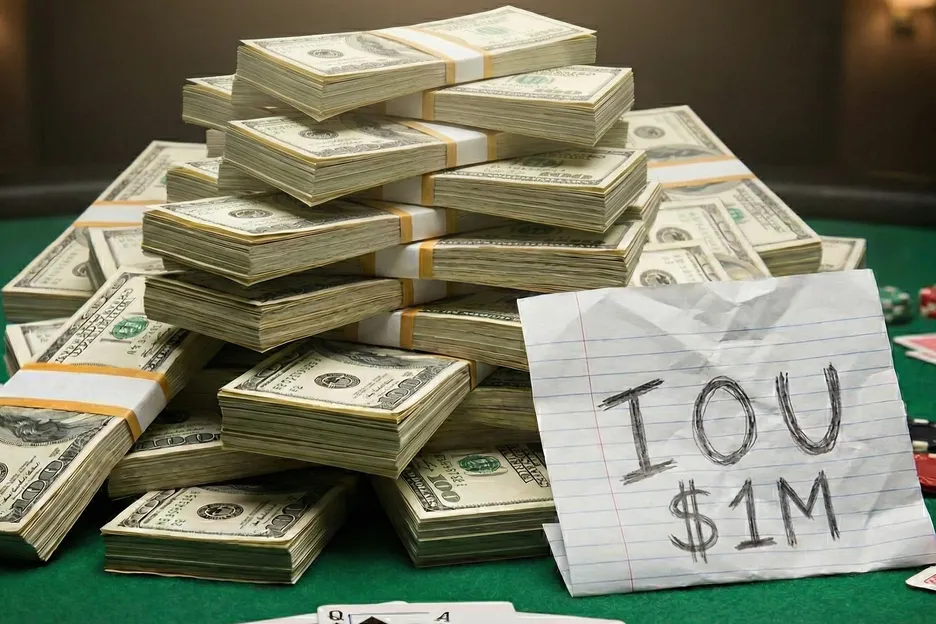 The deeper you get into makeup, the harder it can be to focus on making good decisions rather than chasing losses.





The hole: How decisions can make makeup deeper
Variance creates makeup. Some of the decisions you make while carrying it can make it bigger, and this is where players can get stuck. Here's what it can look like.
Your game moves away from your A-game
Some players force spots, call more than they should and try to win back in one hand what they lost in ten. Others fold edges they would normally take and protect their stack too early. The same player can do both in the same week.
Volume goes up to get out faster
More tables, more tournaments, more days in a row. On paper, more volume means more chances. But if you're tired, short on sleep or already frustrated, the quality of each decision can drop. You're adding volume at a worse level, and that can add to the makeup instead of reducing it.
The weekend shot
A Sunday with a huge field and a first prize that would clear everything at once. It's easy to see why it feels attractive. But big fields mean more variance, and your edge in them is often smaller. Building your schedule around one big score is a bet on the least likely outcome.
Pressure on its own doesn't always lead to worse decisions. Some players play better when something is at stake.
The problem starts when the pressure pushes you into the conditions where your level drops: playing tired, playing more tables than you should, moving up in stakes, or sitting down without checking what state you're in.
Those are the conditions that pull you from your A-game toward your C-game (read more on this in 'Why your poker A-game disappears - and how to get it back'), and those decisions dig the hole deeper.
When the makeup gets very big, getting out can start to feel impossible, and that feeling is what keeps some players trapped.

When the pressure leaves the table
Makeup doesn't always stay at the table.
Motivation
When you look at how much you need to recover, the next chop can feel very far away. If your deal has pre-chops, you might not feel comfortable taking them while you still owe. Either way, the link between today's session and any money you'll actually see can get weaker. You still put in the hours, but the reason behind them can get blurry.
Doubts about your backer
It's often the part nobody says out loud. Will they keep backing me? Are they losing confidence in me as a player? Do they think I'm the problem? These doubts can lead a player to avoid conversations, delay updates, or stop asking simple questions about their own deal, like what the stop-loss is. The less you talk, the more space the doubts have.
Life outside poker
For some players, it goes further. Sleep can get worse. It can be hard to switch off after a session. Your mood may start to follow the graph, and the people close to you can end up carrying part of the weight. When that happens, makeup is affecting both your decisions and your quality of life, and each one makes the other harder.
Three rules for playing poker in makeup
Variance is real. You can play well for months and still see the makeup grow. That part isn't in your hands.
But a lot of what happens to your makeup depends on decisions you make every day:
- How many tables you play.
- Which buy-ins you play.
- The physical and mental state you play in.
- Which tournaments you choose. Fields and structures where you have a bigger edge can mean smaller top prizes, but also lower variance.
- Whether you bet the makeup on one big-field Sunday.
When these decisions go wrong, makeup can get out of control. When they're made well, they don't remove variance, but they give you the best chance of getting through it.
So decide your makeup rules before you sit down, not during the session. On a calm day, away from the tables, write three rules:
- A table limit. The maximum number of tables where you still play your best.
- A tournament filter. The buy-in range and type of field where your edge is clearest.
- A state check. A short list of conditions you need to meet before playing: Minimum sleep, no new session right after a big loss, a clear stop time. If you don't meet them, you play less or not at all.
Then share the rules with your backer. It shows you have a plan, it opens the conversation you might be avoiding, and it gives you someone who can hold you to it when the pressure pushes the other way.