

Luke Geel is an AI engineer for the US Air Force with degrees in math and economics. As an avid poker player he can often be found at the live tables in the Boston area, as well as occasional appearances on New England’s pioneering livestream, Garage Game Live.
This week, as part of his regular series for PokerOrg looking at the intersection of poker and AI, Luke explores the reaction to his AI tells detector being used on ESPN, and unveils a brand new tool to make life easier for poker content creators.
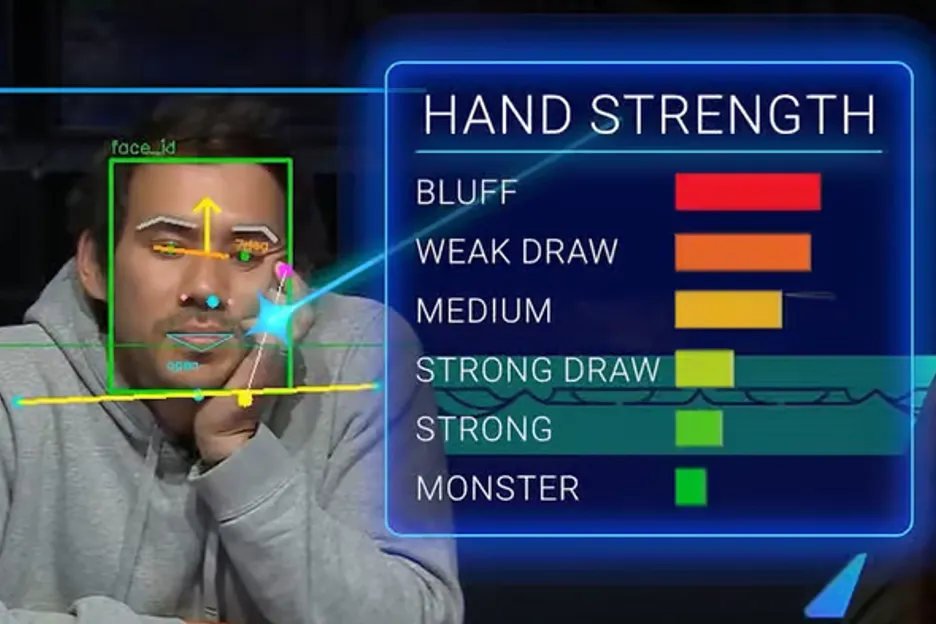
If you’ve been watching the WSOP on ESPN recently there’s a good chance you came across my AI tells detection tool.
In a nutshell, the tool tracks hands and compares a player’s physical and verbal behavior with the strength of their poker hand, in order to determine whether they’re bluffing, strong or somewhere in between.
I first wrote about it here at PokerOrg back in April — I explain how it works in a lot more detail in that article, so go check it out if you want a little more background.
It was around that time that I was contacted by Omaha Productions, the producers of ESPN’s WSOP coverage, with a view to using the tech in their Main Event broadcasts.
We ran some trials to make sure it worked, and to see how quickly it could be turned around, and lo and behold they’ve actually used it in their broadcasts.
The process involved them picking a specific player at a featured table and, once they’d been eliminated (it would have been grossly unfair to do this while they were still in), sending me the footage of that player to feed into the program.
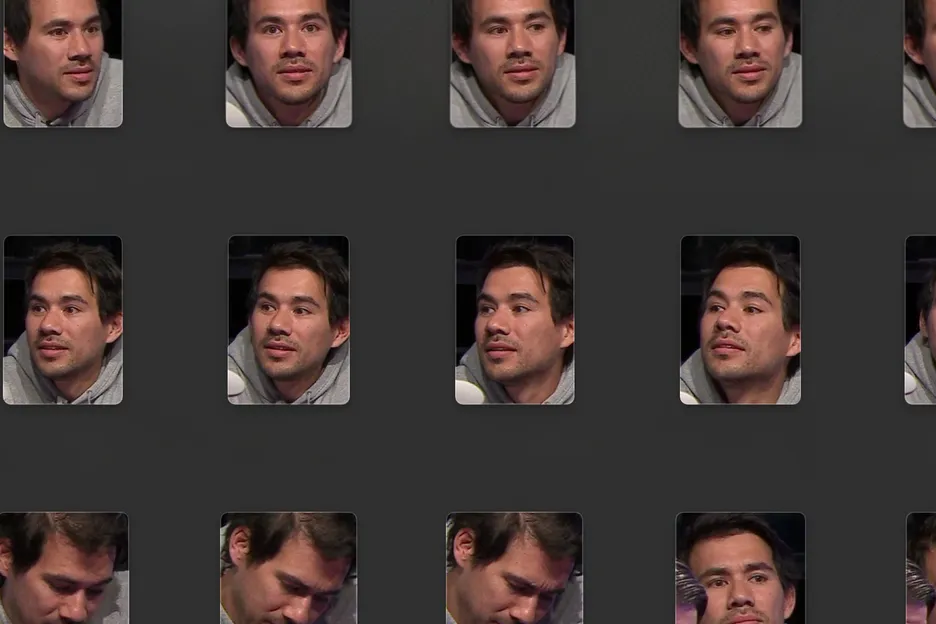
It would then take around 8-9 hours to run the footage through the tool, clean and prep the data, and send it back to them so they could edit it and get it ready for the broadcast.
It’s been amazing to see it go from this very personal project to something featured on ESPN. I was even invited to go on NBC News to talk about it.
The reaction to the tech hasn’t been completely positive, of course — it seems to have ruffled some feathers.

The backlash
I never thought it would get 100% positive feedback, but I think that whenever technology — or specifically AI — is judged to be encroaching on an area that people think of as very ‘human’, the backlash can be quite emotional.
What I’d say to the people who feel that way is that, in this case, it’s just intended to be a fun addition to the experience of watching poker. I’m not trying to destroy the things you love or make poker a worse experience.
Of course, as I mentioned in my last column, it can be used to help spot tells from players who play on a lot of livestreams, and a couple of players have reached out to me to learn more about specific opponents.
I worked with one before the WSOP work started taking up all my free time, and another is interested.

Bear in mind this is not my full-time job — I work for the US Air Force — and the initial goal was not to make money. I’m fascinated by poker, and technology, and having the chance to work on passion projects that combine these two loves is an amazing opportunity.
And one thing I believe strongly is that the more work you do for other people without expecting anything in return, the more that comes back to you down the line in future.
Rather than thinking ‘How can this benefit me immediately as much as possible?’ I’d rather just build something that people are interested in, that’s useful, and see where it goes from there.
Which leads me to my next project…









A new free tool for poker content creators
I play on a livestream called Garage Game Live, and recently I wanted to get a collection of the hands I’ve played so I could share a few of them with friends.
Initially I went through the footage with a pad and pen, writing down the timestamps and so on. Kind of a laborious process.
And then I thought, ‘Hey, I wonder if I could make a tool to do this automatically?’ It would also help with collecting all the pots other players have been in, in order to provide the content to train the AI in detecting their tells.
So I built it, and invited my friends at Garage Game Live to try it, and they said it massively sped up the process of finding hands for highlight reels and that kind of thing.
Basically, you can ask the program to find and clip all the hands involving a certain player, or over a specific pot size. As time goes on we should be able to search by even more criteria, such as multiway pots, showdowns, and a lot more.
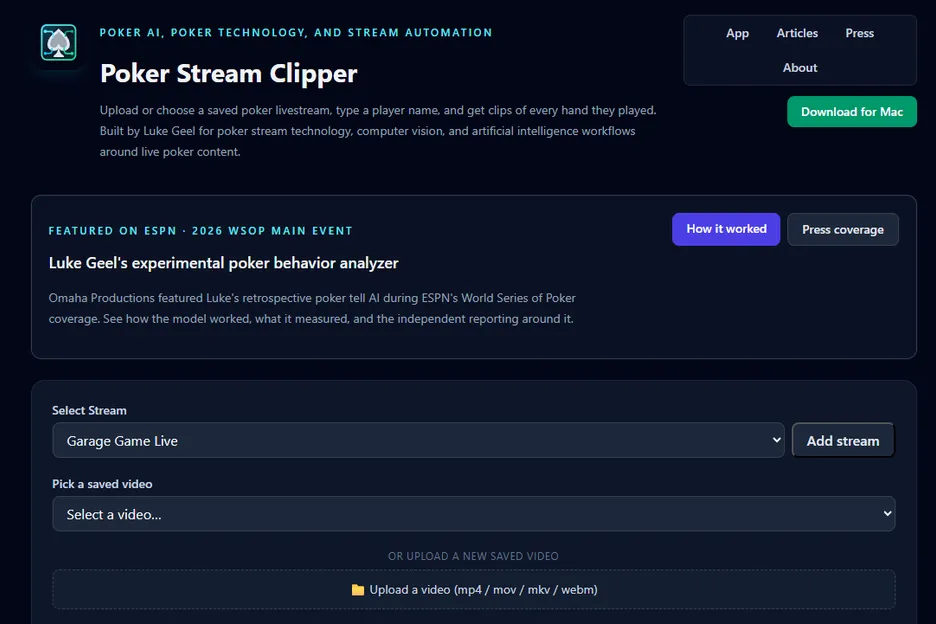
It works by reading the information from the stream’s on-screen graphics, so adding a new stream requires a little tinkering, telling the program where on the screen the players’ names or stacks are displayed, for example, or where on screen the pot size can be found.
It’s really useful for finding hands you yourself have played on a stream, but it can also help you study a certain player, certain hands, or certain spots.
I’ve already added a bunch of different streams including the Lucky Lady and the Venetian. Adding a new one takes me around half a day to configure, and I’ve reached out to other streams and YouTube channels, Hustler Casino Live, the WSOP and so on. They might test it out while they’re making some of their highlight videos.
It’s not quite 100% accurate just yet, and there are still some features I’m hoping to improve, but it’s available right now if you want to give it a try.
Just head to my website to try it for yourself. I’d love to hear your feedback.
Follow Luke Geel on LinkedIn and X.
Featured image courtesy of ESPN.