There’s always been something a little different about the way Andrew ‘LuckyChewy’ Lichtenberger plays the game of poker.
On the surface, he seems like any other poker boomer who was inspired by Chris Moneymaker’s story, and the WSOP on ESPN. And when talking with the WSOP bracelet winner it's easy to discern that Lichtenberger truly loves to play the game, .
Lichtenberger has developed a reputation as one of the game’s deepest thinkers, all while possessing one of the calmest table demeanors in poker, while along the way amassing more than $25 million in career tournament earnings.
But for most of his life, one of poker’s most respected competitors has been just as intrigued by what can’t always be readily seen, measured, or even solved beneath the surface of the game.
PokerOrg sat down with Lichtenberger for a wide-ranging conversation about his poker journey, the mentors he met along the way, the evolution of his mindset, and the role intuition plays when the cards fall where they may.
Watch the full episode above, read on for a preview, or check the links below to listen on Apple Podcasts or Spotify.
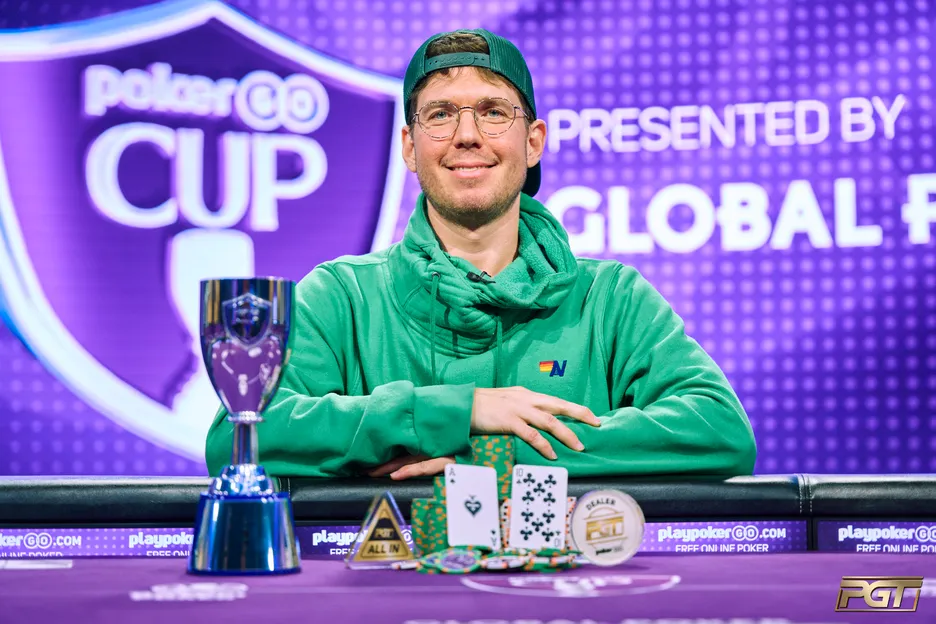
How does it feel?
For Lichtenberger, intuition isn’t something he went looking for. Over time, however, he became aware of moments when a subtle feeling or physical sensation seemed to point him toward one decision over another.
And in poker, making the right decisions at critical moments can make or break a deep tournament run and a big score.
“For me it was a fairly natural process,” says Lichtenberger. “It was not something that I really sought out. It just happened. When those moments occurred, that led me to feel like there is this sort of underlying patternistic nature to the game.”
Lichtenberger is careful not to suggest that every feeling of intuition from within us is some mystical poker superpower, but quite the opposite.

One challenge has always been separating genuine intuition from what he calls “signal versus noise.” We asked him to share an example. He recalled one hand where that ‘signal,’ so to speak, came through loud and clear.
After defending the big blind with 
 offsuit, Lichtenberger faced a large turn bet on an


 board. Something about the situation told him his opponent was weighted toward Broadway hands containing a single diamond.
“While I was tanking on the turn, I felt that if the river came a diamond, they were probably always going to bluff, and I was just going to call happily.”
The diamond came on the river, and so did his opponent’s bluff.
“It feels in some sense, like you're sort of choreographing the outcome, and it's almost this lucid living type of experience.”
That willingness to explore beyond conventional poker wisdom has been a recurring theme throughout Lichtenberger’s career.









‘I was making as much money as my college math professor'
As a teenager, Lichtenberger discovered poker while working at a bowling alley, where his bosses played online. He was a big fan of strategy games like StarCraft growing up and quickly recognized the strategic similarities between those games and poker.
“I realized that poker was a strategic, tactical game where you're just trying to outmaneuver your opponents, and it has incredible depth and complexity, but the rule set is quite simple.”
While considering a college major, Lichtenberger would tell friends and family he was interested in philosophy and similar subjects. He kept receiving the same canned response.
“When I mentioned my interest in those classes, the response I always got was 'there's no money in that'. And I was like, okay, well, if that's something that people value, then poker is surely a viable source of income. So, I started playing more and more.”
Eventually, poker won out. Lichtenberger left Stony Brook University after three semesters with a bankroll of roughly $30,000. But he didn’t withdraw from college without paying off one crucial loan that was due, which came from his mother.
“When I left college, my mom made me pay her back for the tuition she'd spent, which I think was good. It was a good lesson in accountability”
It didn’t hurt that he was already making more money at the online tables than many of his friends, and even some of his professors.
“I was probably making about as much money as my math professor. I fell in love with poker. And I didn’t foresee a way that I was going to lose interest in the game any time soon, so I may as well keep pursuing it.”
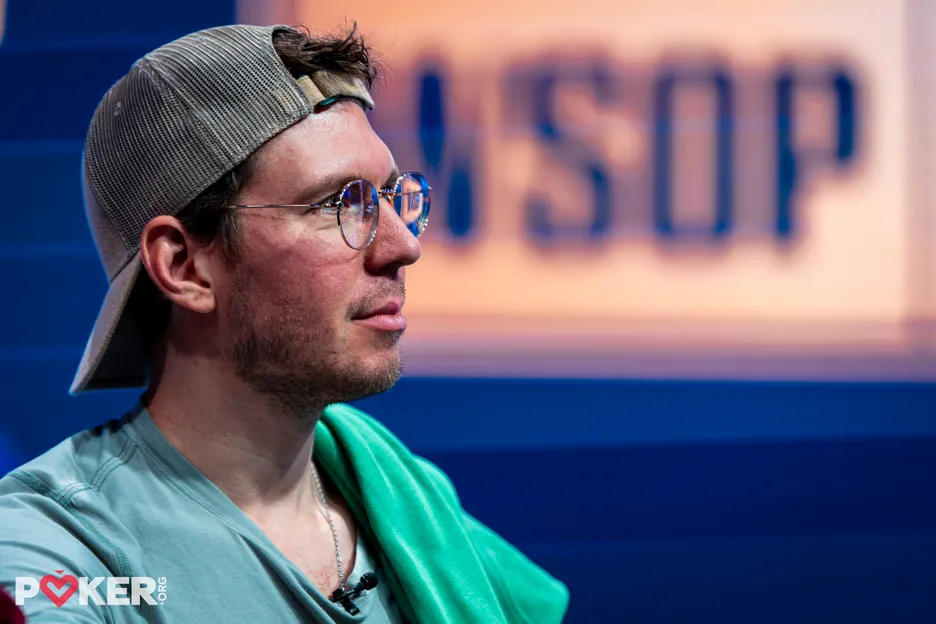
An open mind opens doors
Poker also became a personal laboratory for something much bigger in Lichtenberger’s life beyond the game.
“I scored pretty high in personality tests and openness. I’ve always been very open to new ideas and new ways of perceiving things. There are a lot of reasons for that. I think some of it is innate and some of it is learned.”
That mindful openness encouraged him to continually challenge his perceptions of himself, other people, poker, and eventually the nature of reality itself.
“I think throughout my career in poker, I continually saw that I would often bump up against these challenges where I had rigid perceptions of myself or others or reality or the game itself. I needed to soften in some way to gain more insights and then overcome whatever challenges I had at the time.”
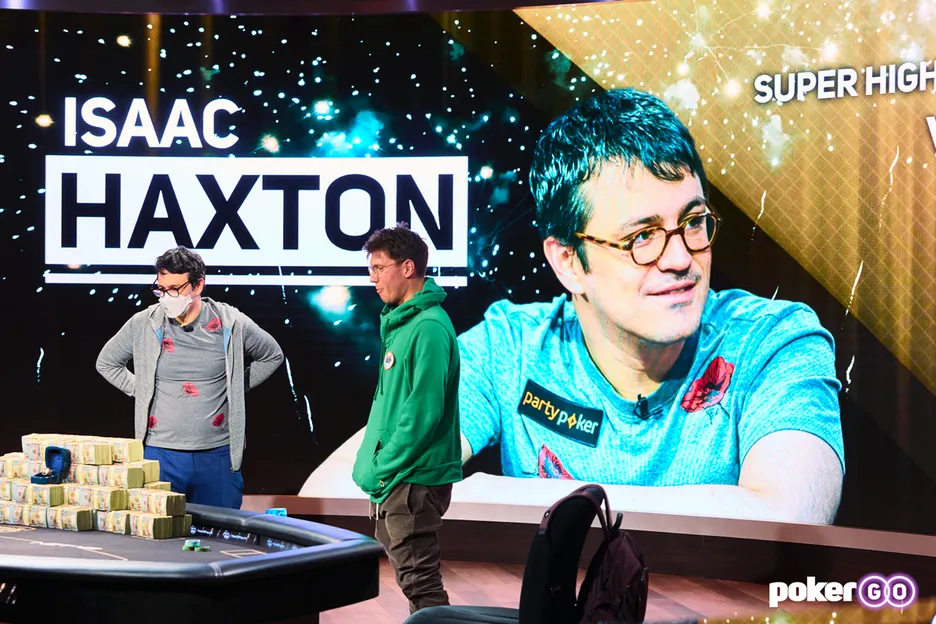
A true student of the game
During our exclusive interview, Lichtenberger talks about a deep dive into Eastern philosophy and metaphysics, challenging his own assumptions, learning to recognize when he was forcing an outcome at the poker table, and finding ways to return himself to a calmer, more present state when his instincts and emotions became clouded.
We also cover his early relationship with cash game crusher Aaron Jones, his upcoming book, Khemset Holistic Poker Codex, becoming a father, and why his exploration of intuition has moved beyond poker.
Nearly two decades after choosing poker as a profession, Lichtenberger still considers himself a student of the game by questioning everything: How can a simple, yet infinitely complex card game reflect more about life than what appears on its surface?
Lichtenberger's true gift is that he’s always open to whatever answers come his way, and many of the important questions he’s asking himself can’t be solved by a solver.
The Interview — Andrew 'LuckyChewy' Lichtenberger
Highlights from our in-depth conversation with Andrew Lichtenberger include:
- Why did Andrew drop Eastern philosophy studies in college to focus more on poker?
- How does he decipher genuine intuition from what he calls 'signal versus noise'?
- More about his intuition workshop coming up on October 2nd.
- Why did he feel motivated to write about his intuition discoveries in a book debuting this winter?
- Who was his biggest mentor as he climbed the cash games stakes, and what did he learn?
- And much more...
Watch Andrew Lichtenberger’s full interview with PokerOrg’s Craig Tapscott in the video above or listen now on Spotify or Apple Podcasts.
Explore more extensive interviews with some of poker’s biggest names below, including episodes with Lucas Jumalon, Garrett Adelstein, and Lex Veldhuis.
Follow Andrew on X and for more information on the intuition workshop in October.
Additional images courtesy of PokerGO.