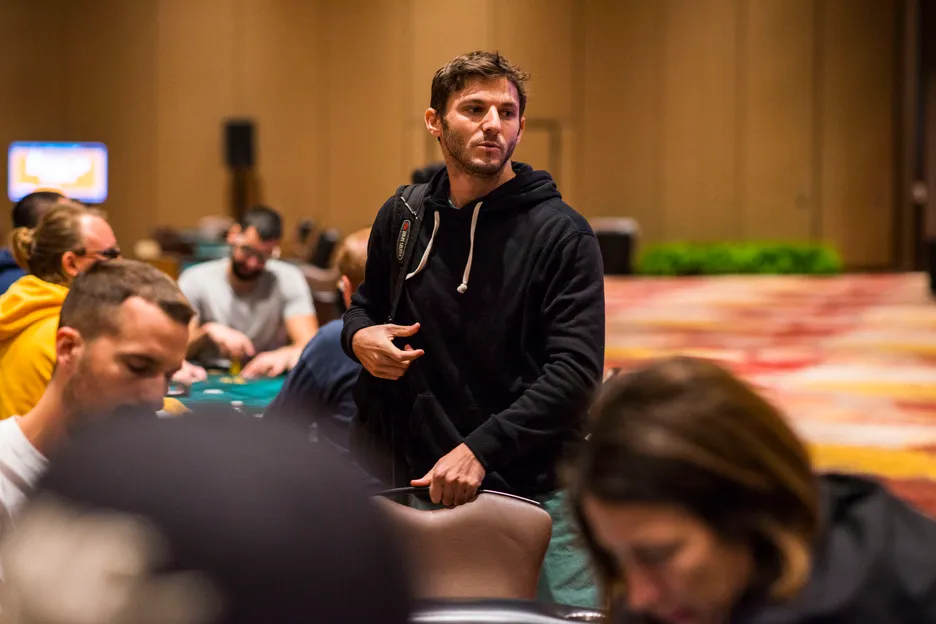


Jonathan Jaffe is a poker coach and high-stakes tournament professional with over $20 million in live earnings. He is a co-founder of GTO LAB, where he hosts the GTO LAB Podcast, and is available for coaching both cash game and tournament players. Contact him to find out more.
In this article, first published on his Substack, Jaffe looks back at the late 2000s and a time of battling regs, life and his own ego. Stay tuned for more, including exclusive access to new articles.
In September of 2009, in the first match of a $25,000 WCOOP heads-up tournament, I flopped the nut straight against one of online poker’s great villains — 'JeevesGets' (not his real handle).
Iftarii (BB): 21,579 (134.9 bb)
JeevesGets (SB): 18,421 (115.1 bb)
Preflop:
JeevesGets raises to 320, Iftarii (
 ) raises to 1,120, JeevesGets calls 800
Flop: (2,240) 


Iftarii bets 1,500, JeevesGets raises to 17,301 and is all-in
As my cursor moved towards the call button, TJ looked at me, incredulous. The ultimate opportunity for a slowroll had arrived; was I really about to waste it? I was not.
The tournament gave each of us a 10-minute time bank for the entire event.
I spent the next 5 minutes in some sort of sadistic euphoria.
Iftarii calls 15,801
JeevesGets reveals 

Turn: (36,842) 
River: (36,842) 
A little while later, I received a message from a new user in my AIM window.
anon_44 (5:56:54 PM): listen u *******
anon_44 (5:57:00 PM): if i ever meet u I will try to kill u
anon_44 (5:57:03 PM): i dont care if u kill me first
anon_44 (5:57:09 PM): you deserve to be murdered and torutrued for that
anon_44 (5:57:10 PM): i am serious
anon_44 (5:58:13 PM): im coming to ma now
anon_44 (5:58:17 PM): you deserve to be ****ing murdered
anon_44 (5:58:27 PM): and everyone in your ****ing family deserves to get murdered you moron
anon_44 (6:04:43 PM): yea you better ignore me
anon_44 (6:04:56 PM): i dont care if ur bigger or stronger than me, i will ****ing murder and torture u or die trying
anon_44 (6:05:02 PM): ive never done a thing to u
Me (6:06:18 PM): whos this
anon_44 (6:06:28 PM): go **** yourself iftarii
anon_44 (6:06:36 PM): i will come to massachusetts and ****ing kill you
anon_44 (6:06:39 PM): ive never done ANYTHING to u
Me (6:06:58 PM): jeeves?
anon_44 (6:07:26 PM): what goes around comes around
anon_44 (6:07:28 PM): you are ****ing dead
Heads up can get personal
Jeeves was extremely talented, and had plenty of ego to match, but that described me just as well.
What bothered me about Jeeves was how fragile he was, and how easily he could lose his sh*t over the most minor and common occurrences. Jeeves (and a few of the other top pros of that era) was prone to detonating over any downturn in luck, and spraying his wrath at whoever had dared to get lucky.
I’d grown up around explosive anger, and vowed never to become it. Heads-up can feel very personal, and everyone in those games wanted to vent when they ran bad. Most of us were sitting on plenty of anger and frustration. For better and for worse, I held mine, and I had a particular contempt for the guys who couldn’t hold theirs.
Slowrolling Jeeves was me exorcising some of my own darkness, and feeling self-righteous while doing it. Vilifying the guys who let their explosive anger out was also my way of not becoming one of them.
The rage expressed in that chat log was particularly egregious, but the heads-up ecosystem of that era could be a pretty toxic place. A few years later it would curdle into something a whole lot uglier than nasty chat logs.








Having it all
If you’d asked me at the start of 2008 what I wanted, I could have given you the whole list without thinking: A girlfriend. More money. More recognition. That was more or less the wish list of a 20-year-old who thought he had himself figured out.
That year, I got all of it, more or less in order.
In April I met Brittany. We’d be together for the next six years. In June I finished 4th in the WSOP Heads-Up Championship, which put my name in the poker world for the first time and gave my bankroll a real boost. And in November, more than half a million dollars landed in my lap when I finished second at Foxwoods.

Tournament poker was never going to be my life, and I knew it. Going on tour to play tournaments meant a lot more folding than raising, a lot more busting than final tabling. I was accustomed to a game where I was playing 80% of my hands and winning more days than I lost. I wasn't cut out for all the patience and the pain that a life of tournaments requires.
A few weeks after I turned 22, I bought a house, and what I wanted from it was simple: a place where my friends could come and hang out, crash for days or weeks at a time, and show up whenever they wanted. And they did.
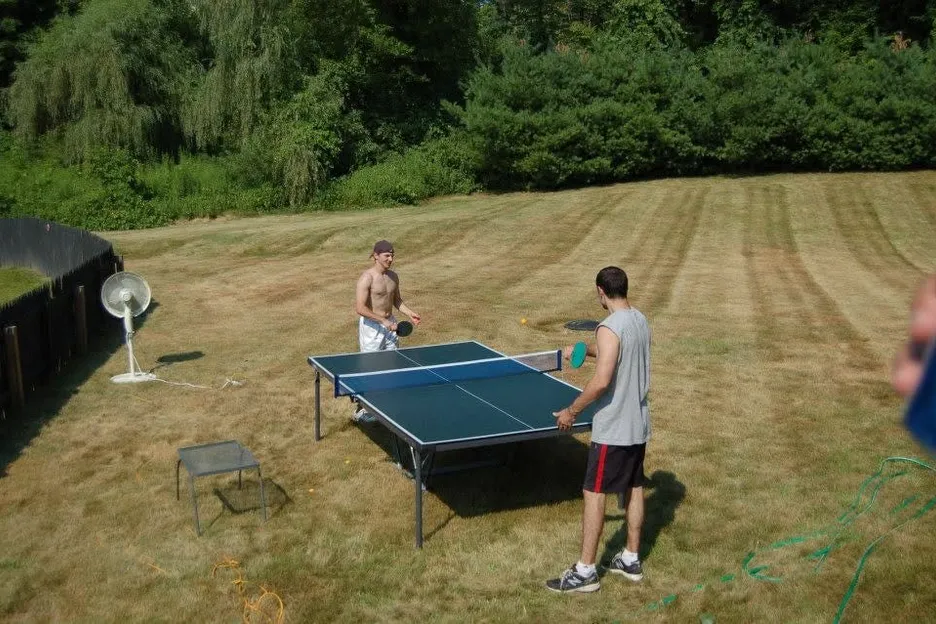
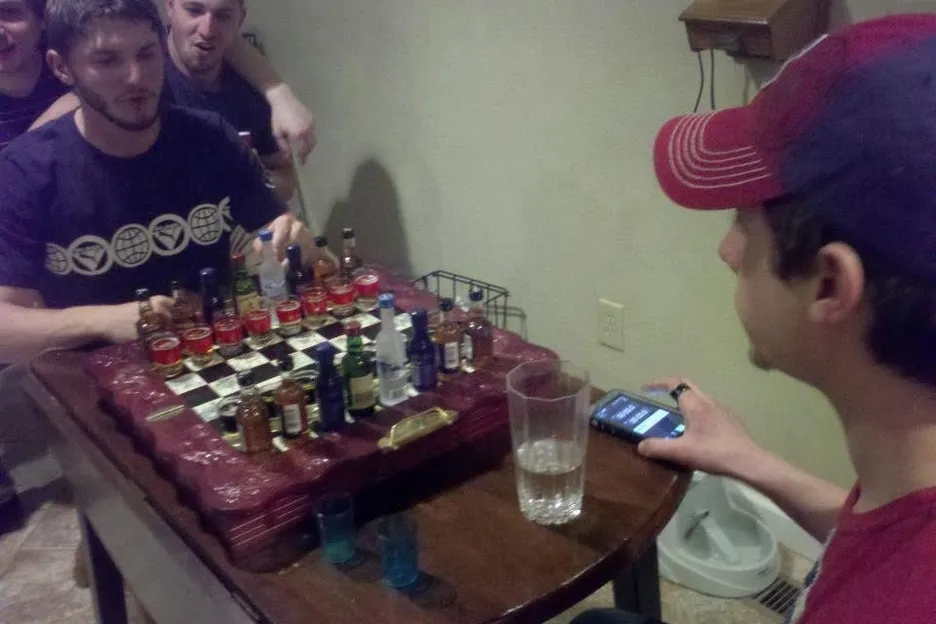
Friends were over constantly to grind, so often that I turned the master bedroom into an office and chose a smaller room for myself. But it wasn’t just poker. There were parties, beer hunts, wiffleball tournaments. I loved being around my friends and Brittany, and I’d built a place to keep them close.
Life was genuinely, uncomplicatedly good. I was making more money than most adults I knew, playing a game I loved, in a house that was generally full of the people I liked most.
I was starting to get used to this rhythm. I wanted things, I got them, and then I’d think of something new to want.
The slowroll against Jeeves only advanced me to the second round. I’d end up winning the next four matches and taking down the tournament for $315,000. I don’t remember how much of that went to me, but I’d be surprised if it was less than 80%. On top of that, I made another $300,000 grinding heads-up sit and go’s that year.
My poker ego, already sizable, continued to inflate. I’d made more money in 4 years than I’d hoped to make in 15.
In the pre-solver era, there were a lot of different ways you could be good at the game. My gifts were in pattern recognition and a willingness to test out creative lines.
The first stage was noticing how a play had made me think and feel, and then imagining my opponent arriving at similar thoughts and feelings.
Stage two was building a strategy to exploit those feelings, nudging my opponent toward the decision I wanted him to make.
In 2025 Ben Tollerene described what it was like being on the other side of the felt: “You would take these lines that would push such strong feelings in me….You had a very strong affect in this way…I can remember you would take these lead lines….You would check call and just start leading and it made me want to do certain things, and I could feel the power in it.”
Stage three was the most rewarding: anticipating when my opponent was nearing his breaking point and was ready to snap.
This meant staying attuned to the signs that my opponent had caught on to my strategy. And then, just as he was ready to adjust his play, I’d already be there, waiting for him on the next level with the counter to his adjustment. I tried to live one step ahead.
One of my favorite tricks was to take a bizarre betting line that was likely to provoke even a tight opponent into a bluff they’d almost never make. When I would catch them bluffing in these unique spots (where they had thought their bluff was rare and spontaneous), they would determine that I must be a calling station, and therefore not worth trying to bluff.
If you can get your opponent to shut down their bluffing in a heads up match, your edge becomes insurmountable.
Being gifted mattered more than being determined
It was close to the end of the era where being gifted mattered more than being determined, where feel and instinct would still beat study ethic.
Rather than appreciate the good fortune of my gift, I leaned into what I felt it said about me.
There’s a version of this you already know if you grew up watching sports. The great athletes seem to lean into their ego, at least in the arena. Afterwards they’ll say humble things in interviews, and most of us assume they’re largely paying lip service, playing it safe.
But in the moment, after a clutch three, a huge forehand, or a critical goal, they’re pounding their chests or pumping their fists, and none of it looks like gratitude. It’s saying ‘I’m the man, and we all know it’.
Sometimes, guys like MJ and Kobe flexed even harder by trading that energy and passion for cool nonchalance and an icy stare. That sent an even stronger message: ‘you’re not me’. Many of us looked up to that. I aspired to it. And there’s a lot of dark sh*t wrapped up in that mentality that took me years to see.
But I think it’s a big part of why, when I won, I didn’t spend much time dwelling on how fortunate I’d been, or how well things had broken for me.
To my way of thinking, that response was for a lottery winner, someone who’d been purely lucky that a jackpot had fallen into his lap. I wanted the other thing. I wanted it understood that I had done this, I made this happen, and it would happen again because it was skill, and skill is repeatable, whereas luck is random.
Most poker players have a complicated relationship with what it means to be lucky. Being called lucky moves the focus away from what we’re proud of. I didn’t want that, so I behaved in ways that I thought would keep it on me.
The irony was that the gifts that made me a great poker player in 2009 probably wouldn’t have been enough to build a career on 10 years later, and I wouldn’t have found any games to play 10 years earlier. For me, the timing of the poker boom was about as close to a golden ticket as anyone gets. I was one of the luckiest people I knew, but I chose not to see it that way.
Nearing my ceiling
2009 was a year of enjoying the spoils and continuing to crush the high-stakes heads-up games online. And somewhere in there, a crisis I’d never seen coming arrived, one that looks completely obvious to me now.
My goals and desires had been getting met so quickly, that I eventually ran out. I didn’t know what to want anymore. More money struck me as shallow and mostly pointless; obviously not a purpose, but a distraction from the lack of one. I still liked gaining recognition, but I was nearing my ceiling. I played a fraction of the hours that my peers played, and I had no desire to change that.
This dilemma caused me to ask bigger questions. Questions I couldn’t answer, or answered in ways I didn’t like. I wasn’t clinically depressed, but I was philosophically changed. I still took a lot of pleasure in life, in the people I spent time with, and the games and sports I liked to play. But I’d suddenly come to believe that each of these pleasures would eventually exhaust itself, and need replacing, and that was life. I found that utterly depressing.
One evening in early 2010, at our weekly dinner, I told my father about it.
I’d been careful with these thoughts, treating them like something contagious, keeping them off my friends and away from Brittany. But my dad was older, and wiser, and a psychiatrist, and I figured there was nothing a 23-year-old could bring to him that would hurt him the way I worried it might hurt everyone else.
He listened. He asked good questions. I felt heard, and understood, and I was completely deflated. The kid in me was still hoping he’d have the magic antidote. Some important piece of logic I’d missed that would hand me back a reason.
He didn’t. He told me it was hard, and that he’d gone through something similar when he was a few years older than I was. He told me that one day I’d have children, and that they would help fill a lot of the hole I was feeling.
I had always wanted kids, but the thought only sank me further, because it just confirmed the thing I was afraid of. Distract yourself with goals, chase them, achieve them, repeat until you procreate, raise the little buggers, find a new pursuit, die. That was the shape he was describing, even in comfort. That was the whole thing.
The one hopeful thing he said that really stuck was that the most renewable source of purpose he’d found was helping other people.
I’d been volunteering at a local nursing home for the past year, spending time with older folks who didn’t get many visitors. I think when I started, I was prompted by a feeling of obligation; a debt I felt I owed to society because I got to play a game for a living. After thinking about my father’s words, I began leaning into it for a sense of purpose.
It wasn’t a cure. But it was a slow burn, something that didn’t exhaust itself the way everything else seemed to, and over the next couple of years it helped more than almost anything.
There’s something of a paradox in the timing of all this that took me a while to untangle. I’d started sinking into these existential questions in part because I’d gotten everything I wanted. But I think it was more complicated than just that. Right around then, two things I’d built my identity on fell apart at once: my profits tanked, and my status as one of the top players went into free-fall.
Holding down lobbies in one of the most competitive spaces in poker had built me an identity I was proud of: Iftarii. A name that was respected, feared, even envied.
After 4 years in which the arrow had only pointed up, everything went suddenly into reverse.
In 2010, two players, ‘Skilled_Sox’ and ‘Skaiwalkurrr’, turned me into a piñata.
Check back soon for the next chapter in Jaffe's poker journey. New articles will appear first at PokerOrg.
Visit Jaffe's Substack for more, and follow GTO LAB on X.
Images courtesy of Jonathan Jaffe/Triton Poker/WPT.