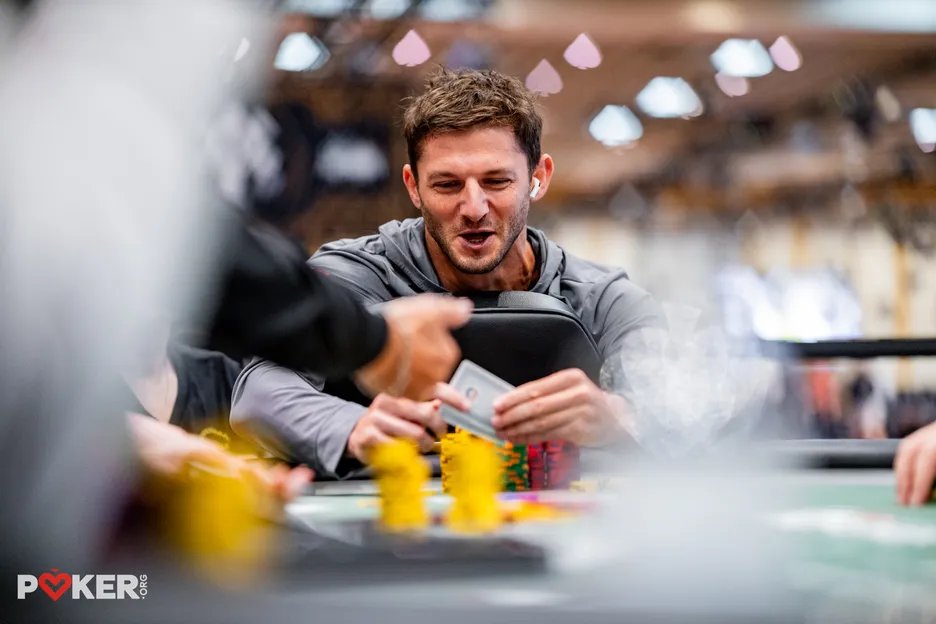


Jonathan Jaffe is a poker coach and high-stakes tournament professional with over $20 million in live earnings. He is a co-founder of GTO LAB, where he hosts the GTO LAB Podcast, and is available for coaching both cash game and tournament players. Contact him to find out more.
In this article, first published on his Substack, Jaffe looks back at the year he truly broke through as a pro. Stay tuned for more, including exclusive access to new articles.
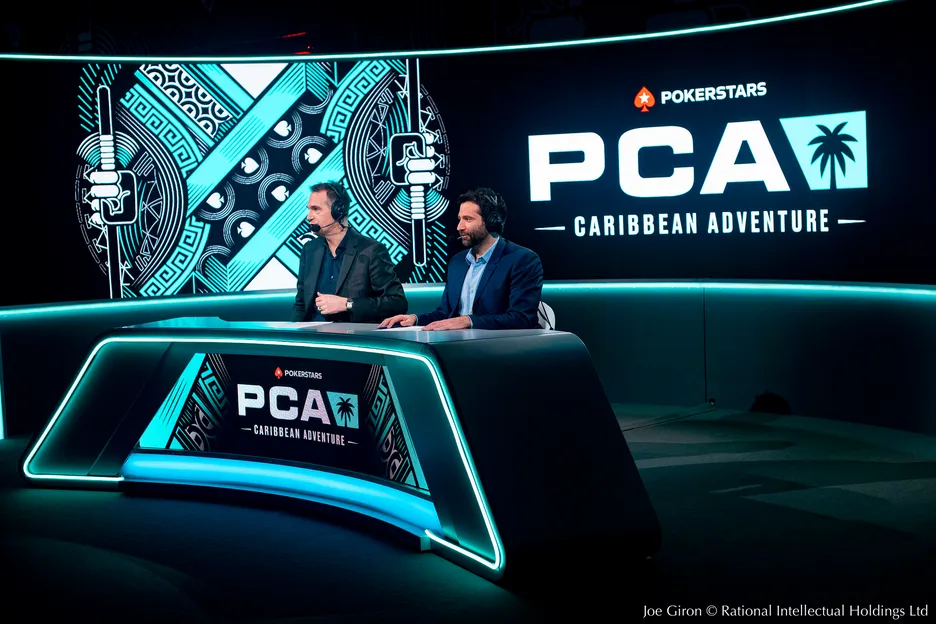
At the start of 2007, I was still 19, which meant that aside from Turning Stone Casino in upstate New York, legal live poker was not a reasonable option for me. One notable exception was the annual PokerStars Caribbean Adventure, a 1,000+ person $10K buy-in at the Atlantis resort in Nassau, The Bahamas.
PokerStars would run hundreds of satellites to this tournament months in advance, drawing in waves of online qualifiers and recreational players alongside the pros.
In 2007, a PCA package was more than just an opportunity to play a great tournament paired with a winter vacation to a tropical destination. Winning a package was a form of validation.
For months you could gloat to friends, family, MySpace, and Facebook that you’d be spending a week in The Bahamas, courtesy of your poker skills. Online poker, that 'hobby' you’d been getting judged for, was now a source of curiosity and envy.
PokerStars promoted the hell out of PCA, and I’m guessing they lost a boatload of money hosting the tournament each year. But PCA was incredible for driving traffic to their site and helping to build on the idealized 'Poker Dream'.

The 2007 PCA was pivotal to my career, but not for anything I accomplished on the felt. I fell midway through day 1 after massively overplaying A-J on a J-7-6 flop and getting all in against J-7 and a set of sevens.
Like many players in high buy-in tournaments, I’d swapped 5% of my action with a couple of friends I viewed as similar in skill level. One of those friends, another heads-up player named Jon Ford, placed third in the event for $550,000. My 5% cut ($27,500) of his score gave me my largest single-day windfall yet.
It was money that felt different. It wasn’t earned, it was lucky. It’s easy to rationalize taking shots with lucky money, and that’s exactly what I did.
The shots started small and stayed occasional, mostly $500 and $1,000 games when a soft spot showed up. Then came a moment in late January that I wish I could recreate in detail, but the specifics have been swallowed up by everything that came after.
All I remember is somehow finding myself in a $5,000 match and, 20 minutes later, staring at a screen showing I’d won $4,900. Pure chemical euphoria that made everything else in life feel muted by comparison.
After managing to stay away from the $5Ks for another two months, the dam finally burst in late March. Two consecutive $5,000 losses cost me $10K and sent me on a recovery mission, grinding $100 and $200 games until I’d clawed back the losses. But the experience had changed me; I wanted to be battling against the best players in the format, and at 19 I had both the fearlessness and the runway to keep taking shots.
An unlikely ally
As my career grew, an unlikely ally emerged: my father.
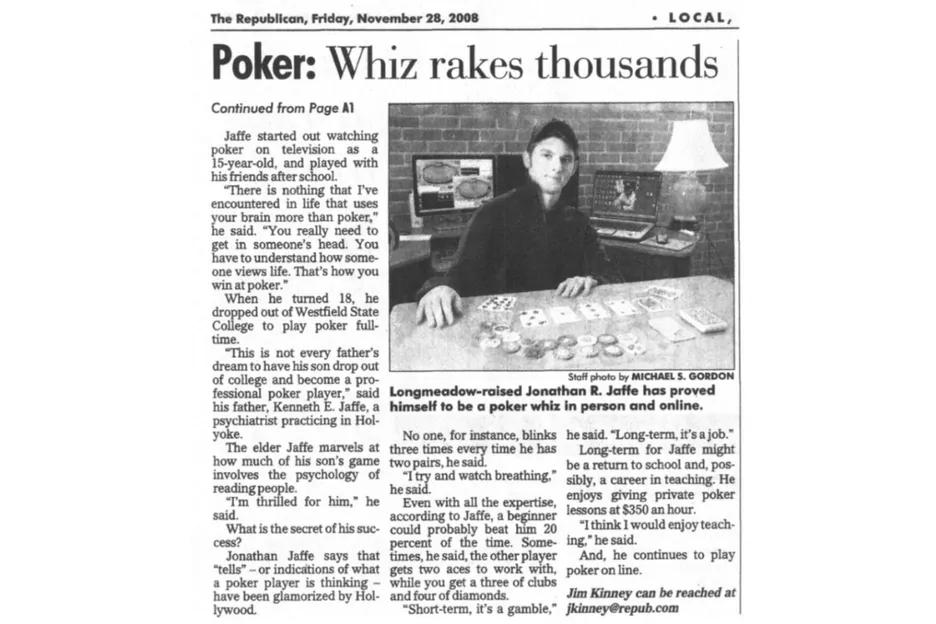
Despite having no interest in playing poker himself, my father was captivated by the drama of the heads-up SNG world. He would watch the empty lobbies with a hawk-like vigilance, and when he spotted an unfamiliar name in the higher stakes lobbies, especially the $2K and $5K buy-ins, my phone would ring.
“Jonathan! Get to the computer! There’s some guy I’ve never heard of from Russia in the $5K lobby!”
I would estimate that my father’s phone calls were responsible for more than 20% of my earnings over this time period.
As a psychiatrist who had always strongly disliked being on call one week per month, my father now had a son who was perpetually on call. For me, it was exhilarating. Whenever my phone rang over the course of the next decade, I was always hoping the caller ID would read 'Dad'.
What followed was the most explosive stretch of my career.
April brought $80,000 in profit, nearly matching my entire previous year in a single month. Just months earlier, I’d been so proud of that 2006 total, of the discipline and grind it represented, and of the emotional lows I had fought through to earn that salary.
Now I’d reached that sum in just 30 days, not from a tournament score, but from the same format I’d been grinding all along. The sheer scale of what was possible had been completely rewritten. I was moving fluidly between stakes, playing everything from $200 to $5,000 games, and winning began to feel like a foregone conclusion.
May tacked on another $20,000. Then June blew the lid off: $138,000 in profit, a number so large it felt fictional.
The climb continued in July, and by early August I was up another $50,000, which totaled a profit of $284,000 without a single windfall larger than $5,400. My confidence was sky-high, my ego even higher, and I’d started to believe I had the Midas touch.








Top dogs
The rungood was real, but so was the skill. I was a natural at hand reading*, and heads-up poker in that era rewarded exactly that.
The heads-up scene was unpredictable. New top dogs could emerge overnight, and it wasn’t always clear whether you were watching a real shift in the hierarchy or just a mirage of variance. None of us could honestly say who was best and who was simply running hot.
Looking back, I think I truly was a top 3-5 heads-up player by mid-2007. But I was playing under-rolled, which meant that timely rungood was still the primary driver of my success that year.
The inevitable reckoning began in August, as my first high-stakes downswing saw me lose back just over $100,000 of my profit. I ended the year $182,000 in the black from my heads-up sit & go play, but also with a new appreciation for just how quick and dramatic the swings could be at the stakes I was playing.
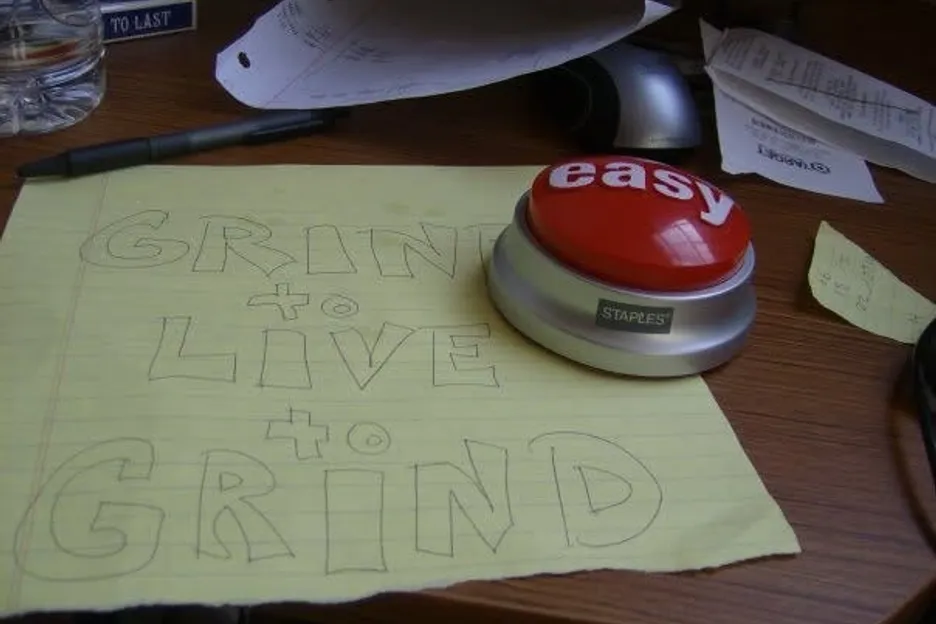
There was a big difference between playing heads-up with a 20-50 buy-in bankroll and playing 6- or 9-handed sit & gos with a bankroll that supported a 300-1,000+ buy-in downswing as sit & go crushers like 'Jorj95' and 'SpaceGravy' were doing around that time.
I’d spent so much time telling friends and family that poker wasn’t gambling, that I’d managed to bullshit myself. The reality was that I was now playing stakes that were just as much of a gamble as they were a job.
The sensible fix to my over-exposure was simple: sell off some of the risk. And in February of '08, an offer to do exactly that arrived. Enter 'Dr. Fells'.
Backers come calling
His real name was Keith, a fellow pro whose Hannibal Lecter avatar had been a familiar face in the heads-up games since before I’d finished high school.
One day he asked for my email, explaining that he’d assembled an investment group specifically to back some of the top heads-up players in the highest stakes games. Would I be interested in hearing their proposal?
A month later, Keith and one of his investors, Mike, flew to Connecticut to meet with me. Their presentation was thorough and transparent, with multiple prediction models, various risk scenarios, and conservative and aggressive options depending on my risk tolerance.
They were offering a serious backing deal, one that could allow me to continue to play the highest stakes games, while only risking what I was comfortable losing.
With Nick by my side, asking questions and giving input the entire weekend, I found myself increasingly interested in and validated by their proposal. Professional poker was still foreign enough that one of my friends’ mothers had quietly concluded I must be dealing drugs.
Having people want to back you was a badge of honor.
Partial backing would smooth the swings and let me keep firing in the biggest games without flinching at a bad month. But it also meant handing someone else a cut of my profit.
At 20, with no dependents, I was in a situation where I could afford to take on the variance and grind back up from the low-mid stakes games if things went poorly. I felt myself going back and forth on it all weekend.
On the second night, my father joined us for dinner, and I could tell he was quickly taken with Keith. Towards the end of the night, when it was just Keith, my dad, and myself, my father turned to Keith and asked a simple question: "What do you think? Should Jonathan take the deal?"
Keith considered this for a long moment, then shook his head. "No. I think Jon will be fine without us. If he downswings, we can always revisit this in the future."
That moment has always stuck with me and my father both. Keith and I became fast friends, exchanging more than 300 emails over the next 5 years, and I will always consider him a close and trusted friend.
My first WSOP
Having turned 21 in March, June was my first opportunity to head to Vegas and play in the tournament that had inspired my career: the World Series of Poker. I had modest success in the few events I played over the first two weeks, before making a very deep run in the $10K Heads-Up Championship.
Heads-up was my specialty, and performing well on such a public stage was thrilling. Fourth place out of 256 players netted me $108,000.
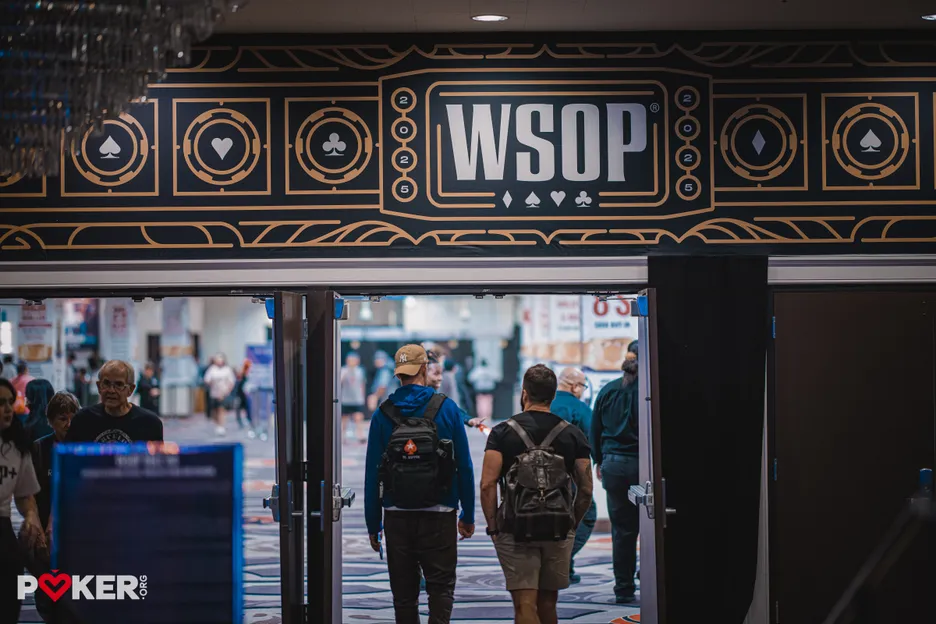
That result mattered more than the number suggests. Despite having profited over $250K to that point, I’d walked into the Series with a bankroll of around $100K, so fourth place nearly doubled it.
The money had gone where money goes: taxes, maxed out retirement contributions in ‘06 and ‘07, plus rent and the ordinary costs of living. And though I’d never been a car guy, I’d bought a 2004 Infiniti G35 Coupe anyway.
Looking back, it was the first thing I bought to be looked at. On some level I knew that, but I tried not to give it much thought. It would be years before I’d let myself be honest about what I was actually trying to purchase.
In November, the World Poker Tour’s annual stop at Foxwoods presented another opportunity. A $10K buy-in, just 90 minutes from my apartment in Connecticut.
Live tournament poker in 2008 was a different universe from the online game I’d been playing. Online, I’d been sharp at picking up on timing tells and bet-sizing patterns, but live poker offered a buffet of free information.
Players routinely discussed their hands between streets, flashed cards to their neighbors, and blathered openly and honestly about their strategies and opinions. All of that was secondary to the physical tells, which were abundant and often egregious.
In 2008 I was an arrogant online heads-up pro who looked to be about 15. Despite my recent fourth place in a relatively high-profile tournament, my real name still meant nothing to 99% of the live poker world.
I decided to capitalize on my anonymity and immediately went into full thespian mode. I stacked my chips in nonsensical four-chip-high stumps, displayed the manual dexterity of a toddler when placing bets, and told anyone who asked that my grandparents, whose supposed wealth came from owning a bowling alley, had bought me in for my 21st birthday.
When Mike Dentale asked for my name at my day one table, I decided I was all-in on this bullshit act.
“Chris.”
The performance was borderline offensive, a caricature so extreme it should have been unbelievable. In the first hour of the tournament, I limped 3-2 suited under the gun, and then re-raised large after a raise and multiple callers.
When my opponent folded to my continuation bet on an A-K-10 flop, I proudly showed my bluff and spent the next 90 seconds meticulously stacking my chips like a child re-arranging building blocks.
For six days, (the FT was the seventh!) I maintained this charade while completely demolishing my opponents. I bagged the chip lead each night, never getting more than 25% of my stack all-in on any single hand from the middle of day one until the final eight players. My control over the tournament felt absolute.
The act nearly crumbled on day four when Jon Friedberg, a seasoned pro, approached me during the unbagging process.
“So I heard you’re 'Iftarii', right?” he asked, referring to my PokerStars handle. My heart stopped, but he didn’t seem certain, so I doubled down. I tried my best to look puzzled, and a bit embarrassed for him.
I replied, “I’m… American?”
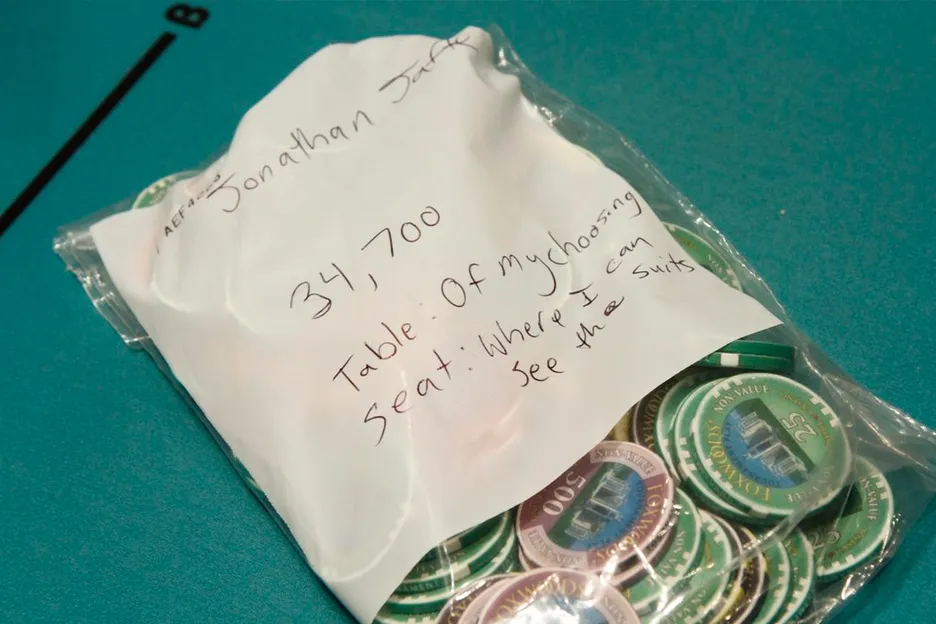
Apologetic and a little flustered, he explained that another pro named Kevin Saul had identified me on a poker forum as a high-stakes online player. I maintained my bewildered expression, we chuckled about the misunderstanding, and he walked away, convinced he’d made a mistake.
It wasn’t until reaching the televised final table** with six players remaining that my true identity ('Iftarii') was confirmed.
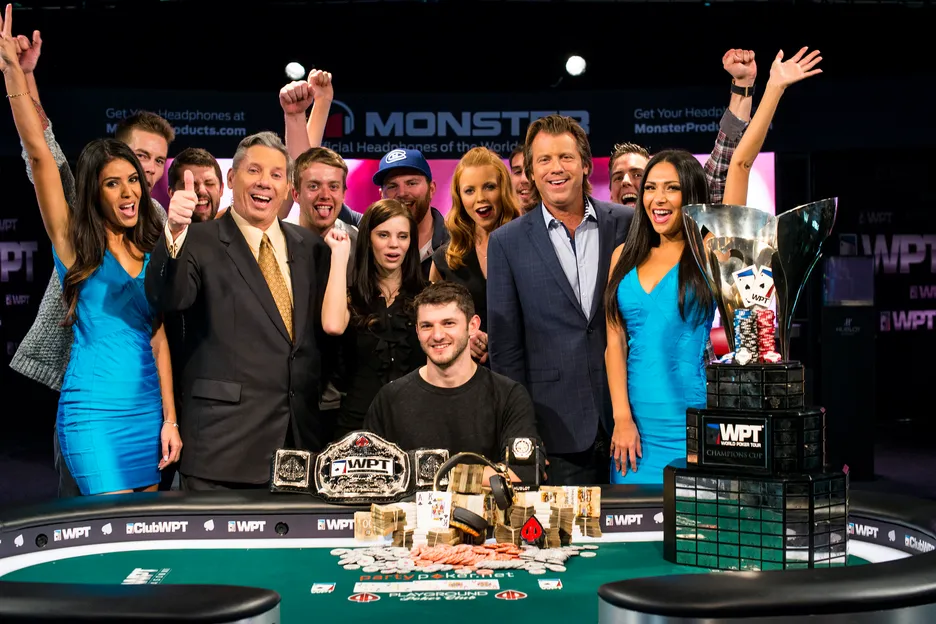
At the final table, despite losing every all-in pre-flop and knocking out zero players, I rode my chip lead all the way to heads-up against Jonathan Little. After hours of battling, I lost three preflop all-ins to Little (two for the win) and finished 2nd for $670,000 , keeping 85% for myself with 10% going to Nick, and 5% to Keith.
It’s hard to say how I felt, because I don’t think I let myself feel it. I was thrilled about the money, but I felt like I’d let down all the friends and family who’d come to watch. Part of me held the competitor's mentality that only losers are satisfied with second.
Most players who run deep in a major tournament feel the pull of the circuit afterward. I did not.
Foxwoods had been thrilling, but tournaments were slow, patience-dependent affairs, and patience was neither a virtue I possessed nor one I had any interest in developing. I went home to my heads-up lobbies. That’s where I actually lived, and where I felt I belonged.
At 21, I was exactly the kind of player the game rewarded, but an entirely new game was coming, one that would expose everything I wasn’t.
* Hand reading is a combination of logic and pattern recognition. 20+ years ago, the pattern recognition was the most important element of hand reading. Some of the patterns you might look for were:
- Preferred betting lines when flopping big hands
- Bet sizing tells
- Timing tells
- Players who were incapable of certain bluffing lines (Example: raising the river with a bluff was something many players were not even capable of in 2008)
- Signs of tilt, and how a player was likely to alter their approach when tilted
- Signs that a player was on the verge of tilting
** While we were waiting to be introduced at the FT, Mike Matusow and I made two $5K wagers. The first was whether or not he would be introduced as Mike 'The Mouth' Matusow, or simply Mike Matusow; they did not say 'The Mouth', and I won. The second bet was on when the FT would finish. It ended up being the longest FT in WPT history to that point, and I lost that bet. The heads-up match lasted more than 4 hours, and we finished at 4am.
Check back soon for the next chapter in Jaffe's poker journey. New articles will appear first at PokerOrg.
Visit Jaffe's Substack for more, and follow GTO LAB on X.
Jaffe appeared as a guest on the GTO LAB podcast this week with Nick Petrangelo and Dan Dvoress. Watch the full episode below.
Additional images courtesy of Jonathan Jaffe/Rational Intellectual Holdings Ltd/WPT/Joe Giron.