

If you are of a certain age and turned on the 2026 WSOP Main Event broadcasts this year, you heard a sound that immediately took you back two decades to 2003: a gritty, glissando-driven slide guitar that turns into stomping blues chaos. If you were a dog playing poker, that sound was your whistle. And if you were watching TV at any point during the poker boom, that sound meant one thing: you were about to watch the WSOP on ESPN.
Sure, poker had been on the tube before, but never like it would be for the next eight years. The poker revolution would be televised, and 441 Productions was doing it in a way it hadn't been done before or since. The shows were part sporting event, part documentary, and the best of character-driven poker television. If Chris Moneymaker was responsible for the poker boom, 441 was responsible for making sure the world saw it happen.
Matt Maranz led that production team through its entire WSOP run. Ask him today who helped, and he'll tell you about his core team who were with him from the first flop to the last river: Dave Swartz, Sari Spiess Skier and Dylan Boucherle. And then Maranz will tell you, literally name-by-name, about the dozens upon dozens of people who made 441's poker coverage what it was. And while Maranz may remember every name, he's conscious of the fact that many people in the poker world won't know his.
"Our role is largely forgotten," he said.
That's why we reached out to Maranz. His memories are more than incredible poker history. They also speak to a subject PokerOrg is exploring in-depth in the lead-up to the 2026 WSOP Final Table: what could the poker boom teach us about making poker bigger and better in 2026?
PokerOrg is talking to the people who lived through the poker boom, told its stories, and helped shape what the game became. The conversation below is condensed from an interview with Maranz in July 2026 in which he discusses how the poker boom broadcasts came to be, why 441 stopped producing ESPN's poker shows, and what he thinks about the 2026 reboot.
'More than just a television show'
Take me back to the first WSOP production you did. What did you believe you were making at the time, and when did you realize it had become something much bigger than another sports television project?
When I told our staff we were going to do a poker show, it took some convincing. We all were experienced producers who had covered the biggest sports events in the world and won all kinds of Emmy Awards. I knew poker could be interesting to work on and there were good stories to tell, but I sold it more like it was a summer job. Let’s do it for a few months, then we’ll go back to our real lives. I mean, who was going to watch poker on TV, right?
The first sign that this was different came after we edited the first hand back in New York. Everyone had the same reaction: This is really interesting to watch. Even more intriguing to me, no one could say exactly why. At that point, I knew we had a compelling television show. But no one was thinking we had a pop culture phenomenon on our hands.
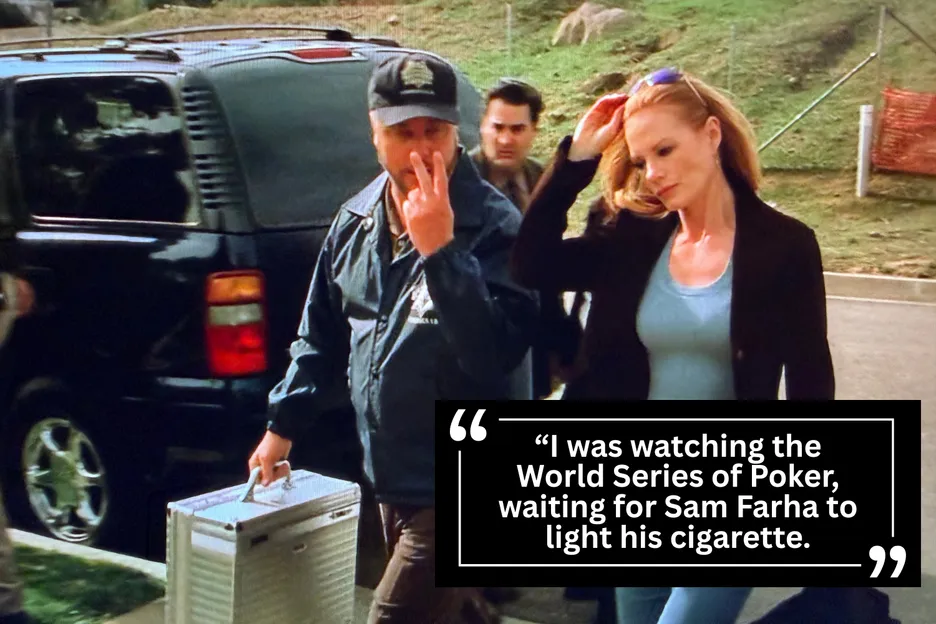
It didn’t really hit me until 2004. My wife was watching CSI. One of the detectives arrived late and they asked him where he was. He said he was watching the World Series of Poker waiting for Sam Farha to light his cigarette.
That was the moment for me. That’s when I realized we had created more than just a television show.
Poker had existed on television before your shows. What did you and your team understand about the game that previous productions had missed?
The reason I wanted to do a show about poker was because I read 'Big Deal' by Anthony Holden. I’m not a gambler and had barely played poker, but I found the characters in the book and the whole culture surrounding poker fascinating.
Before we started shooting, I spent four weeks hanging around Binion's meeting players and trying to figure out how to present poker on television. The first thing I realized was that the players were even more interesting than I expected. I used to joke that the only thing more interesting than a poker player was the player sitting next to him.
That’s what earlier (and later) shows had missed. In any television show, viewers need someone to care about. They need a reason to become invested. I wasn’t sure how to make viewers care about poker. But I knew how to make them care about the people playing it. That’s why our shows were always about characters.
The second surprise to me was that players actually talked to each other at the table. Sometimes it was strategy, sometimes boredom, sometimes just people being friendly, but there were actual conversations taking place. Combined with the hole card cameras, that table talk changed everything. Instead of watching poker from the outside, viewers were suddenly sitting at the table.
That’s what made the show different. You saw everything. You heard everything. You weren’t just part of the game, you were an omniscient viewer who knew everything — sometimes even more than the players themselves. There’s something seductive as a viewer when you know a player is going to get bluffed before he does.









Poker was just the plot. The players were the story.
How much of the show’s success came from treating poker players as characters rather than simply competitors? What made someone compelling enough to build an episode around?
The importance of treating players as characters cannot be overstated. It was every bit as important as hole card cameras and table talk. It’s Storytelling 101: People like stories about other people.
Put it this way: Over the years, many people have asked me what Chris Moneymaker or Phil Hellmuth are like. No one has ever asked me how they play K-10 offsuit.
That’s why we always made the show about people first and poker second. Poker was just the plot. The players were the story.
It always bothers me when I hear today’s poker players aren’t as compelling as players from the early years. Everyone is interesting. I mean, everyone. It’s just the producer’s job to figure out what makes them so. It could be anything. A mannerism, a card protector, a job, a backstory, a family member, a personality, a nickname, something you’re wearing, a hobby — literally anything, even a lack of charisma.
One of my favorite things about my time at the WSOP was wandering the tournament floor trying to find stories. It was amazing who and what you’d find. You just had to look.
I don’t think the interesting people disappeared. I think the desire or ability to recognize them did.
Was there a particular hand, player, scene, or episode when you thought, “We have figured out how to make poker work on television?”
I can tell you the exact moment.
It was Day 2 of the 2003 Main Event. It was only our second day of ever shooting poker, and Sam Grizzle and Phil Hellmuth sat at the same feature table. The two of them had a past — Hellmuth said the only fistfight he ever had was with Grizzle — and they jawed, needled and goaded each other the entire day. Didn’t matter if they were in a hand or not, they continued a hysterical conversation trying to annoy each other. We barely knew anything about the game of poker, but we knew this was interesting. That’s when we realized a poker show didn’t always have to be driven by the poker. Grizzle turning the song 'Battle of New Orleans' into a jab at Phil shaped how we edited every poker hand for the next ten years.
Who were the people or personalities who made that circus irresistible to you?
Everyone credits the poker boom to Chris Moneymaker in 2003, and rightly so. But there’s an important detail people forget. He didn’t appear until about halfway through our seven episode series. The shows already were a big hit before Moneymaker even showed up.
The stars of those early episodes were Annie Duke, Howard Lederer, Chris Ferguson and Phil Hellmuth. Later events may have changed how some of those people are viewed, but in 2003, audiences were fascinated by the mom who played poker after putting her kids to bed, her professorial brother, the guy who looked like Jesus and could throw a card 70mph and slice fruit, and Hellmuth being Hellmuth.
Those personalities are what began building the television audience. By the time Moneymaker arrived, viewers were already hooked. Then Chris gave the story the perfect ending.
'Our role is largely forgotten'
Why do you think the people who created the 2003 broadcasts have largely disappeared from the industry’s account of its own boom?
My guess is if you asked the poker community who produced the WSOP shows that launched the poker boom, most would say Mori Eskandani and PokerPROductions. I’d be lying if I said it didn’t bother me a bit.
Our team produced the WSOP from 2003 to 2010. Those were the hundreds of episodes that introduced millions of people to poker and inspired an entire generation to play. The poker boom didn’t start when Chris Moneymaker won the World Series of Poker. It started when he won the World Series of Poker on television four months later. I like to think we had something to do with it.
If I had to guess why our role is largely forgotten, maybe it’s because we never were poker insiders. Unlike the groups that produced the shows before and after us, we were television people, not poker people. We didn’t hang out with players dissecting hands. So, even though we had great friends in the poker world, we always were a little outside of it. Maybe that made us a little easier to forget once we left.
I also wouldn’t rule out it was in some people’s self-interest to minimize our role. After we were replaced and the show’s ratings, revenue and relevance declined, it became inconvenient for some to remind people who had produced the broadcasts during the boom. Once you’re no longer in the room, other people get to tell the story.
Why did the WSOP decide to move away from your production team, and what did you believe at the time would be lost as a result?
Ty Stewart and Jamie Horowitz, then an ESPN executive and now the head of Omaha Productions, believed the coverage needed to be more about poker strategy than story. So they replaced us with PokerPROductions whose expertise was poker. I told Ty at the time I thought it was a mistake. The goal of sports television is to grow the audience, yet poker strategy can get complicated and intimidating. Leaning into strategy was going to make the shows less accessible to many and narrow the audience.
To me, it was a clear shift from broadcasting to narrowcasting. Very few businesses wake up in the morning and say, “Let’s make our product appeal to fewer customers.”
The ratings plummeted immediately, and the WSOP’s long slide from mainstream entertainment to fringe sport has continued ever since. It was sad to watch, but not surprising. I don’t pretend to be an impartial observer. But I think the WSOP made a bad decision, then followed it to its logical conclusion.
Have you ever thought about or had the opportunity to come back to the WSOP?
I’ve stayed in touch with Ty Stewart over the years. More than once, he's told me replacing us didn’t turn out the way they thought it would. Every few years, I’d get a call saying they wanted to find a way to bring me back. Then I’d get another call saying they couldn’t get out of their existing agreement with PokerGO.
This year felt different. Ty believed there was a way to make it happen. I was excited too. I still care deeply about the WSOP. I’d have loved the chance to help a new generation fall in love with the WSOP the way the first generation did. Obviously, it didn’t happen. But that’s a longer story for another day.
2003 ESPN vs. 2026 ESPN
The opening theme music this year is the same as when you were running the show, but most of us who have watched the new version know the show isn’t the same. Do you see it that way?
I haven’t seen the shows, so I can’t compare them. But I know Ty Stewart and Omaha talk about bringing back the style and storytelling we used from 2003-10. It’s an admirable goal, but it’s trickier than people realize.
People — even some television people — think storytelling is simply producing feature pieces about players so viewers get to know them better. That’s only part of it. Storytelling is using every asset at your disposal — hands, table talk, outer tables, fans, feature stories, commentary — and weaving them into one cohesive narrative. It’s like writing a book where something that happens on page 38 matters because of what happens on page 142. There are setups and payoffs, character arcs, callbacks, beginnings, middles and ends. Everything has to work together to serve the larger story.
I hope Omaha is approaching it that way. It’s tempting to do a feature about players hanging out off the felt and feel like you've checked the storytelling box. But you need to introduce characters, follow their journeys and reward the audience for paying attention by making every part of the series feel connected. That’s harder than it looks, but it’s the difference between showing an event and telling a story.
What do you think about the episodes in the lead-up to the final table? Our feeling is there is just enough to build excitement for the final. Do you share that thought?
Four episodes isn’t many, but it’s four more than ESPN wanted to give. They had very little interest in doing any edited shows.
The number of episodes is a business decision, not a production one. Your job as the producer is to tell the best story you can about the Main Event so excitement builds for the final table with however many episodes you’re given. So if it’s 4, it’s 4.
I haven’t seen the shows. But I understand Omaha devoted one episode each to Days 1 and 2, then covered Days 3-8 in the remaining two episodes. That makes it pretty obvious to me their goal was production efficiency rather than telling the best possible story. That decision alone makes it very difficult to build maximum excitement for the final table. I would’ve approached it differently.
Is 2026 poker even suited for 2005-era coverage, or has it changed too much?
The original episodic shows succeeded because they were the right content at the right time. I think the content can still work. I'm not convinced the environment can. We're living in a completely different media world than we were in 2003. Cord-cutting, fragmented audiences, and endless viewing options make it incredibly difficult to create a mainstream phenomenon of any kind.
And even the best television show can't make people watch it for the first time. That's a function of distribution and promotion. If people don't know it exists or easily find it, you’ll never get the chance to discover if they like it or not.
That's why I think the biggest challenge isn't the production itself. It’s getting enough eyeballs to take that first look.
I think the poker industry would be surprised how difficult it was for the WSOP to find a distribution partner. The WSOP wasn’t asking for a rights fee and was willing to pay for production. There still wasn’t much interest. ESPN ultimately said yes, but the commitment is modest. Cornhole has more hours. ESPN agreeing to air poker and making poker a priority are two different things.
I also think it’s unlikely ESPN will devote meaningful promotional resources to it. Marketing dollars are finite. From ESPN’s perspective, what’s the business case for spending those dollars on poker instead of another property? I’m not sure there is one.
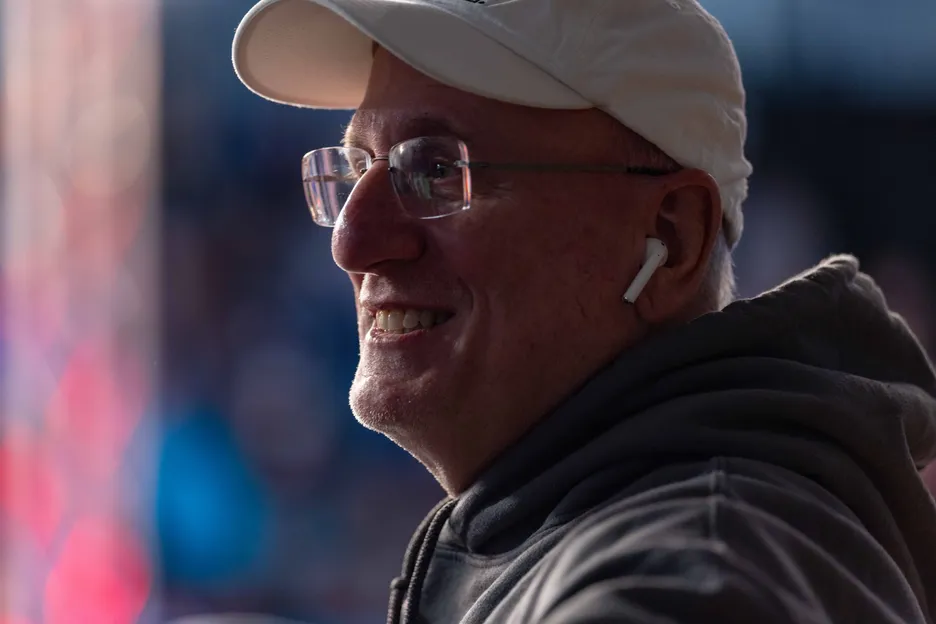
Since you stopped doing poker coverage, what have been some of your other favorite professional moments?
Since poker, I've been fortunate to produce shows for everyone from ESPN and Netflix to the Travel Channel. We've made follow-docs about athletes and teams, and applied what we learned televising poker to other competitions, from esports to cornhole. My favorite project was 'Friday Night Tykes'. For six seasons, we followed the most competitive youth football league in America and used football to tell much bigger stories about youth sports, parenting, and how we want to raise our kids. It was named one of the best television shows of the year, and sparked a national conversation that led to debates in Congress about youth sports. It's rare to work on a show whose impact extends beyond television. I feel incredibly lucky to have been part of two.
I'm semi-retired now, which mostly means I only say yes to projects that genuinely excite me. Poker still does. I'm currently developing a documentary about poker that should begin shooting soon.
What would you like the poker community to understand about the people who actually created the television version of the WSOP that helped launch the boom?
As you get older, you tend to remember less the projects you did and more about the people you did them with. We were a bunch of people who knew nothing about poker but loved telling stories and loved hanging out with each other.
For ten years, we traveled the world together covering poker, and having adventures most people wouldn’t have in ten lifetimes. It’s hard to recognize the good old days when they’re happening, but I think we did.
Even now — I’m 61 and have been to only one poker tournament since 2012 — probably 80% of my favorite stories to tell friends are still about my life in poker and the people I shared them with. I think many of my old co-workers would say the same thing. It really was a magical time.
Personally and professionally, we hit the flop.