

Jessica Welman ended up in the boomtime World Series of Poker because she was, in her own words, "a terrible academic."
While the other students in her graduate program spent the summer teaching or taking classes, Welman headed to Las Vegas under the extremely convenient premise that the trip would further her research into poker players. It turned into a career.
Welman went on to work in just about every part of the industry. Along the way, she found a place for herself in an industry that often had a very narrow idea of what a woman in poker media was supposed to look like and do.
What emerged was a philosophy that is especially relevant now: good poker coverage should not assume every fan wants the same thing.
In this installment of Inside the Boom, Welman looks back on the early media rooms and and why she fears today's consolidated media landscape has forgotten one of the boom’s most important lessons: you have to meet the audience where it is.
From the classroom to the Amazon room
How did you end up at the WSOP in the first place?
I ended up at the WSOP mostly because I was a terrible academic. Everyone else was either teaching or taking summer school and I didn't want to do that, but I also didn't want to look like the laziest MA candidate, so I claimed I was furthering my 'research' into poker players in Vegas.
What did your research prepare you for—and what did it get completely wrong about the reality of the Amazon Room?
I had a glimpse of what tournaments looked like because the WSOP Circuit had come through Caesars Southern Indiana. These were the days when multiple outlets still showed up to report on these things so I got a tiny glimpse of how media row worked. However, if you are asking about my academic research, the paper I had written was about non-verbal communication among poker cohorts, so that really didn't address the scope of the WSOP. The behaviors I observed and wrote about certainly happened at the series, so I guess I didn't get anything 'wrong' per se?
Your first WSOP job was near the bottom of the poker-media ladder, but you treated it as an opportunity to prove you belonged. What do you remember about those first days?
These were the days when outlets that weren't PokerNews were only allowed to post once an hour. On my first day I remember the time for the first post was drawing near and I just sat at the computer afraid I would mess it up. Court Harrington ran PocketFives Live at the time, offered up his standard pithy, Southern advice:
"It's the internet, not a novel. People will forget what you wrote by the end of the day."
That was the advice I needed to relax a bit, have some fun, and not stress too hard about whether every hour was perfect or not. Since PocketFives Live only covered the members of the online community, we also had a lot more latitude than other outlets. We weren't trying to get interviews with Phil Ivey. We were keeping track of the Scott Seivers and Jason Somervilles of the world years before anyone else really paid them much mind.
My parents always instilled in me the idea to be grateful anyone wanted to pay you to do something, so I never focused on how menial the job was and how little it paid until after the fact. As a poker fan, I got behind the ropes access to everything and made money to boot, so it always felt like a blessing.
In the meantime, I was quietly developing a very unique skill set virtually no one else had. It wasn't I was an amazing writer or that I had some elite level of poker acumen. It was simply that I knew which online screennames belonged to which real-life poker tournament participants.
So, by the end of my first summer, I picked up an extra gig working for the WPT as a tournament reporter for Bellagio Cup. By the end of Bellagio Cup, my boss Jeff Holsey offered me a full-time role, but only if I promised not to drop out of school to take it. Despite repeated assurances I did not need this degree and it was useless, he wouldn't listen, I finished grad school a semester early, and within the next year I had moved to Vegas.
What would someone entering the WSOP media room today struggle to understand about the atmosphere, workload, access, and personalities of the press corps you joined?
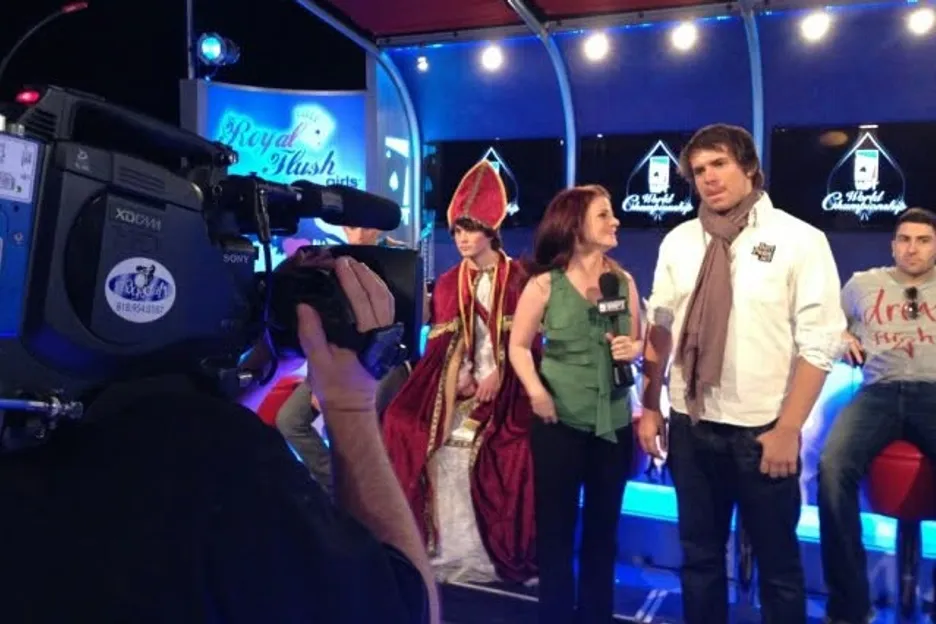
Well, no one would believe that one of my fellow reporters actually brought a desktop to the media room to use for the 2008 WSOP, while another didn't bother bringing a computer at all. But, as someone who walked by the media room a half dozen times this summer and never saw a soul inside it, I doubt people would grasp just how many people were in there.
Not only were there reporters working on features, but there were multiple outlets all doing some version of live updates that competed well enough with PokerNews that it was worth the outlet to bring out full on teams to produce the content.
You entered a poker industry that was overwhelmingly male, both at the tables and in the media. How did that affect the opportunities you received, the way players treated you, and how hard you had to work before people assumed you knew what you were talking about?
In 2010, I was taking a new reporter through the Amazon Room and I saw how excited he was that known poker pros were stopping me to chat, wave, give a hug, and so on. I could tell he thought this was his near future. I decided to give me the bad news at the start.
"Listen, I am one of the only women these guys see all day. It's media girls, a few dealers, and the girls selling cigarettes and M&Ms. So I wouldn't get your hopes up that you are met with this level of hospitality by the players."
That was the good news. I always thought it was an advantage to be a woman in the tournament reporting space because poker tournaments are very boring and these guys are stuck in their seats and just want someone to talk to. That made my job extremely easy. I would get great stories or tips of hands we missed or a suggestion to stick around because there is a maniac at the table.
The PocketFives community was always just thrilled that we were willing to pay attention to them, so they were always very laudatory of my work, especially once I started working WPTs and they were suddenly in the chip counts after years of being ignored.
As for the rest of the community, I think it really was two or three years before I had people's respect as someone who was always putting in the hours on the floor and cared about doing a good job.









Crashing the boys club
A lot of people would say poker was pretty nasty with misogyny during that period. I don’t want to put words in your mouth, but how would you characterize it?
I think this was a time where there was a very narrow idea of what women in poker could really do. There were a few players like Kathy Liebert, JJ Liu, and Jennifer Harman that weren't sexualized all the time, but the default for players and media personalities alike was to frame them in a sexy way. As a tournament reporter, I was so behind the scenes and so low on the ladder that I did not feel that pressure.
However, once I started doing more things like podcasts, I do think people were a little baffled about what to do with me. No one ever said, "well, you can't interview players because you have to be hot to do that," but no one was really clamoring for me to interview players on camera.
Thankfully, Wicked Chops Poker created this position for me on their weekly poker show where I popped in and gave them the major headlines from the industry for five minutes. Chops called me "The Tina Fey of Poker" and that framing stuck, which elped me secure a talking head spot on The Poker Beat. Honestly, if Chops hadn't outlined the vision for others, I don't think I would have ended up doing as much multimedia as I did because the industry was so stuck in the paradigm of girl in poker video equals 'hot girl.'
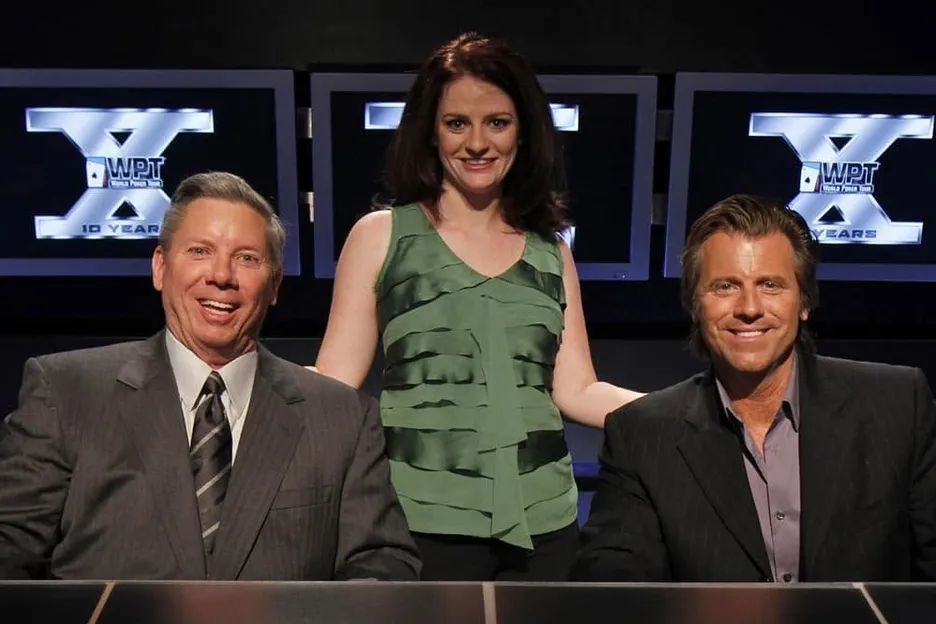
Even after being on camera in various capacities for years, when I worked as the WPT Live Update Hostess in Season X, the larger poker community still pushed back. I was taking over for Kimberly Lansing and I got a lot of social media posts informing me I wasn't nearly as attractive as her, as if this was somehow news to me and some sort of insult.
You worked as a writer, interviewer, podcast contributor, video host, editor, and producer. Which medium did the best job of capturing what the WSOP actually felt like—and what did each format inevitably miss?
You didn't include fan in the question, but my answer started when I was just a fan. I would listen to Gavin Smith, Joe Sebok, and what started as Scott Huff on the CardPlayer podcast and then Joe Stapleton on PokerWire radio every day during the summer and when they were on the road with the WPT. Nothing compared to that format of podcast where you heard the news of what was going on in the tournament, what the gossip was, where people ended up after play ended, and, my personal favorite, the table talk.
As the producer of the livestreams for WSOP from 2012-2014, I think those did a good job of capturing the environment more than the produced episodes did. The late nights when we would scramble for any guest we could find and shove them in the booth with David Tuchman helped you understand just how boring and long these things could be but also captured the raw energy that comes when the cards got all in or there was a raucous rail.
The meat of my career was live updates, so I hold a soft spot for those because that remains the best way to really embrace the game itself and break down a hand. I will say, I think they've gone downhill as the need for them has been replaced with streams, vloggers, and social media, but reading a post with not just the play but the table talk, to me, is the best way to relive a hand because you can fast forward through all the boring parts with a quick, "Welman tanked for well over six minutes."
The company woman
When you later worked on the official WSOP side, how did your understanding of the event change?
Working directly for the WSOP did give me a great appreciation for the importance of logistics which were often lost on the larger poker community. Things like union rules, NGCB regulations, scheduling the support staff, and even bathroom repair were always much more complicated than people realized.I will also say that working with the team year-round, I came to be very defensive of critics that claimed the organization did not care and it was all about the money.
Seth Palansky in particular, got a lot of unwarranted hate back in the day. I can promise you, more often than not, the voice in the meetings speaking up for the players was Seth's.
I know that isn't very salacious and sounds like a company woman response, but it was true. Everyone on the team at that time really was committed to putting on the best event they could and doing so in a way that revered the brand. With that in mind, I can't recall any tensions over storytelling. I had a couple of scraps with reporters if I felt they had run with something before talking to the floor person involved, but that is more a personal stance that the floor staff were our co-workers and deserved the respect of never being thrown under the bus.
Poker players during that era had television identities, online personas, forum reputations, and private selves that could be very different from one another. What did interviewing them face-to-face reveal that the public version of those players concealed?
With only a handful of exceptions, I don't think any player really struck me as wildly different from how they were on television. Interviewing them, I got to see a bit of personality that didn't necessarily come out at the tables, but I don't know if 'concealed' is the word I would use.
The game of poker, by nature, requires you to mute yourself in many ways to avoid giving away information, so we didn't always get to know players unless you gave them the opportunity in an interview to talk about something besides just the hand they played last level or how it felt to come in fifth place.
So, I liked in my interviews to try and bring players opportunities to express themselves without worrying if it was going to give away crucial information about how they thought about the game.
You saw poker media evolve from blogs, written updates, and experimental podcasts into official livestreams, social video, and organization-owned content. How do you think the coverage is now?
I think the personal storytelling has improved immensely. Towards the tail end of my career, as Black Friday's immediate effects had worn off and people realized the new status quo was never going to be the boom again, players became very wary of the media. There was this awful sentiment floating around that they don't owe the TV crews anything because they didn't realize the power the media had on bringing new people into the game, especially now that the online poker faucet of terrible American players had dried up.
Watching these vloggers and podcasters embrace media as a way to personalize the game has been fantastic to watch, as it gives the players themselves the ability to own the narrative in a way they never really could before.
On the flip side, I think poker tours consolidating media in house or to official contractors has really killed the rest of poker content. Black Friday didn't help, as the affiliate model in the US just can't survive promoting solely regulated online poker, and there isn't money to have competing updates teams at the WSOP anymore.
However, since the media has largely moved in-house or to a model in which the outlet is a contractor of the casino or tour, you only get one version of the story. You are also beholden to your client to deliver a product they want. So, if livestreams are paramount, they can demand you delay your updates and you have to say yes. If they want only the fun and sanitized poker stories, that is what you write.
In this scenario, I am not saying either the outlet or tour are to blame, but it creates a system where you get good macro coverage of a tournament or series, the vloggers and social media provide great micro stories within the tournament, but you are missing those other outlets to tell stories that fall in the vast chasm between the two poles.
Meet the fans where they are
Do you ever think about coming back?
This summer I saw my former WPT colleagues, Mickey Doft and BJ Nemeth, both working with the streaming crew in Vegas. I've done a couple of one-off gigs with Mori's (Eslkandni) production team when I still lived in Vegas, and I can imagine a world where I offer my services as a spotter for production for the Main.
Beyond that, no, never.
When people remember the boom-era WSOP, they tend to focus on famous players and televised hands. What people, stories, and contributions from the media side are missing from that history—and what part of your own work would you most want preserved?
Out of all the work that I did in poker, getting asked to be part of Poker Road Radio was always the work I remember most fondly. Obviously, I stated earlier that this was the product I loved the most as a fan, so being a part of it was incredible. But it was also one of the first times that I was not just 'allowed' to bring my personality to the table but encouraged. Getting to share some of the stories from a tournament day that weren't the headlines but were memorable nonetheless was a very special opportunity. The fact these episodes are lost to time guts me, as I would give a lot to be able to go back and listen.
However, the work I am most proud of would have to be the product that we put out as the WPT Live Updates Team under Jeff Holsey. As your own questions to me attest, being a tournament reporter was always considered this horrible grunt work. There were some reporters who refused to do chip counts because they thought it beneath them even though tournament coverage without chip counts is like a baseball game without a scoreboard.
Our crew took the job very seriously and were always asking, "How can we make it better? How can we make it more interesting?" We were embedding Tweets into coverage as early as 2008. We experimented with short-form videos, guest blogs from players, including how many blinds a player had, and even just invented a recap show no one at WPT ever asked for called Jess & BJ.
We also were keenly aware that there were different levels of fans that wanted different levels of engagement. Some might only scroll chip counts, some might only read post headlines, some might only see the recap, so we intentionally crafted a product that could serve many needs.
If I may be frank, that level of care has disappeared. Take, for example, the discussion around the WSOP streams this summer. The default assumption of every decision was that the stream was the most important and everyone would watch the stream. All other coverage had to change to avoid disrupting the stream.
The stream is great. But some people don't have time for the stream. Maybe they only want to pop in the app and check the counts. Maybe they want hand histories, but they want to know what just happened, not what happened two hours ago.
This product consolidation isn't growing the game. It is forcing a singular mode of consumption on people that, if we are being honest, is a form of consumption that really only appeals to the most loyal of fans. And that, more than anything, makes me sad because it feels like it negates the work and care we put in to meeting fans where they were when it came to our reporting.