

Here's a list of things that happened at the World Series of Poker:
- A player refused to change his shirt for days and his stench was so bad he faced disqualification if he didn't use proper hygiene
- The Series was so overcrowded, the WSOP had to put up tents outside to accommodate the field
- A man impersonating Eagles bassist Randy Meisner nearly conned an online poker company in its WSOP lounge
- A man known to some only as The Devil stood up in the middle of the crowd and crashed two huge cymbals together to celebrate "Shuffle Up and Deal"
- If you didn't want to pay taxes on your winnings, there was a guy who could take care of that for you right beside the cage..for a price
- Las Vegas strippers had lively pillow fights on a regular basis
It's all true. All of that and more happened at the WSOP.
Well, no, not this year's WSOP. Those stories come from a time when 2026's Main Event chip leader was eating pureed food and learning how to walk. It's a time he can't remember but has heard the old men call The Poker Boom.
All the of above (and so much more) was happening at the World Series of Poker in the several years following Chris Moneymaker's 2003 victory. It was a time when Main Event fields were doubling year on year, mainstream sponsors bought space on the felts, and the chaos was so thick you could bodysurf on it.
At the time, optimists thought, this is only going to get bigger and better.
What's that old saying? Every time an optimist cries, the poker gods get their Red Bull wings? Whatever.
So, what happened?
Wall flies, bar flies...time flies
It's not polite to ask if the veterans of the poker boom are aging well, but maybe it's okay to ask the same question of the game. How has poker held up since it boomed?
In 2005, the WSOP media room, such as it was, was roughly the size of my childhood bedroom. It was suited for maybe 10-12 people. An Irish writer sat there one night, growled in frustration, and muttered, "I can't write without a drink." He left and came back 20 minutes later with a bottle. No one blinked.
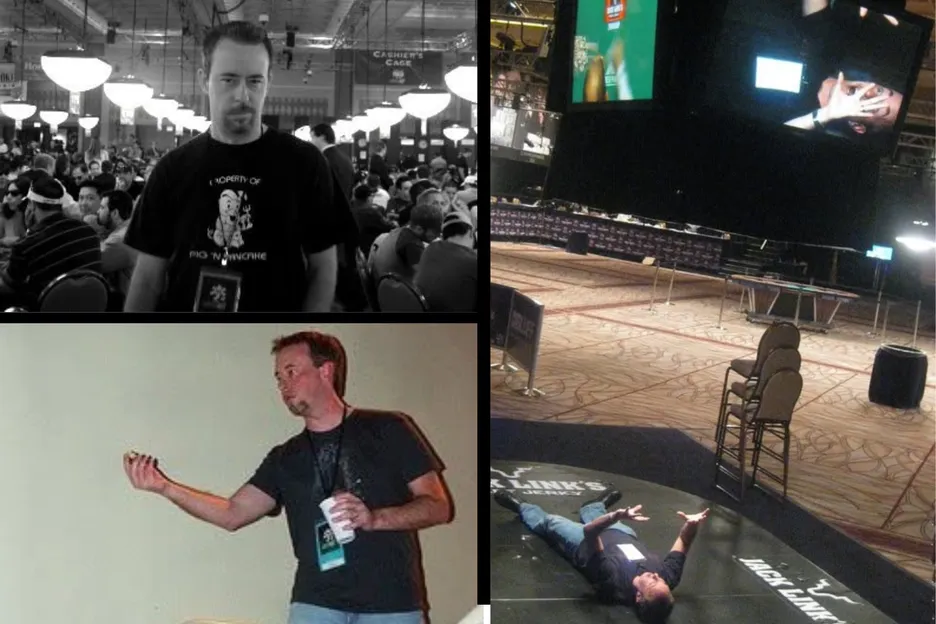
The media room grew in the years to come and so did the annual bacchanal. Eric Harkins, the official WSOP photographer had a margarita machine in his travel trailer. He was a hell of a host. Dinner break usually involved a friendly hallway bartender and high stakes lime tossing on the Rio loading dock. By the end of the boom...well the right side of the photo above tells that story.
There was progress along the way. By 2008, the WSOP appreciated the media enough to put them on risers overlooking the Amazon Room (right below the giant banner photo honoring one of poker's most notorious scam artists).
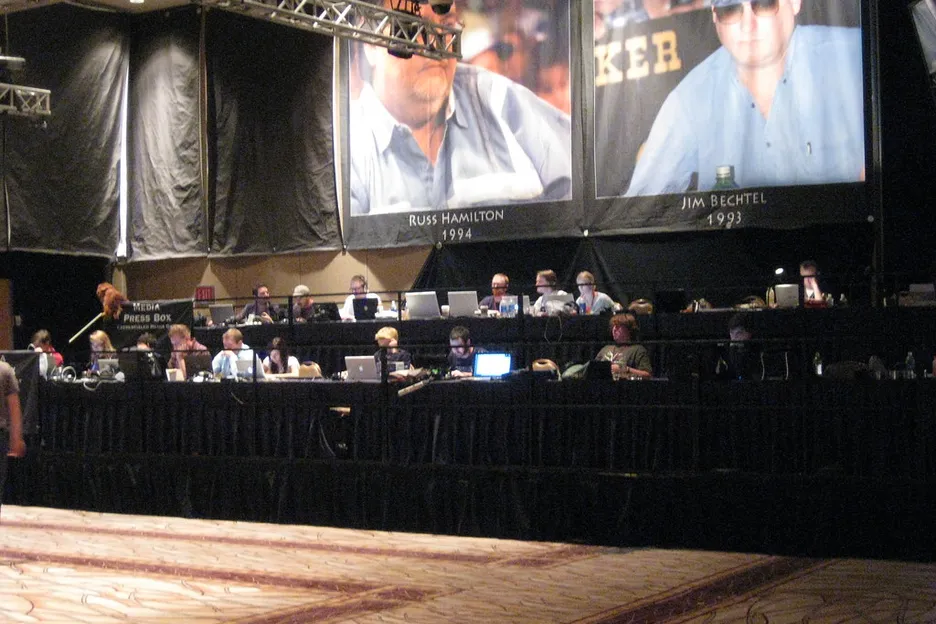
Poker had three print (print!) magazines, countless news websites, enough money to go around. After all, this forgotten period hosted the biggest WSOP Main Event in history.
In 2005 and 2006, on any given day 1, it was not uncommon for an entire table of players to be wearing PokerStars gear. It was hard to separate them all when the online poker giant was supplying roughly 20% of the Main Event field.
These were the years online poker reps carried literal duffle bags of cash around to buy in their online qualifiers. One online poker company had a room dedicated to emergency-ironing the new clothes they would put on players they'd just sponsored two minutes before the player sat down at a TV table.
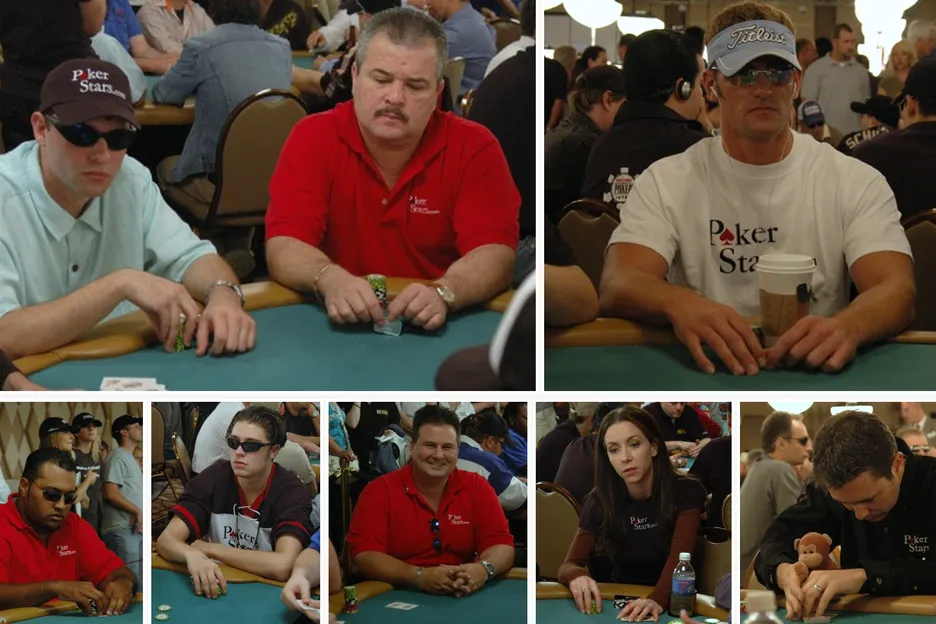









Old school defined
To today's young talent, those chaotic years are a time before time. To the people of the poker boom, it's yesterday. It's old school, but it's still yesterday. How old school?
Snoop Dogg played a WSOP party not too long after he played a party in the actual film 'Old School.' The guy who directed 'Old School?' He was a regular WSOP player during the boom. Streaking the quad was nothing. The boom was a party.
Milwaukee's Best put padded seat cushions in every one of the thousands of WSOP seats, but most people didn't want them. The cushions sat in piles along the walls like trash during a union strike. One year, every player in the annual WSOP media tournament sat down and found a gift in front of them: an early nicotine metal vape pen that looked like a cigarette. Smoke'em if you got'em.
One time, Day 1D was so oversold that there literally weren't enough seats to fit everybody and there was no such thing as an alternate. With Levitra as a table sponsor (yes, really), growth was inevitable. WSOP Commissioner Jeffery Pollack (yes, poker had a commissioner just like the major sports leagues) had his first Degree All-In Moment. It was an afternoon news conference with an angry horde of people yelling at him. It was amazing.
And, yeah, all of those stories at the top were just part of the everyday life during the poker boom. It was every day, it smelled sorta bad, and it was in your face wherever you walked.
This year we had Shot Clock Gate. The riot happened on Twitter/X. It was fine.
Sepia tones and old man bones
If you walked into the World Series of Poker merchandise shop this year, you couldn't miss it: nostalgia. It was all over the walls, merch racks, hats, and shirts.
Benny Binion's silhouette sat just above a hat brim. Faux-retro shirts featured WSOP logos that never existed. You could almost smell the cigarette smoke and stale beer from the Binion's Gambling Hall carpet. It was a sentimentalist's poker paradise and a nod to poker history. But you couldn't nod too long or you were in for a good case of whiplash.
The nostalgia shop couldn't have stood in starker contrast to the ultra-modern poker spaceship in the Paris ballroom. If you needed the point a little too on the nose, you could just sit and watch a guy wearing a 1977 WSOP shirt under television lights suited for a 'Close Encounters' reboot while buying a ninth entry to a tournament on a pocket supercomputer that sometimes doubles as a phone.
In the middle of all this, a gray-haired fifty-something dude stood looking a 21-year-old kid who has the chip lead in the 2026 WSOP Main Event. I realized (almost too late) the older guy was me muttering, "Son of a...the kid was born the year I started covering poker. Joe Hachem's WSOP bracelet has more life experience than Lucas Jumalon."
Old Man, predictably, yells at cloud
No shade on Jumalon or the hordes of young faces dominating the game. Their presence on the scene was what a lot of now old men were hoping for when poker exploded in 2003. The huge fields and staggering money were all part of the big plan, the big vision, the big time future for the game.
Some old men yell at clouds. Some old men shuffle off and don't bother the youngs. Some old men start hitting up old poker friends from the poker boom era and asking, "Wait...hold on. Did we go extinct and just not realize it yet? Did the dinosaurs know?!" And then that turned into, "Did the big plan actually work out? Is this what everybody was hoping for? Does it feel like we expected it to? Has anyone seen my glasses? They were around here somewhere."
Here's the thing: I didn't into covering poker as a steppingstone to being a poker pro. As my friend John once said, "You only play poker for the stories." That was the same reason I ended up doing what I do.
Before the poker boom happened, I'd read Herbert O. Yardley, A. Alvarez, Anthony Holden, Jesse May, and Jim McManus. I mainlined RGP posts, Tilt Boys trip reports, and WSOP write-ups from Andy Glazer and Nolan Dalla. I loved the history, and I loved being in the middle of a boom as historic as the 2003-2010 era was.

After UIGEA in 2006, poker would never be bigger than it was then. After Black Friday, it was no crime to believe poker would never be bigger or better. After Covid...well, a lot has happened. The crowds have gotten bigger. The technology has gotten better. But is there something missing?
I know too well that old men romanticize great wars, loud cars, and quiet bars. It's as if we old men won't die if the old stories live. But maybe there is a chance we can learn something about today if we talk with some of the people who lived through the boom and helped make it what it was.
Over the past few days and throughout this week, we're chatting with--forgive me--poker boomers about that big question: is it better to leave those old stories and learnings at the bar, or can they still help make poker better today?
We'll post links to the interviews below as they happen. In the meantime, let us know in the comments what we could still use from that poker boom era. I'll be happy to read all the thoughts...just as soon as I find my glasses and have an afternoon nap.
Inside the boom:
Matt Maranz: The forgotten team that made the WSOP must-watch TV
Joe Giron: The photographer who turned poker’s rawest emotions into history
Paul McGuire: The gonzo Deadhead blogger who showed us what ESPN didn't
Lance Bradley: Poker's journeyman who survived actually living at the WSOP
Jessica Welman: The reporter who met poker fans where they were