

The television cameras knew where to look. They focused on the cards, the champions, and the moments that could be shaped into a clean, dramatic story.
Paul McGuire looked everywhere else.
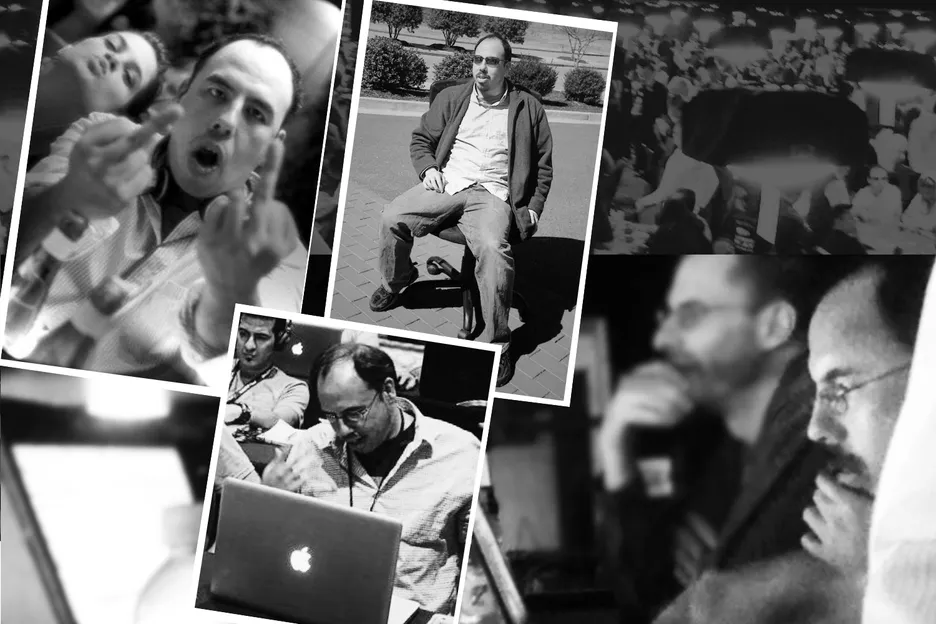
Writing as 'Dr. Pauly', the New York native arrived at the Rio with no journalism degree, no corporate filter, and no grand plan beyond surviving the night and finding a story worth telling. He used a free blog site as an electronic notebook, recording what happened on the rail, in the hallways, around the bathrooms, and in the darker corners of the Amazon Room. Within weeks, players, executives, writers, and competitors were reading it to learn what was really happening at the WSOP.
McGuire's coverage was less a traditional tournament report than a punk-rock bootleg from inside a circus that had not yet learned to control itself. While ESPN created heroes and villains, McGuire wrote about secret deals, hidden financial arrangements, loan sharks, drug dealers, estranged families, exhausted dealers, and the people waiting on the rail to collect their share of the money.
In the latest installment of Inside the Boom, McGuire remembers the years when poker still felt dangerous, strange, communal, and gloriously unfiltered. He also explains why he walked away, why the world that made Tao of Poker possible no longer exists, and why he now prefers telling stories through fiction.
Circus on the rail, circus off the rails
Most people never experience the behind-the-scenes of the WSOP. How would you describe the atmosphere surrounding the World Series of Poker during the years you were there?
The WSOP in its earliest days of the poker boom was pure chaos. They figured out many organizational problems, so things run smoother today, but the mid-00s had plenty of growing pains with a different disaster or problem occurring every other day.
My first WSOP was in 2005 and my last was 2011. I started my blog, Tao of Poker, two months after Moneymaker shipped the 2003 Main Event. When I first moved to Vegas in 2005, the online poker boom was still ascending. I had become a poker media veteran when the UIGEA hit, and I stepped away shortly after Black Friday.
In 2005, the WSOP moved from downtown Vegas and Binion’s to the Rio. Everything was located inside the Amazon Ballroom. There was one event per day with a lofty expectation that it would end on the day it started, albeit at 5am or 6am. The fields were so massive that they would play down to a final table, and resume the final table on Day 2. There were no hard stops back then. When the action expanded to multiple ballrooms at the Rio and the WSOP expanded the schedule with multiple tournament starts per day, there were several tournament restarts each day, plus the start of an exclusive final table. Covering the WSOP became more difficult to cover for a one-person outfit like Tao of Poker. Although my primary focus was final table results, somehow I managed to run around to different ballrooms to find stories in other tournaments. Luckily, I grew up in NYC and could walk fast through crowds.
When you first began covering the WSOP as Dr. Pauly, did you think you were documenting an important moment in poker history?
I was making it up as I went along.
Sometimes I didn’t leave the Rio until 5am, and then I’d stay up well past sunrise to write daily recap. I used Tao of Poker blog as an electronic notebook. When final table ended, I'd re-read everything on my blog then write the recap. I had no idea that the blog updates would become insanely popular. Traffic numbers were through the roof. Tao of Poker blew up in 2005, which was never my intention. I ran with it, had fun, and experimented with content.
I don't have a degree in journalism, but I know how to tell a good story. With so many competing outlets in poker media obsessed with the same reporting style, I had the luxury of deviating from the mainstream. The bustout hands were important, but I quickly discovered everyone loved the stuff I wrote about that was happening on the rail or in the corners of the Amazon Room that the rest of poker media weren't paying attention to. I found off-the-table stuff far more fascinating, especially the circus on the rail, or in the hallways, or in the shadows that mainstream outlets never mentioned.
At what point did you realize that Tao of Poker had become something more than a personal blog—that players, executives, media members, and people throughout poker were reading it to find out what was really happening?
I realized pros were reading Tao of Poker around the third week. A well-known pro found me in press row and said he had to take a bathroom break. He wanted me to tag along because he wanted to be on the next installment of "The Last 5 Pros I Pissed Next To..." That was a schtick I posted on Tao of Poker which everyone loved, especially pros.
Other writers I had admired, like Jesse May and Tony Holden, had set the bar for exquisite poker writing. Jesse and Tony reached out and sent words of encouragement. I was blown away by their support of Tao of Poker. I later found out that WSOP bigwigs and Ceasars execs were avid readers. Other execs from rival casinos in Vegas were following along religiously. Borgata in Atlantic City hired me to cover their seasonal tournament based on Tao of Poker's popularity.
Of course, it wasn't all positive. A couple of dinosaurs in poker media shunned me because Tao of Poker killed their traffic, and a couple hardliners thought I shouldn't be there because I wasn't a journalist. Several poker news site owners were livid that I was siphoning away their traffic.









'He's the biggest cocaine dealer in Chicago'
ESPN was creating the polished television mythology of the poker boom. You were often writing about everything happening outside the camera frame. What parts of the WSOP story did television inevitably miss/
The WSOP didn't allow deals, so players would have to take an unscheduled break and discuss a deal in the bathroom. I accidentally walked in on one. A pro was a friend of a friend, and I told him I didn’t see or hear anything. He won the bracelet and tipped me cash. For many years after, he’d always buy me lunch or drinks.
Staking was another taboo issue. Sometimes ESPN would air clips of the audience, and people on the rail would be going nuts when their friend won a big pot or busted a player. Viewers at home thought, "Awwww... he's got supportive friends!"
We knew the real story. That final table player had swapped percentages with Pro A. Meanwhile, Pro B was his current backer, and Pros C and D were former backers waiting to collect outstanding make-up. There was also probably a bookie, loan shark, and drug dealer hovering on the rail and waiting to get paid.
I saw multiple tense situations when ex-wives would bring their kids to the press room or press box and beg someone to write a story that their children's father was a deadbeat and degen gambler who owed several months of unpaid child support.
Another time while covering a final table, a friend from college tapped me on the shoulder and said, "See the guy in the Cubs hat on the rail? He's the biggest cocaine dealer in Chicago. He knows he'll end up with most of the winnings when [NAME REDACTED] starts a four-day bender when the tournament ends."
Your coverage felt unusually immediate and unfiltered. How much of that voice was a deliberate gonzo approach, and how much was simply the only honest way you knew to describe the environment?
You never knew what was going to happen at the WSOP, so you had to be able to adapt and think quickly. I had been an aspiring screenwriter and novelist, so I knew how to tell a story and set a scene. Most of the good stuff wrote itself, and all I had to do was transcribe the table banter. It's flattering that I got compared to one of my favorite writers, Hunter S. Thompson. However, my approach was more inspired by improvisational music.
I'm a Deadhead and followed the Grateful Dead all over the country during college. I also loved Phish and followed them everywhere to see live concerts, even Japan. Those jambands created magic in real time and you never knew when something crazy would happen, which is why you never wanted to miss a show. I tried to bring that sense of adventure and excitement with every day of coverage on Tao of Poker.
Punk rock was such a major influence because it dismantled corporate gatekeeping and weaponized raw emotion over technical perfection. These days I look back at Tao of Poker's WSOP coverage more like performance art, or a DIY punk show, or listening to a Dead bootleg. Readers loved that raw punk ethos and my antiestablishment voice as a member of Generation X.

What is one scene from those years that still feels completely vivid to you?
You never forget your first Main Event final table, so for me it was Joe Hachem winning the 2005 WSOP.
The final table was played at Benny's Bullpen for a final farewell, and drunk Aussies were on the rail shouting and chanting to create a festive atmosphere. I also knocked actress Shannon Elizabeth out of the 2005 WSOP celebrity/media tournament when I cracked her aces with pocket jacks. We were all-in preflop. I sat next to the dealer and kept pointing at where the river card would eventually land. I said repeatedly, "Put down a jack right there!" And sure enough, bam! A jack on the river. She was not happy.
I dropped acid on the day Phil Hellmuth showed up at the 2009 WSOP Main Event dressed as Julius Caesar. I thought it was hilarious, but a lot of people did not. I remember looking up at the press box and peeking into the souls of all my friends and colleagues. They were miserable, especially the ones who had been there all summer. Covering the WSOP is a grueling job, and many of them had become jaded vets who loathed Hellmuthian antics.
I remember writing something on Tao of Poker like: “Didn't Hellmuth's agent remind him that Caesar was stabbed to death by his peers on the steps of the senate?” I expected that a group of pros would ambush Hellmuth at the end of Day 1 and shank him as he exited the Rio.
It didn't happen.
Who were the people operating around the edges of the WSOP who fascinated you most?
There was one mysterious Russian guy from Brooklyn that never played, but I always saw him on the rail. He wore a tracksuit and a fanny pack. I'd see him a lot in AC and during the WSOP on the rail keeping tabs on Russian pros. Benjo (Winamax's Benjamin Gallen) and I used to joke what was in the fanny pack? A handgun and cash? $25K cranberry chips from the Bellagio? Hand sanitizer? Food comps?
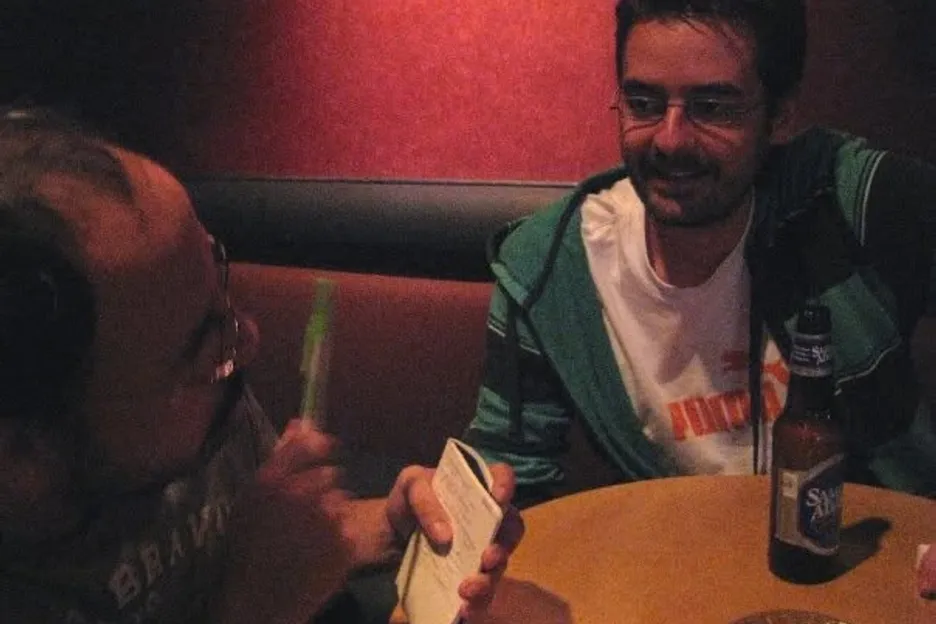
The rail and hallways were a source of endless content. Agents, both high end and aspiring D-listers, roamed the hallways. Online poker marketing interns hauling gym bags with hats and patches for final table players. Irate and entitled tourists called home to share bad beat stories. Loan sharks and their backpacks full of cash. Broke dicks begging for a staking. Debt collectors. Drug dealers. Estranged family members seeking a handout. Groupies. Sex workers. Scam artists. Con men. Overworked dealers huffing on Camels with a vacant thousand-yard stare.
Where did you draw the line when nearly everyone around you was behaving as though no lines existed?
The infidelities, hookups, and random pros with sex workers were a line I didn't cross. I bumped into one pro with two ladies of the night, which was odd because he had a beautiful wife. He tried to make excuses about what was going on. I told him I didn't care. My first book had just come out, so he stopped by the press box and bought 25 copies of 'Lost Vegas' and left a generous tip hoping I wouldn't write about his sexploits on Tao of Poker.
When did the WSOP begin to feel different to you?
There was a visible vibe shift after the UIGEA in 2007 which ushered in the era of dot-net branding because you couldn’t pimp dot-coms. And things got really weird and dark in the summer of 2011 after Black Friday. A lot of pros were planning a move to Mexico or Canada. At least I got to cover the WSOP during the last days of the glorious poker boom pre-UIGEA and pre-Black Friday.The expansion of the schedule and inclusion of online events diluted the true value of a bracelet. I left poker before it got really bad. I remember thinking 56 bracelets each summer was too many. They give out like 100 these days?
'A profound lack of leadership'
You eventually disappeared from poker almost completely. Why?
Black Friday was the tipping point. I paid my own way to the WSOP and international tournaments because Tao of Poker earned income through affiliates and ad revenue, especially from PokerStars. Once the government shut down my business and that money tap got turned off, it didn't make sense for me to continue.
At the same time, I'm a creative person first and foremost. I accepted a temporary job in 2005 and next thing I knew, it was seven years later. I felt my creative writing brain was not being properly utilized. Poker reporting has so many constraints, which was a worthy challenge to initially overcome. It was fun trying to come up with new ways to talk about poker and write final table hands or end-of-day recaps. After a while, I realized I was repeating myself. I felt creatively bankrupt, which coincided with Black Friday.
I also got into a gnarly car accident and totaled my girlfriend's Mazda during the start of the 2011 WSOP Main Event. I should've died. That's what the paramedics told me. I look at a picture of the twisted wreckage every year on the anniversary of the crash. I refer to it as my re-birthday. I had used up all my run good and good luck to survive that crash, so it was time to step away from poker and leave Las Vegas.
I moved to San Francisco, then Los Angeles. California was much better for my mental health and my creativity.When Black Friday happened, no one knew what the future would hold. Some optimists thought the ruling would be reversed very soon, and poker would return to its glory days pre-UIGEA. It's now 2026 and online poker is only legal in six states, yet sports betting and prediction markets are everywhere. Heck, marijuana is legal in way more places than online poker. That demonstrates the profound lack of leadership in the poker world.
The online sites and so-called industry leaders failed to develop relationships with the right politicians.I thought I'd take 2012 off, recharge my creative batteries, and return to poker in 2013. But one year turned into two and so on. I then made a promise to myself that I'd return to poker when California legalized online poker. That was 2012. It's 14 years later, and there's next to zero chance that happens. Almost every spring, a different outlet or startup or gaming group offers me a job to return to poker reporting. One pro even offered me $50K to reboot Tao of Poker. I always politely decline. I pivoted to sports betting in 2013, which was another one of my passions. I worked there for more than a decade before pivoting again.I have no regrets. I had an absolute blast during my time in poker and I don’t think anyone had more fun than me. I stepped away at the right time before everything got too gnarly and social media divided the industry politically and it got too hard to compete for eyeballs. To quote the Kurgan from Highlander, "It's better to burn out than to fade away!"
'I'm interested in contradiction'
The people in your fiction often feel as though they could have wandered out of a casino at four in the morning. How much did the gamblers, degenerates, dreamers, and survivors you met during the poker years shape the characters you write today?
People often imagine casinos as places of excess, but after living in Vegas for many years, I realized the gaming floor was a place of exposure. At 4am, the social performance is over. All masks are off. The successful executive, the degen gambler, the downtrodden cocktail server, the drunken tourist, or the poker pro shooting dice were all stripped down to whatever they're pursuing most desperately. Money is obvious, but there’s also something else driving them.
A sense of purpose, or forgiveness, or reinvention, or companionship, or proof that luck hasn't abandoned them?
I realized within a few weeks of moving to Vegas that people almost never gamble only for money. Rather, so many of us use gambling to fill that hole that we all have inside of us. Some of them are trying to recapture or reignite their soul which had been crushed by everyday life or slowly leaked out. My years in poker and my most recent time in the sports betting world changed the way I think about characters. My other novel, 'The Kicker,' is about a rookie kicker and single dad who is approached by criminals to fix football games. Fiction isn't interesting to me when people are neatly categorized as heroes or villains.
I'm interested in contradiction. Therein lies the drama. The person capable of extraordinary generosity can also be astonishingly self-destructive. The person who appears fearless at the tables is often terrified in everyday life. The people I met in Vegas carried those contradictions openly, and they gave me permission to write characters who resist easy judgment. They make presumed rational decisions according to their own flawed worldview, and that's what makes them compelling characters, which in turn fuels great fiction.
Without giving away too much, what connections do you see between your latest book and the world you encountered during the poker boom?
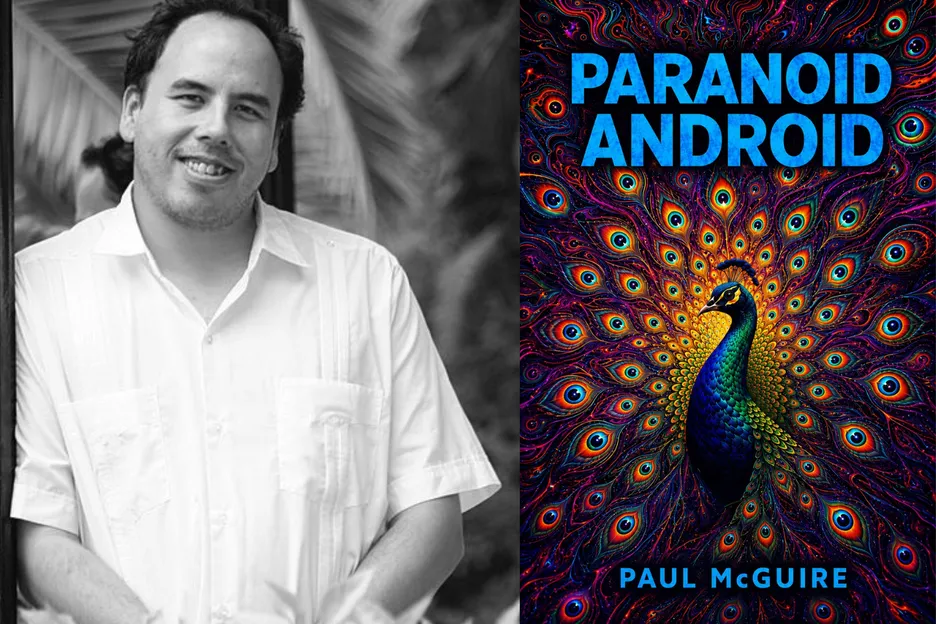
The protagonist from Paranoid Android, Jasper Zen, is a professional poker player and sports bettor. He earned a basketball scholarship to a prestigious NYC prep school but is also a math genius. He dropped out of MIT and moved to Vegas to play poker. In many ways, Jasper is an amalgam of several pros I met or befriended in poker or sports betting when I lived in Vegas. They were highly competitive people who had a knack for numbers and reading people. They knew how to exploit even the tiniest of edges. That all comes into play when Jasper investigates the mysterious deaths of his former classmates. He must make difficult decisions based on incomplete information.You build theories from fragments, search for patterns, and constantly ask yourself whether what you're seeing is real or simply what you want to believe. That's true at the poker table, but it's equally true in everyday life.
Getting out before the algorithm
ESPN is once again involved with the WSOP. Is there any realistic way to recreate the electricity of the mid-2000s, or were the conditions that produced that era too chaotic and specific ever to exist again?
There were so many unique characters from the old gambling world that stood out. They looked different, talked oddly, and dressed like characters who could've walked off the set of a Hollywood gambling movie. They were brash, cocky, a little crazy, and completely unhinged. All of that made for great TV.
Poker, especially the gambling world around the turn of the century, attracted self-made outlaws operating on the fringes of legality. With so much of the modern gambling world legalized, it's attracted more academic types who would’ve been scared away from the tables or step into a casino in the 1990s or early 2000s. That’s when you didn’t know if you could get robbed by borderline criminals or shady gamblers while walking out of the casino, or even in the bathroom.
These days, the average poker player looks like they work for a hedge fund or a tech company. The hoodies and sunglasses almost make everyone look the same.
Where's Sam Farha in the slick dinner jacket with an unlit ciggie dangling from his lips? Or Minneapolis Jim Meehan in a cowboy hat slamming Heinekens, that were filled with water and not beer. Before the tournament started, he tipped the wait staff to empty beer out of the green bottles and fill them with water so everyone at the table thought he was drunk.
Guys like Farha and Meehan were quirky, but that’s who they were. Nowadays, personalities are manufactured or performative to get clicks/attention or cut through the noise.
When people look back at the archive of Tao of Poker, what do you hope they understand about that period and about the person who was writing it?
The Tao of Poker was active between 2003 and 2011. That version of America feels like a dream. That small window was only a few years after 9/11 but before everyone had a smartphone and was addicted to social media or influenced by reality TV. Social media apps and algorithmic feeds weren't yet the dominant lens for daily life 20 years ago, but blogs were the most popular form of internet entertainment.There was still a sense of monoculture in the mid-00s, albeit the last vestiges of it. We all watched the Travel Channel on Wednesday nights to tune into the World Poker Tour. We all watched ESPN's coverage of the WSOP. We knew when and where to find that. People still had unmediated boredom, but everyone had their favorite poker forum and blogs bookmarked. You visited Tao of Poker from a desktop computer or laptop. These days, everyone doomscrolls viral content on social media apps instead of absorbing long-form written content. That difference alone explains a lot of the nostalgia for blogs because there was still a 'real world' default state 20 years ago.
By the mid-2010s, algorithmic feeds and streaming shattered shared experiences and destroyed monoculture. Blogs used to be the center of the internet experience, but it was a sincere form of self-expression that felt amateur and low stakes. Compare that to today when personal brands, influencer economics, and follower counts are essential. Tao of Poker occupied a structural niche that basically doesn't exist anymore.
Blogs were a load-bearing wall between internet publishing and algorithmic social media, and that in-between position gave us power in many distinct ways. All that traffic and shared experiences have vanished.The blogging format was anchored by long-form writing and reading. These days, social media vids are dominated by pithy captions or hot takes. A blog post might run 800-2000 words and you shared it with your friends.
Long-form writing is a fundamentally different cognitive mode than a tweet or short TikTok. That's why blog writing from that era often feels more developed, even when it was amateur. That's all gone now in 2026, especially in the poker media landscape.For the person writing the Tao of Poker, I was just a guy from NYC who crashed the party in Vegas during the poker boom and gave my sometimes snarky, sometimes scathing commentary on what I witnessed.
I'm grateful that I had a platform which people from all over the world frequented. We all shared a similar experience which so many of us are nostalgic for in today's fractured, algo-driven world where most viral content is pumped down our throats.
Even if I never stepped away from Tao of Poker, it would be a mere shadow of its former self today trying to compete for eyeballs in a short-attention-span world. That's why I prefer writing novels. It's not for everyone, but for those who love to read will bless me with their undivided attention. If you give me a chance to take you on a journey, then I will entertain you. That is one thing that hasn't changed since the gravy days of poker. Instead of a poker blog, it's novels.