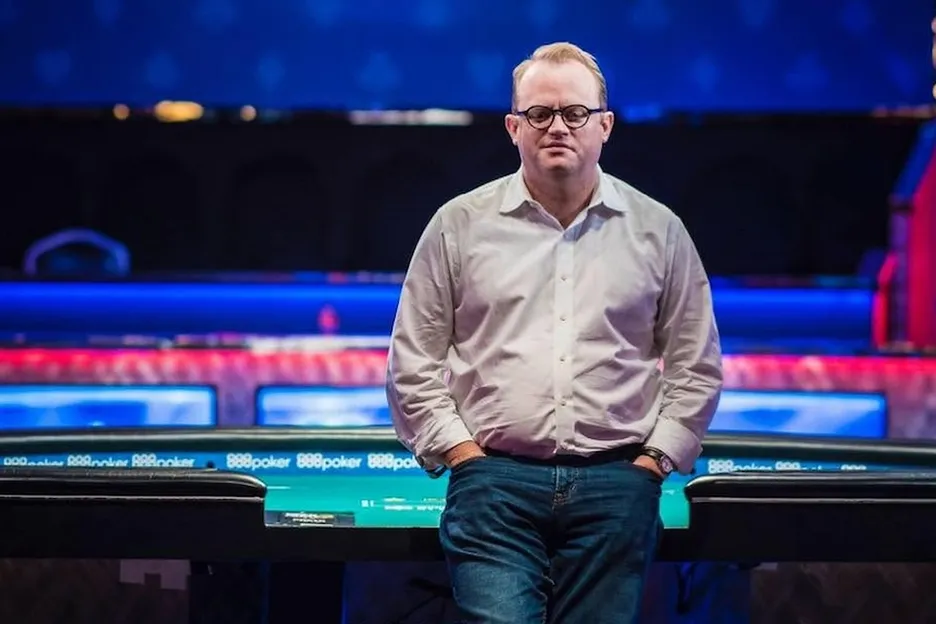


For Lance Bradley, the boom-era World Series of Poker was a playground, a newsroom, and occasionally a place to sleep
Bradley first saw the WSOP from the industry side when he ran an online poker room. When that gig ended, he made a decision to make his bones as an independent writer who almost never left the building where the World Series was happening.
Since then, Bradley has worked in almost every part of the poker industry. He worked at Bodog, Pocket Fives. Bluff, and the World Poker Tour. This year, he wrote about the WSOP for ESPN.
But there was a moment in the middle of the boom that Bradley wasn't working for any company. He was working for himself and the chance to prove he belonged at the World Series.
In this installment of Inside the Boom, Bradley looks back on a boomtime WSOP wallowing in cash and chaos while he was part of a press corps learning in real time how to cover a circus with no ringmaster.
When the WSOP was 'kinda drunk'
So, the Main Event chip leader, Lucas Jumalon, was barely alive when you first went to the WSOP. Is there anything you can think of he would struggle to understand from that time?
Buckle up.
The WSOP from, like, 2006 until 2010 was kinda drunk.
Absolute Poker once tried to enter a monkey into the Main Event.
Jennifer Leigh, an online poker legend who had posed for Playboy, was offered a Main Event freeroll by some random guy if she agreed to play the Main Event in lingerie.
The owner of a new player agency launched his company on Day 1 of the Ladies Event by having scantily clad 'models' parade around the Amazon Room. The bigger online poker rooms, like Full Tilt Poker, UltimateBet, Bodog, all had player lounges in some of the ballrooms outside the Amazon Room, spending tens of, if not hundreds of thousands of dollars a day on free food and drinks.
Tony G once threatened Card Player Media in a blog post over chip counts by reminding Card Player owners he was 'from the street.'
In 2009, the WSOP had to turn people away from Day 1D of the Main Event. It was sold out. That was done with people in line to register. It turned into a whole scene and poor Mike Sexton happened to walk into the tournament area and was immediately thrust into the role of being the player’s spokesperson with WSOP. He handled it with pure class and did a better job of calming people than anybody at the WSOP did.
In 2007, BLUFF had the livestream rights for final tables--something unheard of at the time. The final tables were streamed on a one-hour delay and were filmed in a curtained-off area. The players were sequestered from everybody else and would be escorted by a security guard on breaks to an empty ballroom. No contact was allowed with anybody who could have seen the stream. I think you were allowed one friend or family member inside the area, but they also had to be sequestered.
Phil Hellmuth won his 11th bracelet in 2007 at one of these final tables.
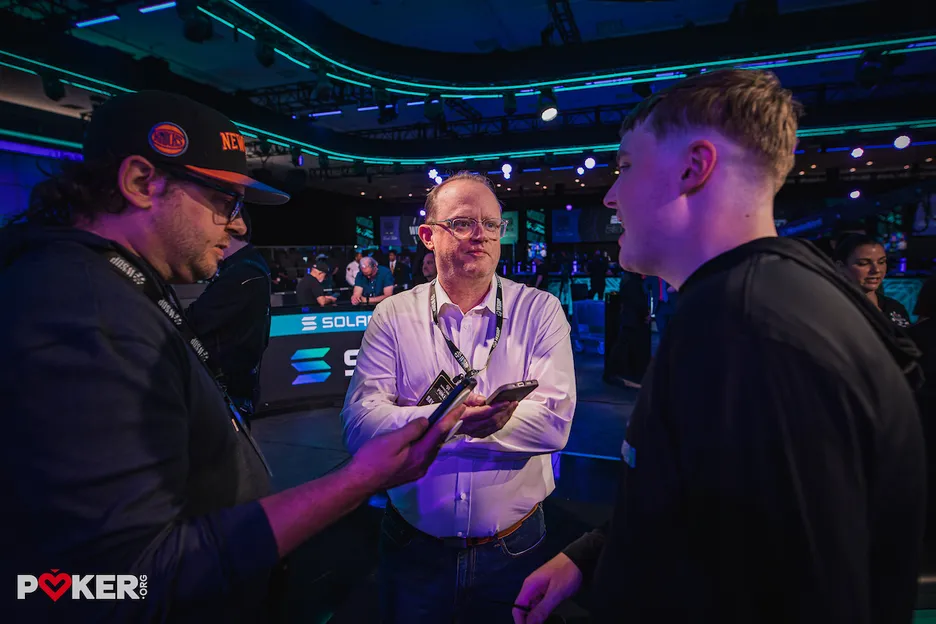
What do you remember about walking into the WSOP for the first time as a reporter?
I kind of cheated a little bit. I first went to the WSOP in 2005 while I was running Bodog Poker. We had sent a bunch of qualifiers and had some celebrities playing the Main Event, so I’d seen the grandiosity of it all before.
The first time I was working on the media side was 2007 when I was running my own blog. I was there nearly every day. Even though I’d seen it before, it was like a playground to me. There were stories everywhere, and I had the ability to interview and write about anybody I wanted. Most importantly, though, I got to spend the summer working alongside some insanely talented and cool people whose work I had been a fan of for years. I’m still friends with a lot of them.
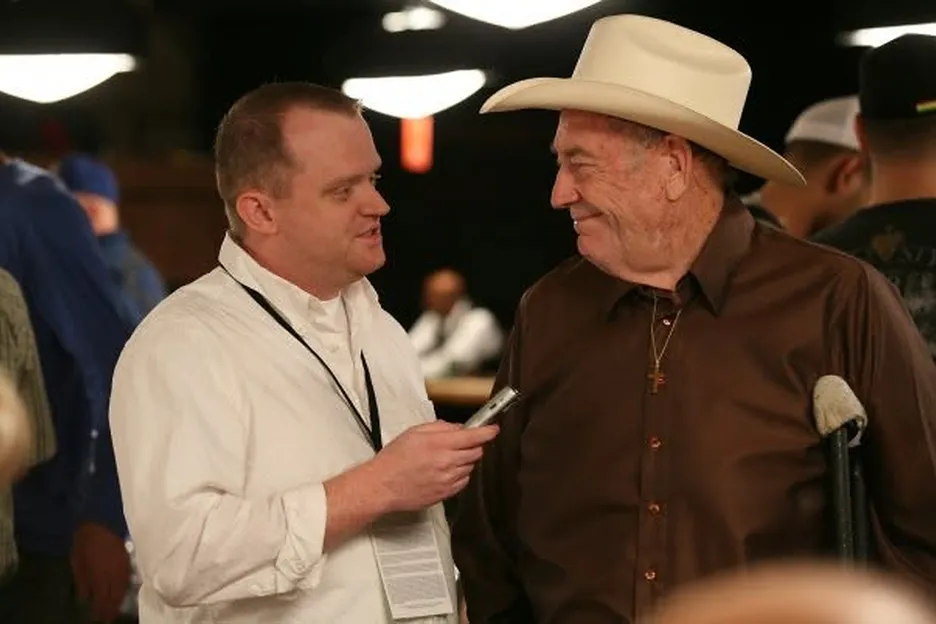









First in, last out
What did that first WSOP on your own teach you about the kind of commitment poker journalism demanded?
I look back at that first summer with incredibly fond memories. Because I was working for myself, I was able to go out and write as much or as little as I wanted, make as many mistakes as I wanted, and learn from them. The goal for that summer was to show that I could hang.
I made a promise to myself before I got there that I would be the first one there and the last one to leave every day. The guys who owned BLUFF Magazine had offered me a free room at the house they were renting, and I was so incredibly grateful for that.
For the first four or five days we were the first ones in the door each morning and the last ones to leave, but those guys weren’t expected to work open to close and soon started leaving around dinner every night. I was spending $40-$50 on a cab ride home at the end of the night and it was starting to add up.
When I came back after my three-day break, a guy I had met literally four weeks earlier told me I could crash with him in his room at the Rio. It made all the difference, and I basically just lived inside the Amazon Room. I really helped me accomplish my goal and also understand what it really meant to do the job when you’re exhausted: interview tired, write tired, network tired.
That summer set my own personal foundation for what I expected of myself when it came to covering a poker tournament - or in this case, 55 of them.
How difficult was it to balance journalism with the commercial relationships that made poker media possible?
It was challenging for sure, and part of that was due to the infancy of the industry. It was some real wild west times with players and partners and what was allowed and what was expected.
A lot of times we would have an advertiser come to us and tell us to write something specific about them or their product. I had a lot of hard conversations--okay, shouting matches--with the owners of BLUFF where I’d push back hard and say “let me talk to the partner and explain why they don’t want that article,” and the times they let me have the conversation, the person on the other end completely understood.
Oftentimes it was the owner or CEO who just wanted to see a puff piece about him or his company. I just explained that that stuff doesn’t resonate with readers. It didn’t then, and it certainly doesn’t now.
Instead, we’d find a way to showcase the company, but in a way that our readers and future or potential partners would read and say “this is the outlet we want to work with”.
The so-called 'poker media'
What did you want you WSOP coverage to provide that readers could not get from ESPN, the official tournament reports, or the other poker outlets camped inside the Rio?
It took some time to figure out to be honest. Ultimately, we knew that chip counts and hand updates were the scoreboard. So I always wanted our coverage to do two things: the first was to find a way to put the reader into the Amazon Room. What was the atmosphere? What was going on beyond the hands? The second was to connect readers to the humanity of the event. Who are these people? Where did they come from? Why are they here? How did they come to start playing poker? The game is the thing that connects every single player with every single reader. Borrowing from political strategist James Carville, It’s the poker, stupid.
How would you describe the WSOP press corps from that era?
I don’t think it was competitive in a cutthroat kind of way where we’d be angry if another writer or outlet got a story or a scoop that we missed. I think it was more like a community of like-minded people who were all trying to do their own thing within the same arena.
I think when it came to having to cover the same event, we all had our own perspectives that we were bringing to the coverage, but also probably subconsciously, had the thought of “how do I make sure my piece is unique” and rarely did you see the same article come from two outlets.
When I saw somebody get a great story, it motivated me to be better. I really wanted to be in the conversation for being the best at what I did and that came from having the absolute highest regard for other people covering the WSOP. There were times that first year where I’d read something in the morning and just be like “Oh my god. I’m so far off from this. I have to get better” but I’d always find that writer that day and let them know how much I liked their piece. So it was competitive, but certainly in a way where we all respected each other.
The boom-era WSOP produced an enormous amount of daily content, but much of the industry rewarded hand reports, chip counts, and fast updates. How hard was it to make room for the deeper human stories that explained why readers should care about the people behind the chip stacks?
I think the WSOP probably unintentionally did us all a favor by telling us that only the official media outlet (CardPlayer then PokerNews) could post updated chip counts. It forced us to figure out ways to cover the WSOP without relying on chip counts and hand updates.
So, it forced us to be creative in our content plans.
For me it came down to recognizing that the game is a beautiful game, and it is played by people. Imperfect people. Who is this guy running deep in the Main? How come the guy that won the $10K Stud Championship has never cashed a Stud tournament before? Who are those people on the rail cheering so loudly on Day 1 of a six day event?
When we started writing those pieces, we noticed it was resonating with the audience. There’s only one winner of an event, but a couple thousand people played the event and each of them probably has some story that makes them interesting or relatable to people following from home.
Is there a story you didn’t report back then that you wish you would have told?
The 2011 WSOP was held under the cloud of Black Friday still hanging around. Covering that Series was weird. There were bracelet events going on amidst a lot of rumors and accusations and facts.
It was so hard to figure out what was real and what wasn’t. Players who owned or even represented Full Tilt, PokerStars, and Absolute Poker/UltimateBet were getting berated by other players.
If I had a time machine, I think I might go back and dedicate some time to talking to those people and convering the anger and sentiment in the room. We covered it at the time, but I’d like to really focus on the emotions in the room and how it impacted the WSOP in general.
The poker boomers poker still needs
Looking back what people were essential to the character of the boom-era WSOP but have since largely disappeared?
How long of a list can I give you? Part of my role with BLUFF was also being the Editor in Chief for WSOP.com which was a fantastic gig. For the first three years, I guess, I sat directly next to Nolan Dalla every day and just soaked up the stories he would tell. It also helped having him introduce me to players or staff I didn’t know yet. We had some dinners together where we’d get to just download a little bit. I always appreciated that.
The head of security for the WSOP was Tony Spencer, and he was the best. Once he got to know your face and your name, he was your buddy. He had a set of rules to enforcem and as long as you were respectful of those - and of him - he would help you if he could.
During the 'blog era; there were a number of insanely talented writers that covered the game in a way that was so genuinely unique to them. Pauly McGuire, Martin Harris, Dan Michalski, Kristin Bihr, Dave Behr to name a few.
The PokerListings crew in the early days was Matt Showell, Owen Laukkanen, Marty Derbyshire, and Arthur Crowson, and I really looked up to them and loved the way they wrote.
The guys from Wicked Chops: Steve Preiss, Colin and Brian Cooley, and Charles Simmons always made me feel like I belonged. Charles was the guy who let me crash with him. I’m not sure that I would have had the career I’ve had if he hadn’t been so kind. While the others have all moved on, Steve is still heavily involved in poker, and I talk at least once a week now.
When you compare the WSOP media operation during the boom with the way the Series is covered and presented now, what do you think is better and worse?
The WSOP media operation during the boom was pretty wild wild west. With online poker still generating a ton of money, there were a lot of us roaming the Rio trying to figure out how to cover what was happening.
Most of the content was live updates, chips counts, and articles. Video was too expensive for most outlets to do. Social media was in its infancy, and nobody was doing social-first or social-native content. Podcasts were new as well.
I remember Dan Michalski and Pauly McGuire sitting down to record an audio report during each day and listening to that, thinking that they were doing something really cool but who would listen to that kinda stuff?
It’s almost the opposite now. There is a lot of social-first content being made, and a lot of it is, by design, that disposable kind of content that the audience consumes quickly and then moves on to whatever the algorithm feeds them next.
There is still a lot of good writing being done, but there are fewer outlets now than there was then, mostly because the online poker advertiser money is a lot lower than it was during the boom.
From a quality of content perspective, I think poker is in a relatively good space. There are a lot of talented and passionate people doing their thing. I hope that the ad dollars can continue to support that type of work. The WSOP is following the model set by the NFL, MLB, NBA, and NHL and is becoming a media brand on their own - as they should.
They’ve made live updates less important while still providing chip counts via their app and have invested in video and live streaming. At the start of the boom, they were relying on other outlets to do that, and, in fact, were paid by other outlets for the exclusive rights to provide that kind of coverage.
What is one WSOP story you reported that captures how what the WSOP was like in our early years?
In 2009, BLUFF got a message from a woman looking for somebody to help her husband. He had been diagnosed with cancer, and one of the things he really wanted to do was play the Main Event. About four weeks later, Kent Senter was in the Main Event. PokerStars and BLUFF paired up to buy him in and take care of his hotel.
I didn’t write the story myself. I assigned it to Diana Cox and she talked to Kent, his wife Patty, their kids (who were also in Vegas to support their dad), and she did a fantastic job with the piece. I know PokerStars wrote about him, ESPN talked about him in their broadcast coverage, and then after the WSOP was over there was an online tournament to help the family with bills. Watching the poker community rally around Kent and his family was amazing.