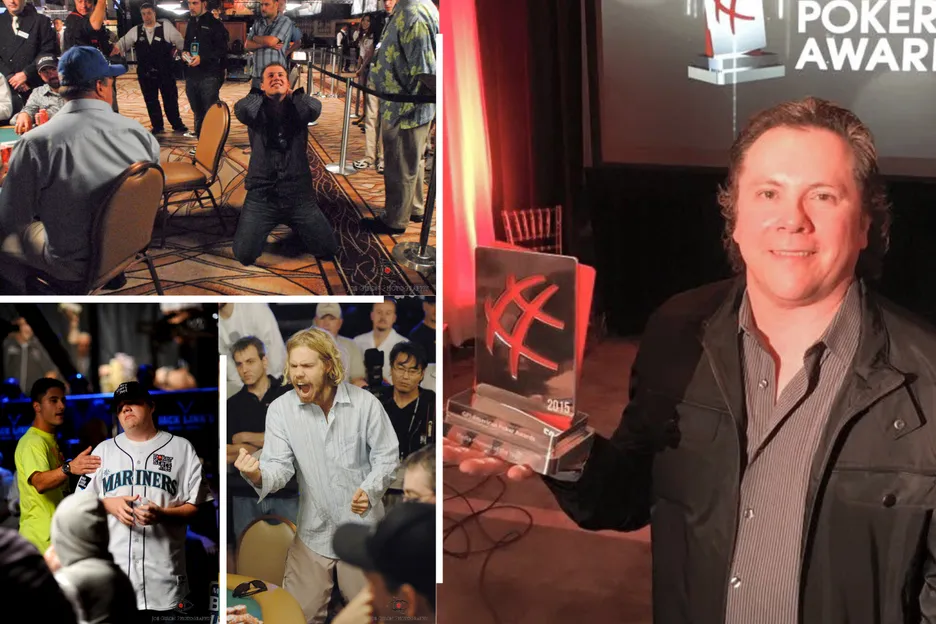


Over the past fifty years, Joe Giron has witnessed some of the best and worst things a person will ever see. He saw airline disasters and earthquakes. He stood in the same room with Nirvana, Steve Ray Vaughan, and Eminem. He traveled with Pantera. He stayed up all night to see poker legend Chip Reese win the trophy that now bears Reese's name.
If simply being in the room was all he he'd accomplished, Giron's life will still be remarkable. But Giron did more. From the time he was 18 years old until now, Giron has recorded all of those moments for history. His work in journalism and rock and roll photography were legendary on their own. Twenty years ago, as the poker boom hit its peak, Giron turned his lens on the World Series of Poker. Today his poker photography archive is the definitive library of the poker boom at its apex.
That's why we reached out to Giron this summer. His photographs are more than an extraordinary visual record of poker history. They also speak to a subject PokerOrg is exploring in depth in the lead-up to the 2026 WSOP Final Table: what could the poker boom teach us about making poker bigger, more compelling, and more memorable in the future?
In our series Inside the Boom, PokerOrg talking to the people who lived through the poker boom, documented its defining moments, and helped shape the way the game was seen. The conversation below is condensed from an interview with Giron in July 2026, in which he discusses photographing the WSOP at the height of the boom, the players and moments that defined that era, and how the Series has changed through the lens of someone who helped preserve its history.
From rock and roll to the Rio
You arrived in poker without knowing a ton about the game, then walked into the WSOP at what may have been the absolute peak of the boom. What do you remember seeing and feeling when you first entered that room?
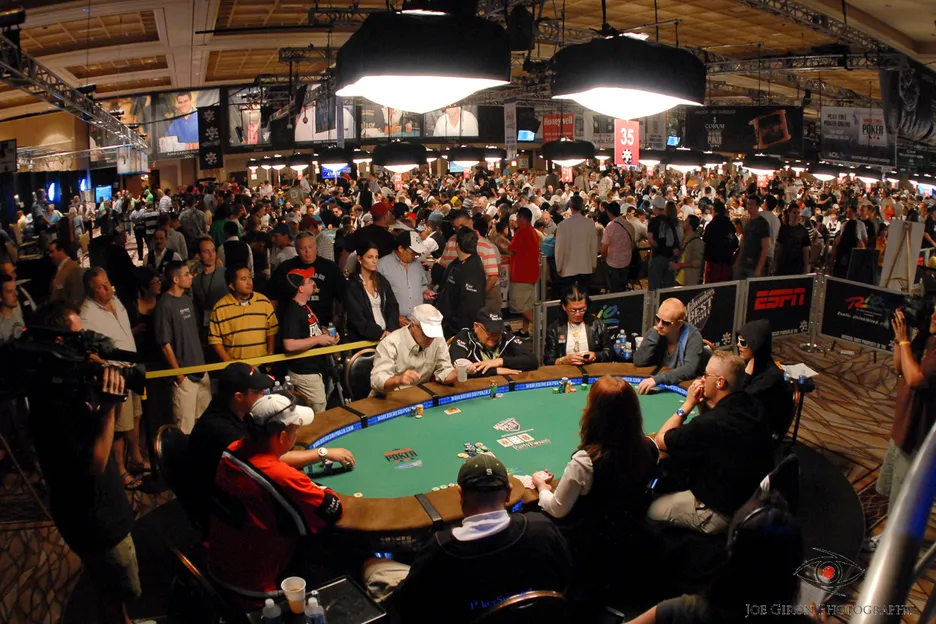
I walked into the Amazon Ballroom at the Rio for the WSOP in June of 2006. I had been in the poker industry for a total of six months at that time covering WPT events. The scale of the 'organized chaos' that was the WSOP was what struck me the most covering that event. The room was huge and every inch of the area was filled with poker tables, staff and players.
It felt quite chaotic to me, but things ran very smoothly for the most part. The 'mothership,' as we have come to call the main stage, was not that large in 2006, It was stuck in the northeast corner of the ballroom, but it was still impressive. Lighting and rigging and manned-rolling camera dollies occupied a large part of the area, as well as the poker table containing cameras that revealed the players’ cards to the TV audience.
Before poker, you had photographed major news events and spent years around rock bands. Did poker seem boring by comparison? How did you find the action you did?
I was a staff photographer for major newspapers in Dallas and Seattle before going the freelance route into the music industry. I photographed music artists for record company commercial shoots and editorial magazine shoots for many of the major rock publications.
I didn’t find poker boring at the beginning as I was attempting to capture moments of emotion that told the story of the tournaments photojournalistically. What helped shooting the WPT events is that I would go to an event for the final three days. That usually meant I was there for the money bubble and players getting paid for their efforts. That is where you capture emotion and nice moments you wouldn’t normally capture on day ones.
Once I learned the game better, my training as a news photographer allowed me to anticipate where the action might happen and where the emotion might come from a player and capture that elation or dejection. After being in the industry for 20 years, poker can seem to be boring at the early stages of the tournament. But my philosophy has always been to shoot impactful images that have context and tell the story of the tournament at hand. After all, it’s called 'live reporting.'









History in one frame
Writers could reconstruct events afterward, while ESPN could edit hundreds of hours into a television story. You had to recognize and capture a moment as it happened. How do you make one frame tell the whole story?
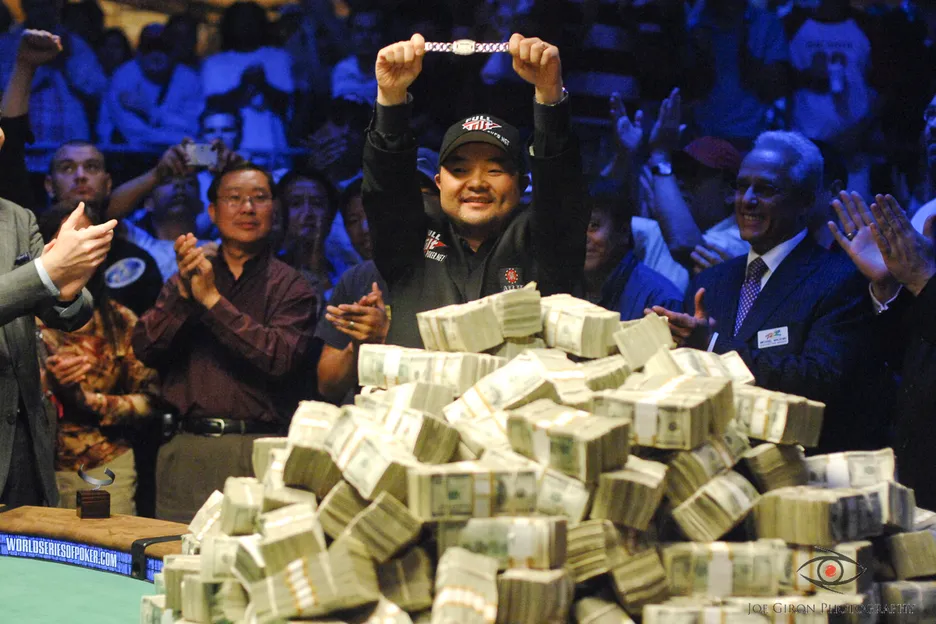
As far as photojournalism, I am a big believer that either you have the talent or you don’t. There is no way to mask not having the talent to tell the story and to create impactful imagery. I was fortunate to know that I had that talent by age 18 and focused on getting as much practical experience in the newspaper industry as well as going to Ohio University which had a high-powered photojournalism program.
Having that experience allows you to anticipate being in the right place at the right time. It’s all about instinctually knowing where to place yourself to capture the moment that tells the story. Context and placing the right visual elements into a photograph help to tell a story in a single frame. That’s usually my biggest complaint about most poker photographers in the industry these days. They lack context in their photographs, and it’s hard to tell that people are playing poker. Pretty pictures of people’s heads are only pretty pictures of people’s heads. Without context, they don’t tell the story of the event or tournament.
Did you notice players becoming more conscious of cameras?
As far as cameras being around poker during the poker boom, there weren’t that many competent photographers during that timeframe, so I don’t think players were that used to cameras being around them. My approach is to attempt to not impact the action at the table in any way and provide 'fly on the wall' coverage of players.
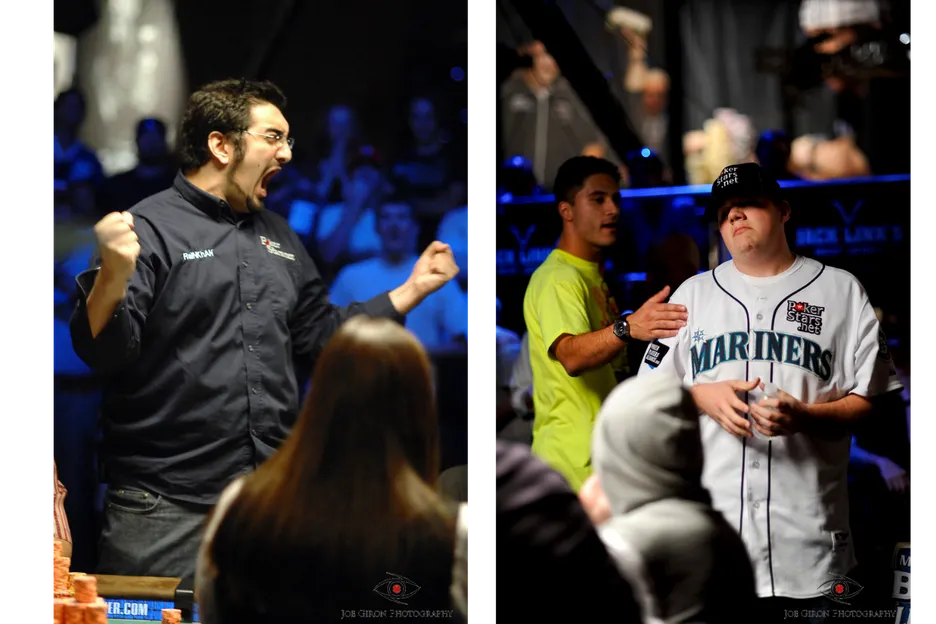
I would prefer that players not make a huge deal when I approach a table to take some pictures. I want honest, organic photographs of the players. I don’t want them mugging for the camera or flashing me a thumbs up. I hope to not impact the flow or integrity of the game.With the introduction of the iPhone and iPads, some players these days are oblivious to the cameras. They are usually looking at their devices. That has brought in a whole different set of challenges to making good photographs of these players while their noses buried in their content.
Which players from that period were especially compelling photographic subjects—not necessarily because they were famous, but because their faces, habits, emotions, or physical presence consistently revealed something?
Some of my favorite players from my early days in poker included Doyle Brunson. He was at the first televised final table I shot in December of 2005. There was so much character in his face, and always wearing the cowboy hat. Scotty Nguyen was a showman, gregarious, and you could tell he was having fun playing the game. Michael 'The Grinder' Mizrachi was young, intimidating, and not afraid to take chances. Burt Boutin was very energetic and volatile at the table,
A good poker photographer must remain close enough to see intimate moments while becoming almost invisible to the people experiencing them. How did you earn that access and trust with players during those years?
My approach has always been to be as professional as possible and to not be intrusive while taking photographs at events. As players see you and your work as time goes by, they come to accept you and trust you to be part of their environment. As any good journalist knows, you aren’t part of the story and don’t want to become part of the story. While shooting I’ve always tried to put myself at arm’s length from interacting with players during play. It goes back to be a staff photographer at newspapers. The best photographs are going to come when players are just being themselves and not trying to pose for the camera.
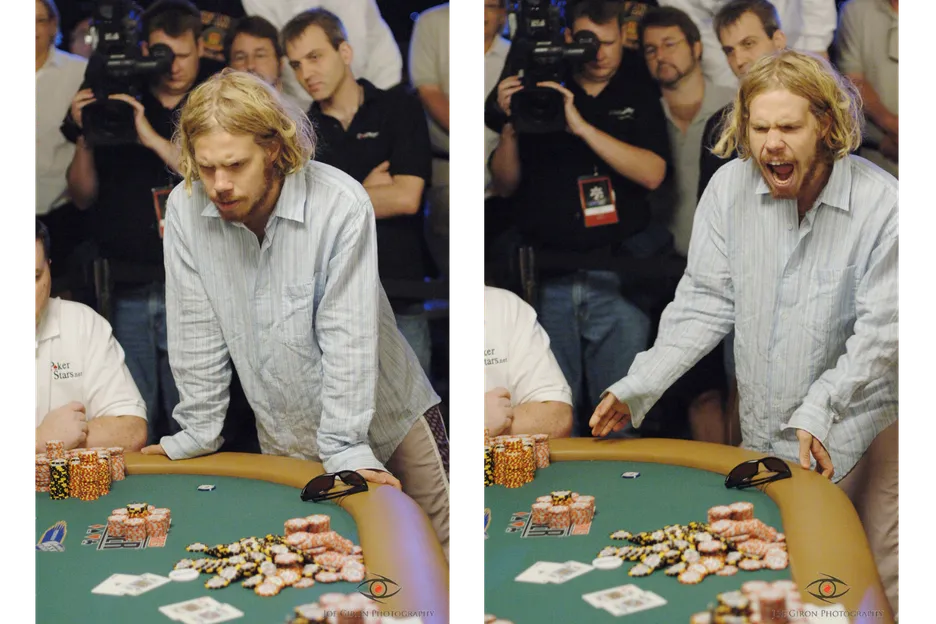
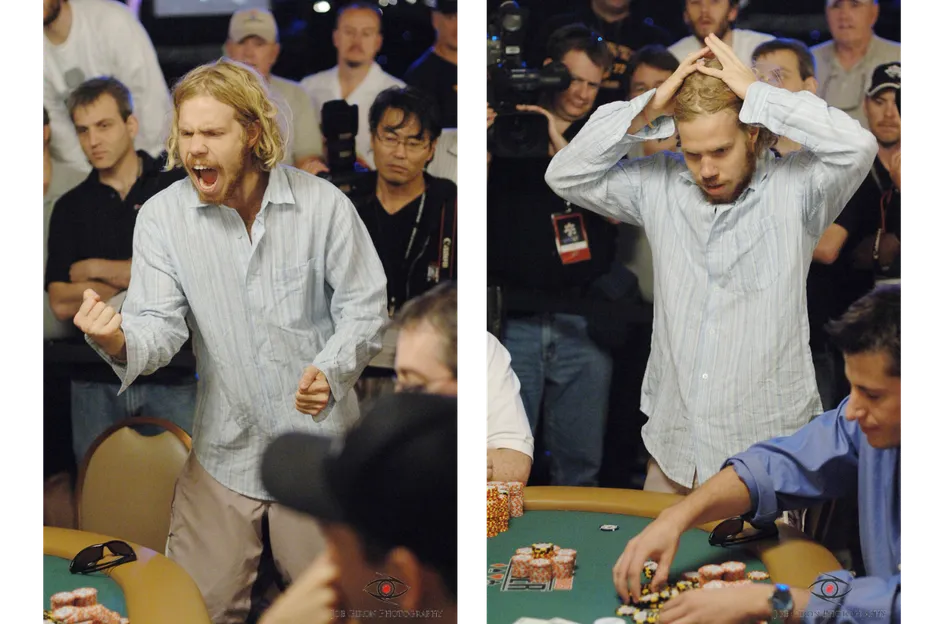
Did you have any trouble photographing someone at the worst moment of their tournament or life?
I have never had a problem photographing people or poker players at the worst moment of their lives. It’s a part of the job of a photojournalist. You are there to capture those moments and tell the story whether good or bad. Most of those 'worst' moments in poker are when players are being eliminated from a tournament or take a bad beat and lose most of their chips.
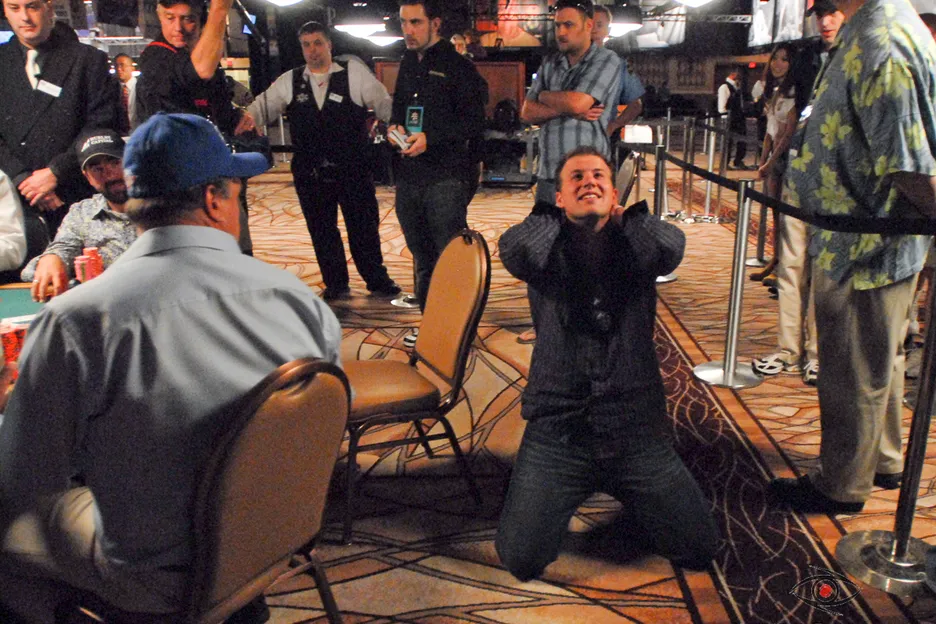
They get emotional, but I believe those moments show that players care and that poker isn’t just a game of robots without any emotion. There hasn’t been one of those photographs that I have chosen not to publish.
Ironically one photograph I chose not to publish was a winning moment from a WPT event at Seminole Hard Rock. This was during Covid in 2021 and we could only publish pictures of players with face coverings. When this player won, he was emotional and his face covering slide off his face. It was a great, emotional moment, but because of the restrictions in place, we couldn’t publish it at the time.
Boom crews
Between 2006 and 2010, online poker sites, blogs, magazines, television crews, and independent media were all competing to document the same event. What was the relationship among the photographers?
Between 2006-2010, there were only a handful of photographers shooting poker, mostly all for one company. I believe the relationship we all shared was collegial, territorial, chaotic. We were all friendly with each other and worked as a team. We were territorial because there were only so many working opportunities at that time compared to now. It was chaotic, because some of the photographers were not very good and you wondered if they actually captured the photographs needed for the assignment or were they just there being fan boys and girls to be a part of the poker scene.
Who were the people outside the spotlight—the dealers, floor staff, media workers, friends, family members, satellite qualifiers, and assorted hangers-on—whose faces belong in the true history of the poker boom?
Some of the people outside the spotlight during the poker boom who made an impression on me include Matt Marantz of 441 Productions, Nolan Dalla, Steve Preiss from Wicked Chops, Dr. Pauly McGuire from Tao of Poker, the PokerStars Blog Team--you, Howard Swains and Stephen Bartley--Rich Korbin from PokerStars and Oliver Tse, a real character who was a sort of poker agent roaming the halls of the WSOP with a rolling briefcase and making sponsor ship deals for players to be patched at the TV table. I believe he might have had a day job, but would scurry around the hallways ready to represent players for a cut of their patch-wearing proceeds.
Your archive now functions as part of poker’s historical record. What do you hope people fifty years from now will understand about the poker boom and you when they look through your photographs?
I don’t believe photographers could have captured the poker boom like we did without the advent of digital photography. As the boom was happening, digital cameras were just starting to get good and capable of capturing images under all sorts of lighting conditions. From a technical standpoint, if we had still been shooting film, there would have been many obstacles to obtaining good photos because color photography would have required the use of filters for correct color balance and color film was not that fast from an ISO perspective to shoot indoors under available light conditions.
We could have captured it well with black and white film, but color emphasizes the splashy, realistic side of the game in its true colors. Plus, processing the film would have required a bunch of time in the darkroom or sending the film out for processing. Digital photography made it possible for us to have instantaneous images to edit and run through postproduction and then upload in a timely manner to editorial websites or distribution channels. I hope the photography of that era can show future generations how the game of poker was growing in popularity as were the tournament venues and TV production sets used to televise the game to the mass public.
Rock and roll all night
Was there any photo you loved that was the hardest to capture?
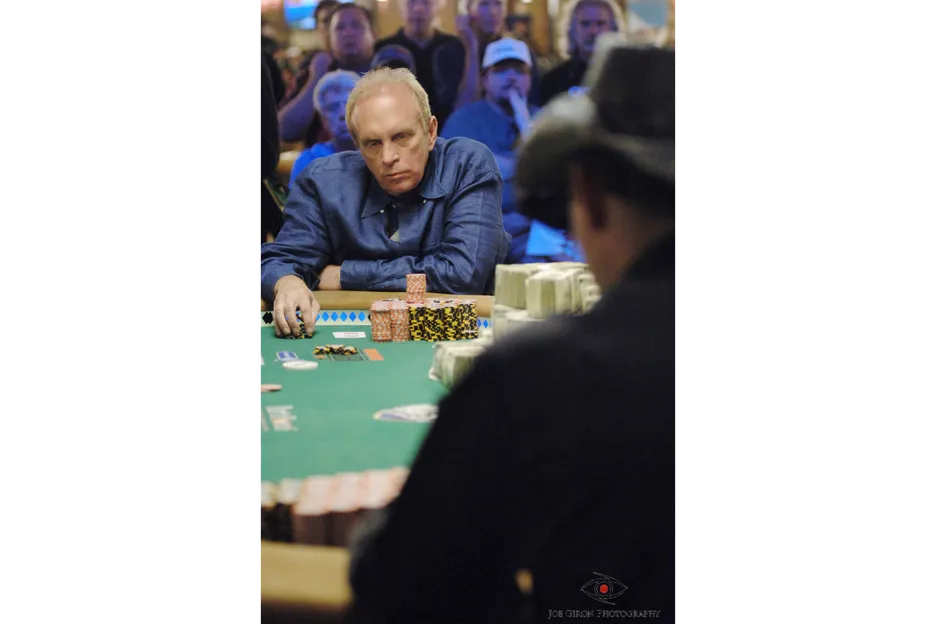
In 2006, Chip Reese battled through one of the toughest tournament fields ever to win the first-ever $50,000 H.O.R.S.E. Championship at the World Series. He took home over $1.7 million after dueling with Andy Bloch for an ever-lasting seven hours.
You told me a couple weeks ago that you aren’t going to retire in the traditional sense. Why is that?
When I saw you recently, we discussed getting older and an end game for work and retirement. Obviously, I have been very fortunate to do what I always wanted to do: be a professional photographer.
It’s the old cliché: 'I don’t feel like I have worked a single day of my life. I did say that I wouldn’t 'retire' in a traditional sense, meaning that as long as I am physically capable and as long as clients still have the confidence in me to produce top-level, world-class photography for their needs, I will continue to show up at events they want to hire me for.
Hell, it could all be gone next week, but I can safely say, I achieved all I ever wanted to as a professional photojournalist, music industry photographer, and more.
Poker has been a great, niche industry for me. It was an industry that desperately needed good visuals to tell the story of the sport. I am glad I was able to have a part in setting a high-bar and industry-standards for future generations of poker photojournalists to attempt to achieve.
All photos courtesy Joe Giron