


I'm coming to you live here from Texas Card House where we are running the WSOP Circuit event for the second time ever in Texas.
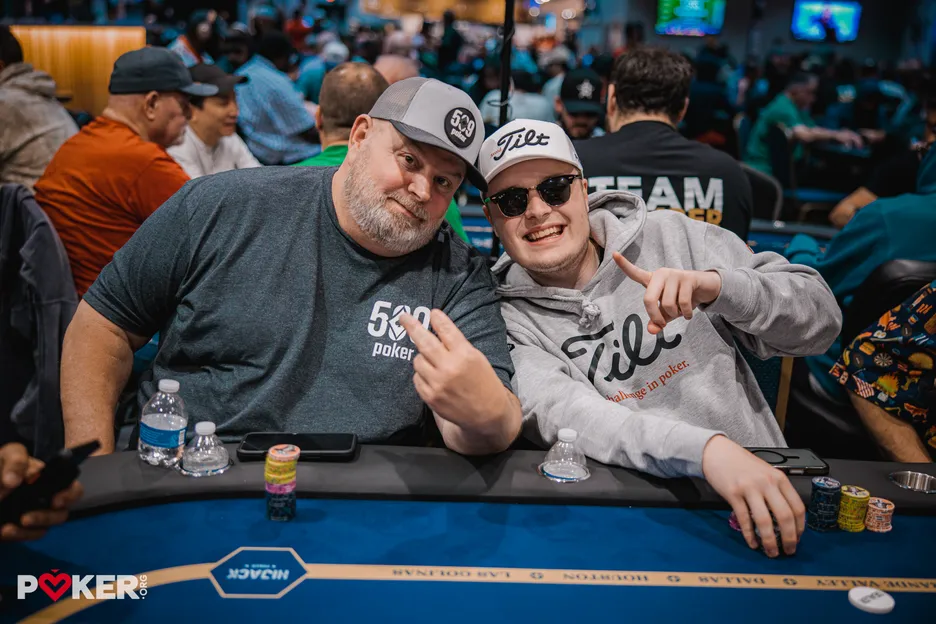
Today at TCH, in walked the current WSOP Main Event champion, Lucas Jumalon.
I'm in the industry, but I'm also a poker fan, so I went up to introduce myself to Lucas and congratulate him. But I'd forgotten that we had history.
My first encounter with Jumalon
At the last WSOP Circuit event, there was a situation where I was called over as the floor, and the table was very upset because there was a player who was, in their opinion, stalling because his table was next to break. He was trying to avoid the big blind. It turned out that it was, in fact, Lucas.
At the time, we had a conversation about why I don't believe that you should do that. I said something along the lines of, ‘I think it makes the game miserable for recreational players, and it's very important to me that recreational players have a great time when they play poker.’
I explained to Lucas that he was trying to give himself a small edge in equity, but doing so at the expense of all the other players at the table.
When I introduced myself, he reminded me that we'd had that conversation.
I ran this story by him to make sure it was okay to tell everybody. I don't think that he is a bad person or an angler or any of those things. I think he is a very genuine kid. He's going to be a great ambassador for the game.
Lucas was very polite, courteous, and kind when he talked to me about all the things that we discussed. And he even admitted that he doesn't stall anymore because of the conversation that we had.





Shot clocks: Yes or no?
That said, it brought up a very good point about shot clocks.
If we'd had them in play, the situation that we were talking about with Lucas would have been irrelevant. And it's not just that exact situation. It's stalling for pay jumps, to avoid the big blind, for table breaks – stalling for all the reasons that poker players feel like they have an edge.
If you have a shot clock and you decide that you want to use all of your time banks in order to avoid a big blind or to try and get a pay jump, that's fine because it's within the structured rules.
That's different from players taking a huge amount of time to stall for an edge – sometimes for more than three minutes
I think that what we lose in ruining the experience for recreational players is far worse than what you gain in equity by doing so. It's why I discourage that type of behavior.

My general stance on things like this is: if everybody did it, would it make the game miserable for everyone? If the answer to that is yes, I discourage that behavior.
Recreational players are the heart and soul of poker and a very vital part of the poker ecosystem. The way we encourage them to keep playing is to make sure they're having a good time every time they play.
I firmly believe shot clocks make poker better because it forces these things to happen more naturally.
Recreational players don't hate clocks as much as some people think they do, and they actually learn to use them very quickly. Overall, it makes for a better poker experience.
Justin Hammer is the Live Events Director for PokerAtlas, an online tournament director for the Texas-based poker app Hijack, and a tournament director at Thunder Valley Casino Resort. He also works as a consultant and is a minority owner of Desert Bluffs Casino in Kennewick, Washington.
For more info visit PokerAtlas.com, HijackPoker.com, and bluffs.poker. Follow Justin on X.


