


This article concludes our series on mental health in the poker world. Previous articles include ‘Shining a light on poker’s mental health crisis,’ an exclusive interview with Stephen Chidwick, ‘Crashing, coping, and surviving poker’s mental grind’, and ‘Dark side of the grind: Suicide, hope & a path to healing in poker.’
Poker can consume everything in your life, your time, your energy, and even your identity. Over time, many players come to realize that shiny trophies or massive bankrolls don’t define true fulfillment in the game. But if you take the time to dig deeper, you’ll find it lives in the quiet joy of the journey itself, hand by hand, day by day, year after year.
True success is found in a life of balance, personal connections, and a grounded sense of who you are beyond the felt.
Ask yourself: What do I really love about the game of poker?
The answer might surprise you; it may also hold the key to your longevity, joy, and well-being in the game.
As PokerOrg’s mental health series comes to a close, we've asked some of poker's major players to share the practices that keep them mentally strong, and emotionally balanced, at the tables and beyond.
We spoke with some of the most successful players in the game, including Andrew Lichtenberger, Maria Ho, Matt Berkey, Josh Arieh, Brad Ruben, David Peters, Jamie Gold, and more, for their unique perspectives on staying mentally healthy and happy — in poker and in life.

Elliot Roe: Poker players should train their minds
“Focus on the long term nature of the game,” says celebrated mindset coach Elliot Roe. “As a professional poker player, you should be looking at the game as if you're the casino, focusing on your monthly and quarterly results and not the outcome of individual hands and individual sessions.
“I think what creates a lot of the stress on individuals is the struggling with poker’s day-to-day variance. With that in mind, it's of vital importance to look after your mind and body; so exercise, good sleep, meditation, and a good diet are all very crucial to overall mental health.
“You need to treat the game as if you were a professional athlete; it's not something where you can allow your body to just decay. It’s important to take rest days. You can't be just playing poker 24/7.
“Ideally, have a hobby you love in your life that’s variance-free. I would suggest a fitness regimen, martial arts, or rock climbing. You could even learn cookery or a new language. Choose something where when you put in the effort, you see the results of your actions. Because if you can have variance-free successes, it can help you with your self-esteem through the downswings of the game.”






Own it to change it: Lichtenberger’s mental game philosophy
“I would suggest that for a lot of the mental health issues we see, poker might not always be the main catalyst,” says Andrew Lichtenberger, a professional player with over $23 million in career tournament winnings. “Yes, a downswing can affect your mental state, but usually it's something else in one's life that's going south.
“I've dealt with my fair share of challenges over the years, from personal relationships to financial blowups, downswings, and all the rest of it. I think the thing that I've leaned on during the most trying times is to focus on the fact that there is a lesson embedded within all of it. And if you choose to see it that way, then it will work that way for you.
“That perspective can be challenging because sometimes, when you're really in the thick of it, you don't want to look at things in that way. Sometimes I think there's a desire to be the victim a little bit. Not to say there's anything really wrong with that inherently, but I don't know how helpful that is in mitigating challenging situations and getting out of them.
“Holding yourself accountable and allowing that accountability to be a catalyst for change — because if you really own it, then you can change it — is what has worked for me in the past.”
Matt Berkey: Routine and resilience
“Anyone who's grinded high stakes knows that the variance can crush you if you're not armored up,” says pro player, coach and PokerOrg Player Advisory Board member Matt Berkey.
“I've been through the wringer: losing seven-figure pots, going broke a couple times early in my career, and dealing with the emotional rollercoaster of nosebleed games where one session can swing your net worth more than you're comfortable with.
“But I've built habits over the years to stay grounded, balanced, and mentally sharp. It's not about being invincible; it's about preparation, routine, and perspective.
“My daily routine is non-negotiable — it's what keeps me even-keeled in the chaos. I block out time for the gym every day, hit the sauna for recovery, and walk my dogs to clear my head.
“That physical discipline spills over into everything; it builds resilience so when a bad beat hits, I'm not spiraling. Poker might be volatile, but my day isn't.
“Variance is brutal — poker’s insanely volatile, emotionally draining, and mentally taxing — but I've learned to compartmentalize. Be numb to the highs and lows during play, process it later. It's kept me thriving in this arena for decades. To anyone struggling, start with routine and discipline; it's ultimately the best path to being resilient.”

Five minutes of sunlight: Maria Ho’s secret to mental clarity
“Staying mentally healthy as a professional poker player can be challenging and requires active management and measures to maintain a good mental state,” says consummate pro and Women in Poker Hall of Famer, Maria Ho.
“I find that what helps me most is a consistent meditation practice, even if it's just 5 minutes in sunlight before play, to ground me for the day. I also practice gratitude, and finding things to be thankful for, or reframing my perspective after a tough bust out through positive affirmations of what went well, or what I did well, instead of immediately focusing on the negative.
“Also having a strong support system and life outside of poker is important as well. Sometimes, poker can feel like the be-all, end-all, and it's paramount to surround yourself with people outside of the game to remind you that there is more to life than poker.”
Josh Arieh on self-awareness and staying thankful
“I go in waves just like everybody else,” says 7-time WSOP bracelet winner Josh Arieh. “For me, it's just making a point to consciously remind myself how thankful I am for the situation I'm in, for the things that I have, for the people around me.
“I've done a lot of work with [mindset coach] Elliot Roe. He’s brilliant. He’s shared a system where, if I'm in a certain frame of mind, if I'm feeling down, I know what to do. It's just a matter of caring about yourself enough to do it. I'm also not going to sit there and listen to somebody talk negatively about anything, and not just poker.
“I know what to do to get in the right frame of mind, it's just a matter of doing it. Mental health — in both poker and life — has always been huge for me. It's always been the major factor in my life.”
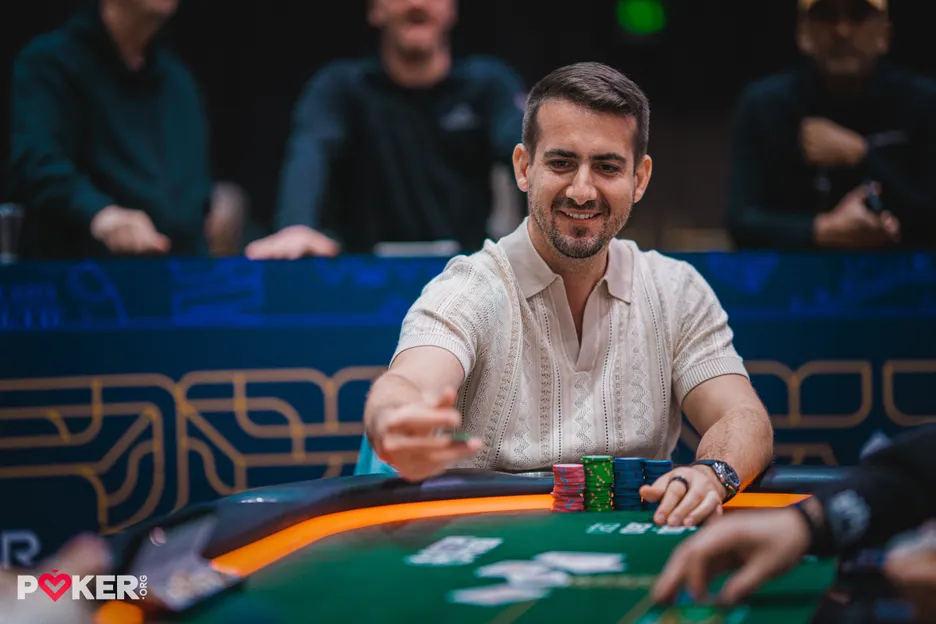
How Brad Ruben resets through silence
“What has really worked for me in terms of healing and getting back to my best self is going on a 10-day silent retreat called Vipassana,” says Brad Ruben, who has won five WSOP bracelets in five years. “I was able to learn a lot about how my mind works and how there's not really a manual on navigating the monkey brain.
“On this retreat, I learned how to just sit with my mind, quiet it and have more equanimity. It’s a sublime Buddhist state of mind.
“In poker, as in life, things happen all the time that we don't want to happen, and things don't happen that we would like to happen.
This occurs within every poker session. So, it's paramount to have a mindful state where we're just observing what occurs and aren't attached to the outcomes.
“I'm still new to this state, it takes a lot of practice. I would highly recommend everyone try a Vipassana retreat.”
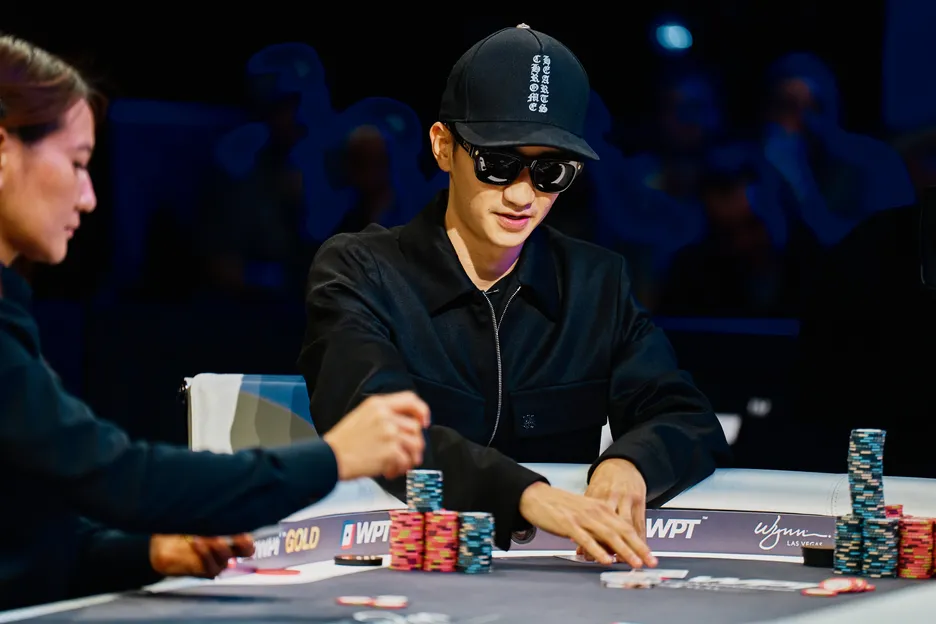
Eddie Pak: Resetting, recharging, and the power of support systems
“Tournament poker is one of the toughest mental challenges out there — the reality is, you lose far more often than you win,” says up-and-coming crusher Eddie Pak, third-place finisher at last year’s WPT World Championship.
“Being mentally strong and emotionally balanced is crucial. After every series or big stop, I take time off to reset and take care of my body — that means working out, boxing, hiking, getting massages, or even doing IVs and infrared saunas.
“Above all, my friends and family are my biggest support system — they might not understand every aspect of the game, but being able to vent, laugh, or just talk it out with them keeps me centered and reminds me that the next deep run is always coming.”
Jamie Gold: The power of gratitude
“Preparation is important, as diet and hydration are key for me,” says Jamie Gold, winner of the 2006 Main Event. “We often overlook the physical aspects of the mental marathon when addressing our state of mind but it is all connected.
“Focusing on the journey, the process, and learning from every session are vital for me. I use meditation and advanced recovery techniques like hyperbaric oxygen and far infrared sauna, peptides and certain supplements that are physical but also support mental health.
“I believe gratitude in all forms is more important than most people understand. It can sound hokey or insignificant, but I believe in the energy of the universe and our connection to it.
“When you are kind and generous and appreciate how lucky we all are to be able to play this game at all, it changes your overall life experience.”
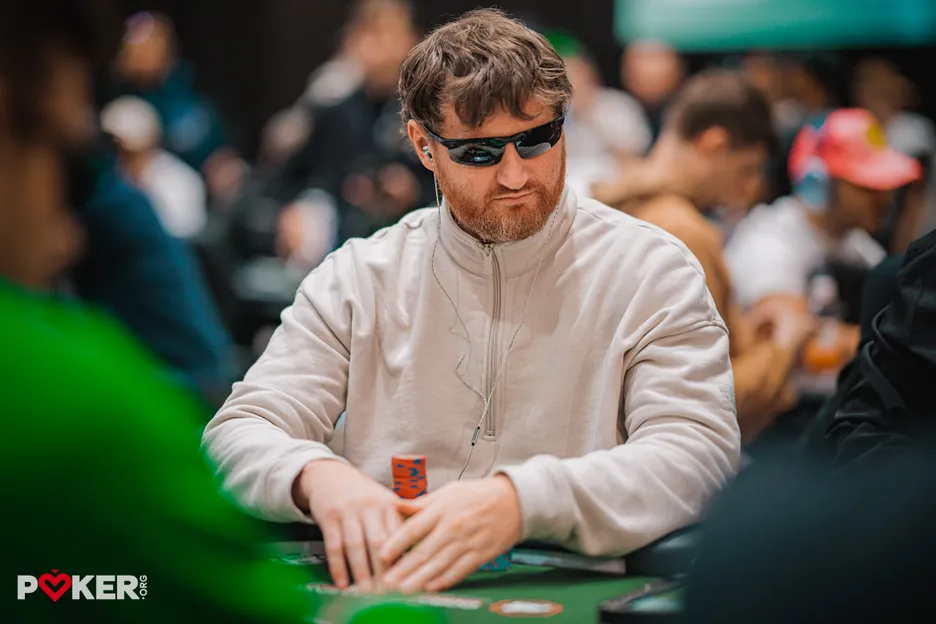
David Peters: Gratitude, perspective and finding balance
“I try to think about previous stretches where I went on a big downswing and remember that I got through that and the same thing will happen this time,” says David Peters, four-time WSOP bracelet winner and one of poker’s most consistent high-stakes crushers. “I just need to trust the process and not get too caught up in the short term swings, and focus on the long run.
“I also think gratitude is very important both with poker and life. It can be easy to get really negative, but when you step back and think about how blessed we are to be playing poker for a living or even just being alive and healthy, you can start to really put things into perspective.
“Eating healthy, exercising, getting outside, and spending time with friends and family definitely helps me to stay mentally balanced.
“It can be tough grinding all day every day. For me, finding balance is very important. If you’re forcing things too much while running bad it’s going to be tough to be in a good head space.”
The real Main Event
The discussions regarding mental health in our community can’t and won’t stop here. The conversation must continue.
By speaking openly and normalizing ongoing discussions around mental health, we strengthen not only ourselves but the entire poker community.
Ultimately, it’s expressed most profoundly in our shared journey as we pull up a chair, feel the spark of competition, the fellowship of community, and anticipate that first card sailing out from the dealer, and landing softly in front of our chips.
Mental health isn’t a side game — it’s the real main event, every single day. But unlike the WSOP Main Event, this one isn’t a zero-sum game. Everyone can win — and when we prioritize ourselves and one another, we all do.
When we care for ourselves and one another as fiercely as we play the game, everyone benefits. Because in the long run, balance, resilience, compassion, gratitude, and the joy of being part of something bigger than us are the most +EV choices, both in poker and in life.
If you’re struggling with mental health issues, help is available. Your primary care physician should be able to refer you to a psychiatrist, a nurse practitioner, or a therapist.
FindAHelpline.com can connect you with professional support services in almost any country in the world, while the Suicide and Crisis Lifeline is available within the USA by dialing 988 anytime.
If you or someone you know is struggling or in crisis, you can find resources for suicide prevention.


