

Four hole cards, bigger draws and more action. Pot-limit Omaha (PLO) can look intimidating to no-limit hold'em players, but there's a reason so many poker fans love it.
If you've never played PLO, there are a few key differences to understand before jumping in. Approach the game with a hold'em mindset and you could find your bankroll taking a beating.
While the games share certain aspects, like hand rankings and community cards, PLO is a completely different beast.
Below, you'll find a brief rundown of how the game works and some basic strategy pointers to get you started.
And if you're located in Michigan, New Jersey, Pennsylvania, or Ontario, once you've got the basics covered, you can get in on the four-card cash game action at PokerStars on FanDuel to start honing your skills.
More cards, more fun, more headaches
In a PLO game, each player is dealt four cards and must make the best possible hand using two of the cards from their hand with three of the five community cards.
That last part is important. Unlike in hold'em, you can't use just one of your hole cards to make a flush or straight.
Like hold'em, PLO follows a two-blind structure with a small blind and big blind.
The action plays out similarly – with a single round of preflop betting and then three rounds of post-flop action across the flop, turn, and river.
But there's another important difference. In PLO, the maximum bet or raise is limited by the size of the pot. You can't simply move all-in for your entire stack whenever you want, as you can in no-limit hold'em.





Starting hands matter
In PLO, preflop hand selection is key.
It may be tempting to speculate with mediocre holdings – after all, four cards mean more ways to connect with the board – but this is a common mistake that many beginners make when transitioning to PLO.
In general, you want to play hands that are connected, both in suit and rank.
For example, 


 may look like a decent enough hand, but its lack of connectivity makes it as good as garbage and certainly not a hand you want to be piling money in with. If you're just starting out, pass on holdings of that nature and wait for hands that are double-suited and connected – like

 or


 .
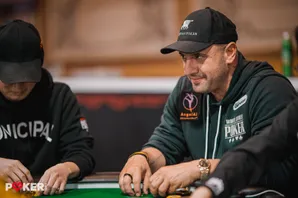
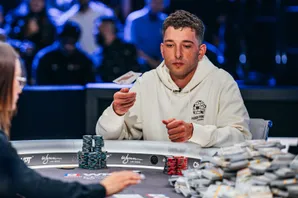
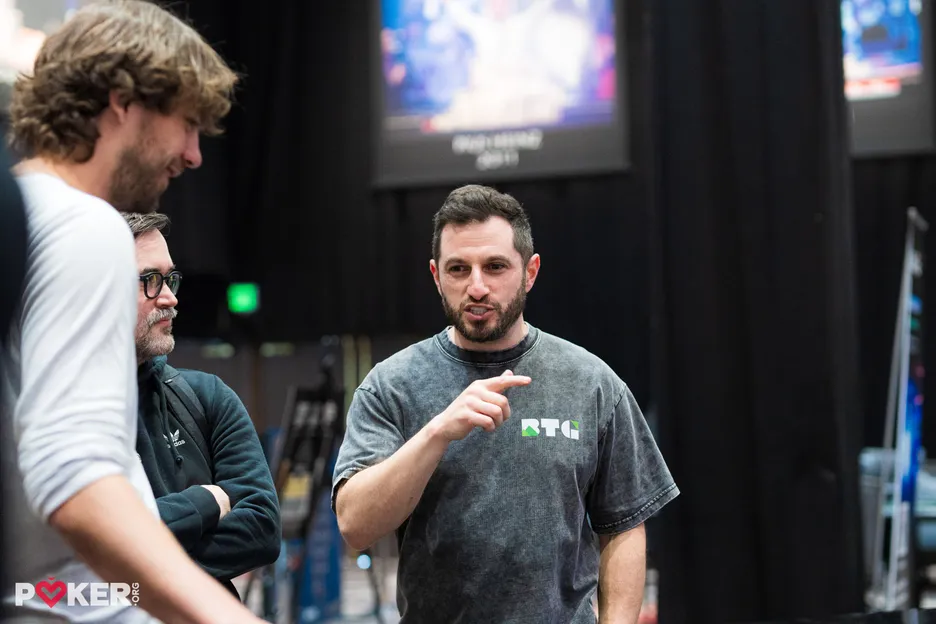 Phil Galfond is one of the sharpest pot-limit Omaha players in the world – but it took him a long time to reach that pinnacle.
Why the nuts matter more in PLO
Remember, while it's easier to make a strong hand in Omaha, the same holds true for your opponents.
A hand that looks huge in hold'em can be surprisingly vulnerable in PLO. A low straight or weak flush might look good, but with so many possible card combinations, someone could easily have you beaten.
That's why drawing to the nuts — the best possible hand — is particularly important.
And don't get too married to a hand that has little chance of improving to the nuts on later streets.
You'll also need to prepare for bigger swings. Because hand equities tend to run closer together in PLO, even strong starting hands can lose more often than you might expect.
It's a good reason to start at lower stakes than you're used to playing in hold'em while you learn the game.
PLO has a steep learning curve, and even experienced hold'em players can take time to adjust.
If you want to be the next Phil Galfond, take your time — study the game and get your reps in.
Omaha on PokerStars on FanDuel
Four-card cash games on PokerStars on FanDuel feature stakes ranging from $0.02/$0.05 all the way up to $25/$50.
Whether you're a newcomer to PLO or a seasoned veteran, there are games to suit different levels of experience. But if you're just getting started, we'd recommend sticking to the micro stakes until you've found your feet.
Start small, get comfortable with the differences between PLO and hold'em, and build your experience before taking on bigger games.
There's plenty of action to be found with four cards. Just remember that more possibilities don't always mean a better hand.
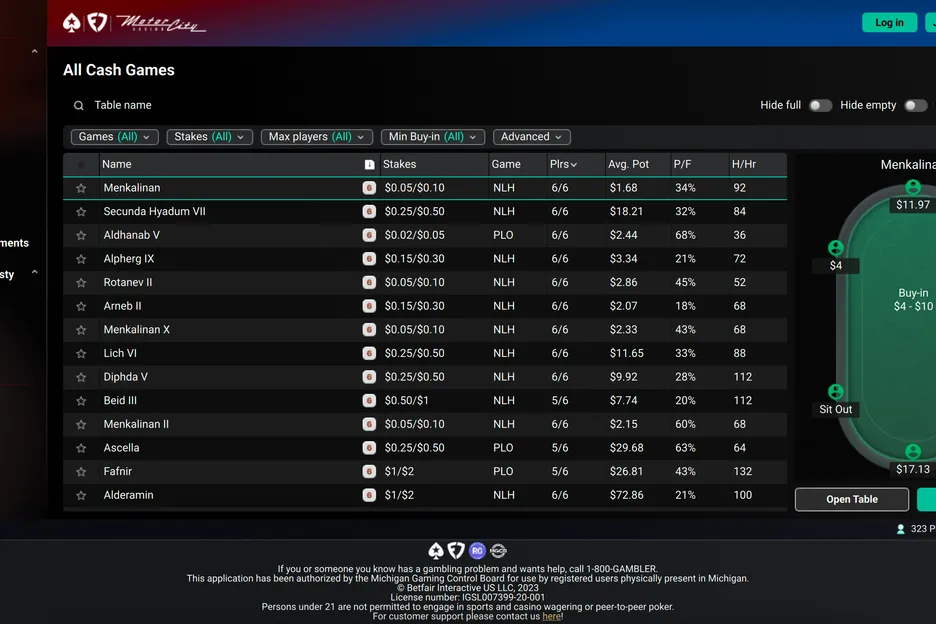 The cash game lobbies on PokerStars on FanDuel include pot-limit Omaha.
You can play PokerStars on FanDuel in Michigan, New Jersey, Pennsylvania, or Ontario.