

Who are the best online poker players you’ve never heard of?
It's a question that may never be fully answered.
But it’s no secret that dozens of elite online MTT grinders have won millions from behind screen names while remaining largely anonymous to the wider poker world.
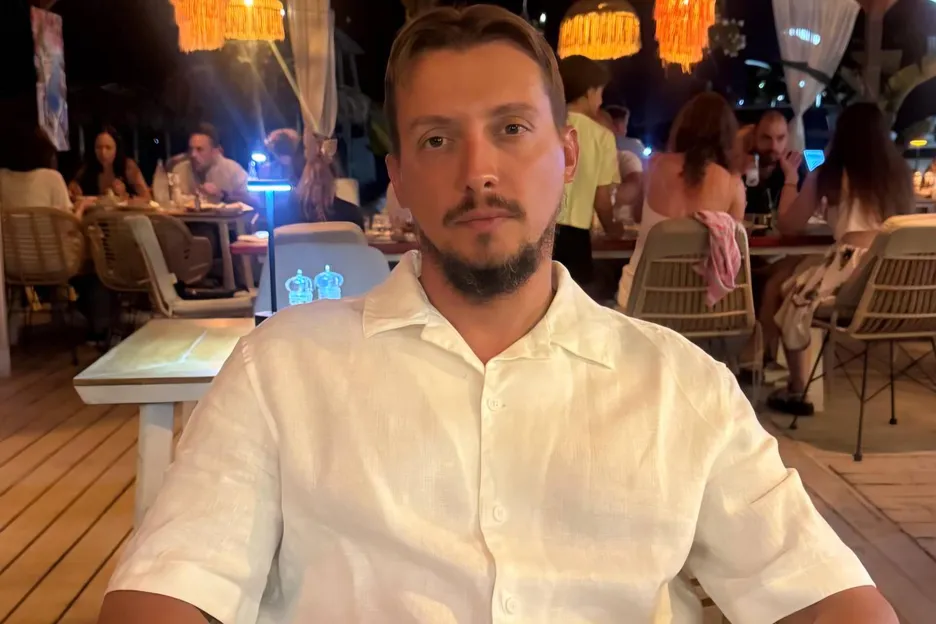
One such grinder, Stefan Rados, aka 'Deltoid88', recently emerged from behind the online curtain after taking down ACR Poker’s $12 million guaranteed NLH Mystery Bounty Venom.
Rados won through a field of 4,792 entries and a stacked final table that included well-known crushers Chance Kornuth, Chris Moorman, Rayan Chamas, and Ivan Limeira. Rados ultimately defeated Brazilian professional Limeira ('chickenpastry') heads-up to take home a massive $865,869 payday.
PokerOrg tracked down Rados after one of his students outed him online, figuring it was finally time to give the Serbian crusher some well-earned recognition.

'I want to play deep-stacked'
Congratulations on taking down the $12M GTD Venom on ACR. How do you choose which online events to commit to?
When I'm playing tournaments, I mainly look for a good tournament structure. I don't want to play tournaments when I'm deep at the beginning, and by the end, everyone has 15 to 20 big blinds.
What I look for in the tournaments I choose to play is for stacks to be deep enough in the later stages. That is what I value most because only then can true poker be played. That’s the only way you can use all moves at your disposal.
I never want to play events that have really fast tournament structures. When you're too dependent on luck, it's not a real game for me anymore.
Did you get the deep-stacked poker you were hoping for as you reached the final table?
It was a very enjoyable tournament to play. At the final table, the average stack three-handed was about 80 big blinds.
How do you approach such a stacked final table with so many elite players surrounding you?
I was stealing when the situation was right to steal. I'm a player who exploits situations as they come up. I look at the spot first, then I look at what cards I have.
The situation might allow me to play any two cards. I don't care about the range of the cards so much because if the situation is right for stealing, it’s not the hand I'm playing. I'm really calculating my moves very deeply before I start playing any hand.

What kind of stack did you have when the final table began?
I started as the third stack at the final table, but the top two stacks were significantly bigger than mine. I didn't have a good situation to implement an aggressive strategy.
I played tight at the beginning and waited for the situation to shift because each pay jump was significant. I was waiting for those short stacks to go, and I was willing to fight them if necessary. But not against big stacks if I did not have a very strong hand, or if I held something marginal. The ICM pressure was so great while those short stacks were still around.









To solve or not to solve
There were some killers at the final table. Who were you most concerned about?
The opponent I respected most was Ivan Limeira ('chickenpastry'). He had position over me, and I paid very close attention to him because he was blocking some of my moves.
He was the problematic player for me, and he was the strongest player of all the opponents that I had on that final table.
How solver-fluent are you when it comes to approaching situations or spots that come up during a long tournament?
At my core, I’m actually a great mathematician and probability guy. But on the other hand, I do not use solvers at all. That is not how I play. I mostly play the opponent.
I like to feel my opponent psychologically. I’m really trying to enter their mind and see what is happening in the hand.
And if I can’t gather as much information in the moment, then I can play mathematically and proceed in the best way possible.
Do you have a background in mathematics? It sounds like you do.
Yes, I'm an electronic engineer by profession.
I competed in math competitions in high school. Probabilities and statistics were always my big weapons. I loved those kinds of number games.
Free your mind, the rest will follow
When did you first discover the game?
I started with poker around 2011. I was drawn to it right away. I was getting better and better.
I liked analyzing a hand or a situation in my head on the spot. When I was less experienced, I thought about it for days, sometimes weeks, to really figure out the hand completely. I never saw any value in using solvers.
When did you first begin to have success online?
It was playing SNGs on PokerStars. I started crushing there. I was actually the best player in the world for years, back-to-back, profit-wise, not volume-wise. But I have played more than 110,000 tournaments on PokerStars.
Back then, you would see my graph curve only go up and up. There were no dips at all. But PokerStars eventually got restricted in Serbia, so I could not play anymore. I switched to a few other poker sites.
Have you played many live events?
I have not played as much as I would like to. I do plan to play more live events. I've played a $5K main event in Vienna and an EPT Barcelona event as well. I've played some events in Slovenia, in Nova Gorica, but also here in Belgrade where I've had some success.
I really enjoy playing live, but my biggest accomplishments are still online so far. I do hope to travel to the WSOP in Las Vegas sometime in the future.
If you were asked nicely to drop a strategy bomb on us to end the interview, what would it be?
To become a really good poker player, you should have your own way of being creative at the tables. You shouldn't be stuck in the same patterns as other players.
A good poker mind is a free mind.
Follow Stefan on IG.