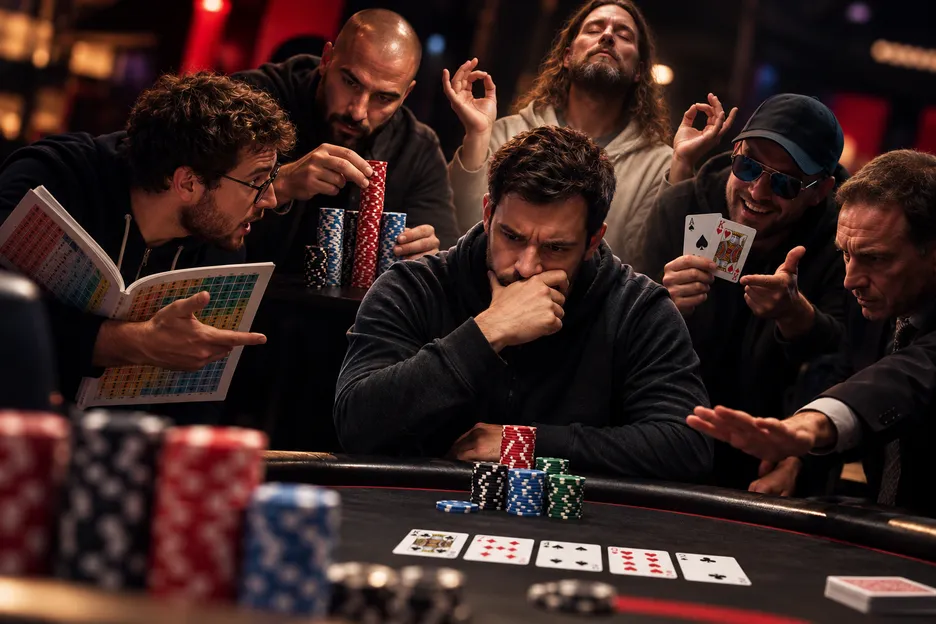


Let’s talk about some of the worst poker advice you can get, and why following it might actually be holding you back.
Some of these ideas sound sophisticated, which is exactly why players repeat them so often without stopping to ask whether they’re actually useful in the games they play.
1. More information is always better
This is the mother of all bad poker advice. A lot of players assume that the more poker streams they watch, the more training videos they consume, and the more hands they discuss, the better they’re going to get.
That completely ignores the fact that a huge amount of poker advice either doesn’t apply to the games you’re playing or is simply bad. Even good advice can hurt you when you’re trying to remember 300 hours of footage every time somebody bets into you.
A lot of players believe they’re studying when what they’re really doing is overwhelming themselves. Then, when they encounter an uncomfortable or stressful situation at the table, all that information disappears and they go straight back to their factory settings.
Usually, that means reverting to whatever mistakes they were already making. They call down too much, get shown a better hand, and then start repeating buzzwords about minimum defense frequency and balance to justify what happened.
Meanwhile, the person across the table may simply not bluff enough.
Your job as a poker player isn’t to accumulate as much information as humanly possible. Your job is to cut through the BS and identify the specific pieces of information that actually help you make better decisions in the games you play.
One useful concept that changes your decisions is worth far more than 50 concepts you barely understand. Study should simplify your decisions rather than make every poker hand feel like you’re taking an exam.
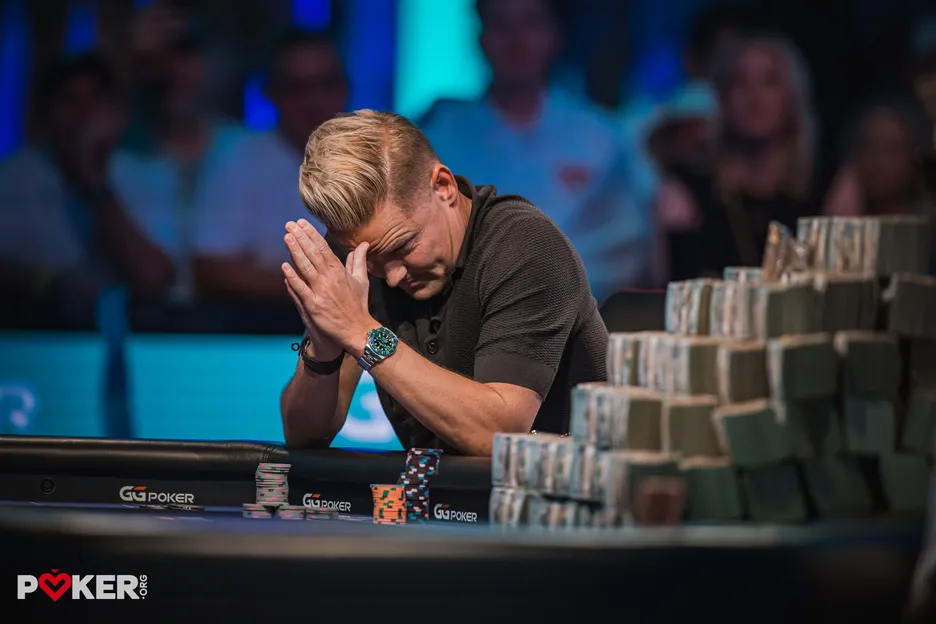





2. You need to balance your range
This advice is laughably unnecessary in many poker games. If you’re playing against the same strong opponents every day, then yes, eventually you’re going to need to vary your strategy and make sure you’re not ridiculously easy to exploit.
That goes without saying.
But in many tournaments and cash games, you’re playing against opponents you may never see again. Even if you do see them again, the exact situation you’re obsessing about may not happen another time during the entire session.
In those situations, exploitation is often far more important than trying to make every part of your strategy perfectly balanced. You should be asking what this particular opponent is doing wrong and then adjusting accordingly.
A friend of mine summarizes this with the idea that nits beat stations, stations beat maniacs, and maniacs beat nits. The practical lesson is simple: stop trying to play the same strategy against everybody.
If your opponent calls too much, don’t spend your time constructing elaborate bluffs against them. Value bet them relentlessly instead.
If your opponent is a nit who folds far too frequently, you probably don’t need to worry about extracting three streets of thin value. Bluff them more often and take advantage of the fact that they’re constantly looking for reasons to fold.
If your opponent is a maniac who wants to bluff every opportunity they get, you don’t necessarily need to fight them for control of the betting. Sometimes the best adjustment is to check your strong hands and give them another opportunity to put money into the pot for you.
Your strategy might look incredibly obvious to everyone else at the table. That doesn’t matter if the one person you’re trying to beat hasn’t figured it out.

3. You have to be perfect to play winning poker
I hear poker players say that if you didn’t sleep perfectly, you’re slightly tilted, you’re dealing with something stressful, or you’re on a downswing, you shouldn’t play. Sometimes moving down in stakes or skipping a session absolutely makes sense, but turning this into an absolute rule is unrealistic.
If I refused to play poker every single time something in my life wasn’t perfect, I would barely ever play.
Part of getting older is realizing there is almost always something going on. Maybe you didn’t sleep particularly well, something came up with your family, the air conditioner broke, work was stressful, or one of the other million things adults deal with every day happened.
You’ll sometimes hear people pontificate about how you need to do yoga, meditate, journal, eat the perfect meal, and complete some elaborate pregame ritual before you can possibly sit down at a poker table. Those things may be useful for some people, but most adults with jobs, families, and responsibilities aren’t going to enter every poker session in a state of perfect mental tranquility.
And that’s fine.
There’s an important difference between being incapable of playing your normal game and simply not feeling 100 percent. You should absolutely recognize when you’re too tired, angry, distracted, or tilted to make good decisions, but expecting perfection creates a standard that almost nobody can consistently meet.
Think about it the same way you might think about going to the gym. You don’t need to have the greatest workout of your life every time you walk through the door; you just need to keep showing up, doing productive work, and getting a little better over time.
Poker works the same way. Consistently making good decisions while dealing with ordinary life is a much more useful skill than waiting for some mythical perfect state before you allow yourself to play.
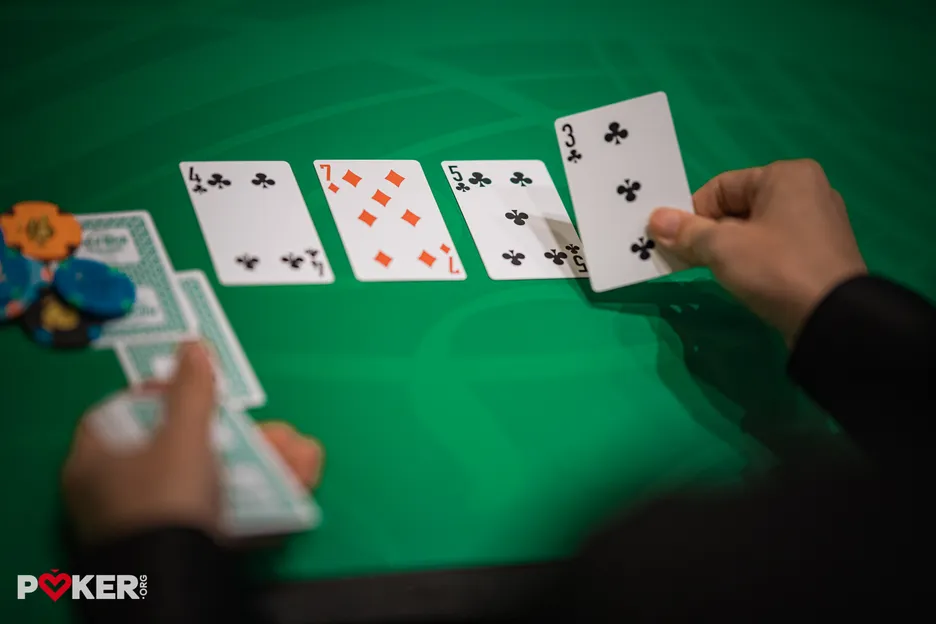
4. If you folded to a bluff, you made a bad fold
This is another piece of bad advice I hear constantly, particularly from recreational players. Somebody makes a tough river fold, the opponent proudly turns over a bluff, and suddenly everyone at the table acts like the player who folded just committed some unforgivable poker crime.
They start laughing and saying the call was obvious. Ironically, that reaction can tell you more about the people doing the mocking than it does about the player who folded.
In many live poker environments, the average player simply doesn’t bluff enough in big river spots. If you don’t have a strong read telling you otherwise, that means making disciplined folds with bluff-catchers can be extremely profitable.
Yes, the opponent happened to have a bluff this particular time. The question is how often they have a bluff across the entire range of hands they play this way. That is what actually determines whether your fold was correct.
Unless there was some enormous physical tell or another piece of information that made the bluff obvious, you can’t judge the quality of the decision based solely on seeing the opponent’s cards afterward. Poker decisions have to be evaluated using the information you possessed when you made them.
Sometimes you’re going to make a great fold and get shown a bluff. That doesn’t magically turn it into a bad fold.
In fact, being emotionally capable of making those folds is often one of the things separating disciplined players from calling stations. Don’t allow the table’s reaction to convince you that every bluff you failed to catch was a mistake.
5. Checking back the best hand on the river is fine
This might be the bad play I see most regularly. Someone gets to the river with what is almost certainly the best hand, checks behind, turns it over, and everybody says, “Nice hand.”
Then the player says something like, “The pot was big enough.”
The pot is never 'big enough' if your opponent is willing to put more money into it with a worse hand.
Missing a river value bet should bother you because value betting is one of the fundamental ways you make money in poker. If you’re reasonably confident you have the best hand and worse hands can call, you need a very good reason not to bet.
A lot of recreational opponents are not thinking particularly clearly on the river. Put out a reasonable bet and you may be surprised how quickly they find a call with a hand you assumed was too weak to continue.
This is something I ask myself about whenever I miss a value bet. If I believe somebody is willing to give me more chips and I’m still unwilling to put the bet out there, what exactly am I doing at the table? I was pretty sure I had the best hand, right?
The entire game is about capturing your opponents’ chips when the opportunity presents itself. You don’t need to recklessly value bet every hand, but being afraid to bet when you’re likely ahead can quietly destroy your win rate.
Stop following advice just because it sounds smart
A lot of bad poker advice survives because it sounds intelligent when somebody says it confidently. More information, perfect balance, flawless mental preparation, never folding to bluffs, and protecting your winnings all sound reasonable until you examine how those ideas actually affect your decisions.
Good poker strategy should help you recognize what matters and discard what doesn’t. Instead of worrying about whether your strategy sounds sophisticated, focus on whether it makes money against the actual players sitting in front of you.
That is ultimately what matters.
I hope these tips help you avoid some of the advice that can make poker unnecessarily complicated and expensive.
Alex Fitzgerald is a best-selling author published by D&B Poker. Check out Alex’s most recent book, ‘How to Beat Players Who Never Fold.’
Visit pokerheadrush.com and subscribe to Alex's FREE strategy newsletter to receive three FREE training video packs. Follow Alex on X and Instagram.


