

Today we’re going to talk about why you’re not winning at low-stakes cash games. I’ve been playing a lot of low-stakes cash recently and doing well, and many of the players who were struggling seemed to be making the same mistakes over and over again.
The good news is that most of these problems are fixable.
 Learning proper bet sizing is a key component to becoming a very good player.
1. Your isolation raises aren’t big enough
One of the biggest mistakes I see at low stakes is players not raising large enough when they’re trying to isolate limpers. If several players are willing to limp and then call almost any reasonable raise, using a standard sizing often accomplishes absolutely nothing.
In particularly loose games, I’m willing to experiment with very large isolation raises. A useful starting point can be somewhere around two times what is already in the middle, and if that still produces four or five callers, you may need to go even larger.
Obviously, the larger you raise, the stronger your range should generally become. If the table requires absurdly large raises just to get the field down to one or two opponents, you can tighten up and wait for hands that are comfortable building massive pots.
Eventually, if people really will call almost anything, you may reach the point where you’re simply making huge raises with hands like aces, kings, and queens. When your opponents refuse to adjust, there is no prize for using a prettier sizing.
There are two major benefits to going big.
First, the players who limp and then call enormous raises out of position are often among the weakest players at the table. You are deliberately creating the biggest pots against the people most likely to make expensive post-flop mistakes.
Second, huge isolation raises can frustrate recreational players who simply want to see flops. A lot of people wait all week to play poker, and they don’t appreciate somebody repeatedly charging them a premium every time they try to limp into a pot.
Eventually, some of them stop folding and decide they’re going to make a stand against you. That is when you want to be ready with the stronger part of your range.
You’re not trying to annoy people for no reason. You’re trying to create large pots against opponents who are calling too much and may eventually start calling even wider because they’re tired of being pushed around.






2. You bluff the river too often
Another major mistake is trying to run too many sophisticated river bluffs against low-stakes recreational players. The average recreational player often reaches the river already emotionally committed to seeing what you have.
They’ve put money into the pot on multiple streets, they’re curious, and they don’t want to spend the drive home wondering whether you bluffed them. That makes them much more willing to call than a technically sound bluffing strategy might assume.
I frequently see more studied players take a line that makes complete strategic sense as a bluff. They represent strong hands convincingly, choose a reasonable sizing, and use a line that might work beautifully against a thinking opponent.
The problem is that the person sitting across from them isn’t necessarily thinking through any of that. They just want to know whether their pair is good.
You need to bluff the player in front of you, not the player you wish was sitting there. If somebody is consistently curious and reluctant to fold the river, stop trying to impress them with beautiful bluff lines and start value betting them instead.
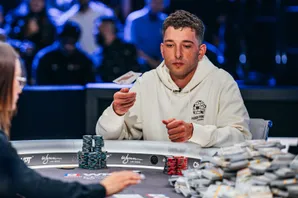
 But is he though? Know the opponent sitting across from you, not the one you hope to be there.
3. You bluff too often when the flush draw misses
If you ask a hundred weak players why they made questionable river calls, one of the most common answers you’ll hear is, “I put him on a missed flush draw.” That phrase has justified an unbelievable number of bad calls over the years.
Recreational players frequently do not want to fold. When an obvious draw misses, they suddenly have the perfect excuse to convince themselves that you might be bluffing.
That makes missed flush-draw boards particularly dangerous places to overbluff.
You might look at the board and think your bluff makes perfect sense. Your opponent looks at exactly the same board and thinks, “The flush missed, so maybe he has nothing.”
Now your technically reasonable bluff runs directly into their favorite hero-calling story.
That doesn’t mean you should never bluff when a flush draw misses. It means you should recognize that many low-stakes opponents call too frequently in exactly those situations, so your bluffing frequency should adjust accordingly.
4. You’re scared to make huge value bets
The flip side of that tendency is that missed draws can create fantastic opportunities for large value bets. If your opponent already believes a missed draw gives you plenty of bluffs, you should be willing to make them pay when you actually have a strong hand.
A lot of low-stakes players get scared here.
They finally make a monster after sitting card-dead for 45 minutes, and suddenly all they can think about is making sure they get called. Instead of betting big, they use some tiny sizing because they’re terrified that their one good hand of the hour will get nothing.
That fear costs money.
Experienced players understand that sometimes you make a big hand and nobody pays you. That is simply part of poker.
But when you have reason to believe your opponent hates folding, especially on a board containing an obvious missed draw, you should be willing to go for a much larger value bet. In some cases, an all-in can actually get called more often than you expect because your opponent knows the decision is final and they’re guaranteed to see your cards if they call.
They don’t have to worry about another street. They just need to decide whether you missed the draw.
When players already want to hero call, stop being afraid of charging them.
5. You don’t think through your river calls
A huge number of low-stakes players make river calls almost instantly. They want to see the opponent’s cards, so they throw in the chips before they’ve actually worked through whether the call makes any sense.
This is one of the most expensive habits you can have.
The river bet is frequently the largest bet of the hand. In some pots, it can be larger than everything you’ve already invested combined.
That means you should probably spend more time thinking about a river call, not less.
Ask yourself what worse hands your opponent could realistically be value betting. Then ask what natural bluffs they arrive at the river with and whether this particular player is actually capable of pulling the trigger with them.
If you cannot identify many hands you beat, you should strongly consider folding. Curiosity is not a poker strategy.
A lot of players justify terrible calls by saying they “had to see it.” No, you didn’t.
If you fold, you still get to keep the chips you didn’t put into the pot.
6. You limp too often as the first player in
Another common low-stakes mistake is open-limping far too frequently. When you’re the first player into the pot and you limp, you often reveal quite a bit about your range immediately.
Most players are going to raise their strongest hands. That means when they limp, everybody else can reasonably assume that hands like aces, kings, queens, and ace-king are either absent or severely reduced.
Now stronger players can attack you with isolation raises.
They know you probably don’t have a premium hand, and they know you’ll have a difficult time defending against aggression across multiple streets. You’ve voluntarily entered the pot while telling the table that your range is capped.
That is not where you want to be.
There can be specialized situations where limping makes sense, but at a typical low-stakes table, you’re generally better off entering pots with a raise when you’re first in. You create fold equity, build pots with stronger hands, and avoid advertising weakness before the flop even comes out.
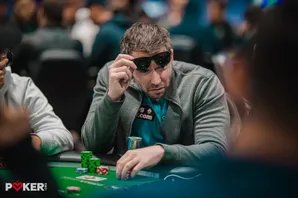
 Alan Keating nor Garrett Adelstein are shy when it comes to giving action to get action at the tables.
7. You never give any action
Some players react to all of this by going too far in the opposite direction. They decide the safest strategy is to never bluff, never semi-bluff, never preflop raise a marginal hand, and never put money into the pot without something close to the nuts.
Then they wonder why nobody pays them.
If you haven’t voluntarily put chips into a meaningful pot for 45 minutes and suddenly wake up with a giant raise, everybody knows what’s happening. You don’t need to be a professional poker player to figure that out.
My 12-year-old little brother could probably identify that range, and he doesn’t even play poker.
You need to give some action if you expect to receive action.
That doesn’t mean punting chips with random garbage. It means finding reasonable semi-bluffs, attacking players who are opening too wide, occasionally raising hands that aren’t the absolute top of your range, and showing the table that your bets do not always represent the nuts.
Good draws are particularly useful because they allow you to apply pressure while still having meaningful equity when called. You can make profitable aggressive plays without turning yourself into a maniac.
The objective is to create enough uncertainty that your opponents cannot simply fold every time you finally pick up a monster. If your range is painfully obvious, you’re doing half of their job for them.
Low-stakes poker rewards simple adjustments
Winning at low-stakes cash games does not always require some incredibly sophisticated strategy. A lot of the money comes from noticing the basic mistakes everyone else keeps repeating and refusing to make those same mistakes yourself.
Raise larger when loose players refuse to fold preflop. Bluff less against people who are desperate to see your hand, and value bet bigger when those same tendencies work in your favor.
Take your time before making expensive river calls. Stop open-limping weak ranges, and give enough action that your opponents cannot immediately identify every strong hand you play.
None of these adjustments are particularly glamorous. They are simply the kinds of things that consistently put you in bigger pots against weaker players while keeping you out of expensive situations where low-stakes players tend to lose money.
Alex Fitzgerald is a best-selling author published by D&B Poker. Check out Alex’s most recent book, ‘How to Beat Players Who Never Fold.’
Visit pokerheadrush.com and subscribe to Alex's FREE strategy newsletter to receive three FREE training video packs. Follow Alex on X and Instagram.