You’ve played some hold’em, and given strategy some thought. You’ve won some, lost some, and have an idea as to where your poker abilities stand in the grand order of things.
In other words, you’re growing to understand how little you understand.
This is not a poker issue. Anything we come to love because of its depth, nuance and challenge is likely to lead us to that same realization. We aren't born into the world already good at chess, karate, pool or abstract impressionism; we learn as we go.
And one thing definitely worth learning is the game of pot-limit Omaha (PLO).
Not only is it an easy, fascinating and natural evolutionary step for a hold’em player, it’s also nowhere near as studied or widely understood as its two-card sibling.
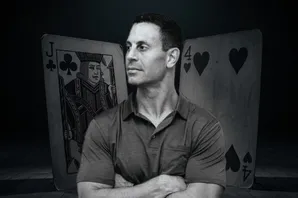
‘PLO is complex, action-packed, and a lot of fun,’ says player, coach and author Jonathan Little (below) in his foreword to Fernando ‘JNandez’ Habegger’s new book, 100 Essential Tips to Master Pot-Limit Omaha. ‘But most importantly,’ Little continues, ‘it is still beatable for players who are willing to study.’
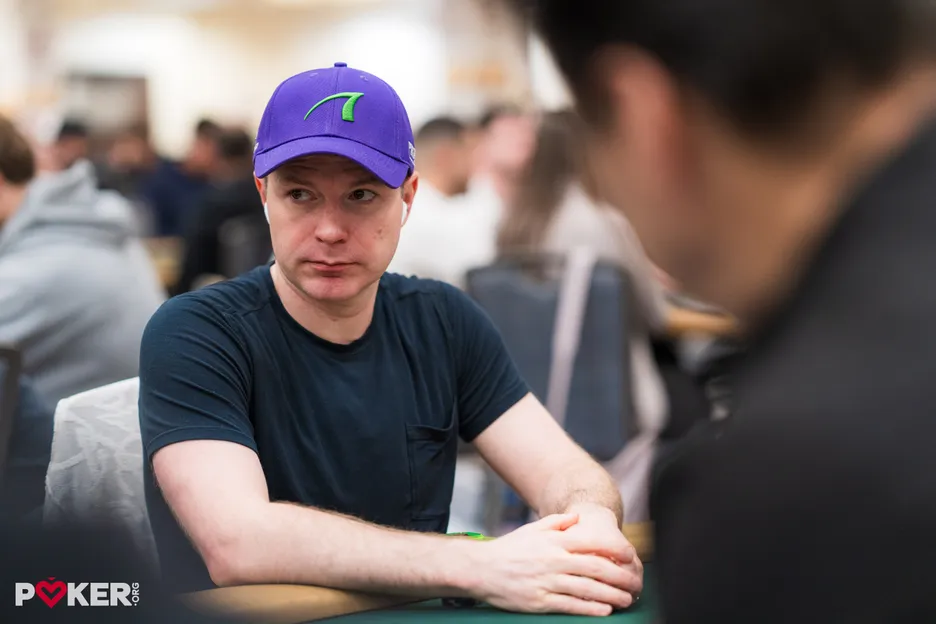 Jonathan Little is the author of '100 Essential Tips to Master No-Limit Hold'em'.
If you’re getting started in PLO, or looking to expand and improve your understanding of the game, Habbeger’s new book should be top of your to-do list.
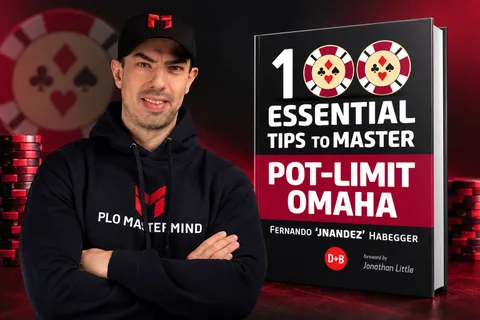
The man known as ‘JNandez’ is a renowned PLO specialist, and has been playing, winning and developing strategies for the variant for over 15 years. His new book, published late last month by D+B Poker, distills his expertise into a training manual that will raise your game.
100 questions for you, the reader
‘The bulk of your win rate is built in the thousands of small decisions you barely notice while you are making them,’ states Habegger. And using 100 example hands, he goes on to explain exactly what should inform each decision.
With an overall emphasis on preflop and flop decisions, the book delves into the following areas:
- Stack size
- Position
- Ranges
- Equity
- Blockers
- Stack-to-pot ratio
- Polarisation
- Exploitation
While it’s not a guide for absolute beginners, Habegger’s detailed explanations of the thought processes involved at each decision point in a PLO hand provide a solid basis for those who want to explore the game’s unique characteristics.
An understanding of hold’em will help you get your teeth into this, as many of the topics discussed will be familiar to hold’em players. It’s the points where strategies splinter and head off into new directions that will hold the most interest, and where you’ll be able to best distinguish yourself from your fellow hold’em-trained opponents.
 Fernando 'JNandez' Habegger's new book from D+B Poker.
Each section is broken down into example hands, with the reader invited to play along with multiple-choice Q&A. You’ll be able to keep track of how you do, but the contributing factors to each decision are explained in such detail that, hopefully, by the end of the book you’ll be armed with the knowledge you need to effectively analyze and execute in any situation that arises.
Important lessons are highlighted for easy reference, with each chapter ending with key takeaways to consider and add to your arsenal.





Your PLO driving test
A late section of the book takes the form of a ‘final exam’ that brings together everything you’ve picked up from the various lessons in order to make the correct — and, crucially, informed — decisions at the hypothetical table.
Unlike the majority of the standalone chapters, the final exam tasks you with making decisions on every street across 15 example hands. If the previous chapters were focused on specific problems and concepts, consider this the test that brings them all together.
You’ve learned to switch gears, how to read the road, when to hit the brakes and when to step on the gas. Consider this your driving test.
Because that just might be the best way to think about the journey towards mastery of PLO. Like every trip, each hand is different. Sometimes subtly so, and sometimes in ways you’ve never seen before.
 Habegger is the PLO mastermind behind PLOMastermind.com.
Every variable, from stack sizes to position, the addition of antes and straddles, variations in rake and more, feeds into every situation. There is no magic bullet, no algorithm for success. You need to train your brain to notice and consider the most relevant information, and make the right choice in the 'thousands of small decisions' that come your way.
The trick lies in wrapping your head around a number of core concepts, and happily for you the book does an excellent job of explaining these. The included exercises then give you a great opportunity to test the limits of your understanding.
In conclusion, if PLO is your bag, go bag this book.
Check out our exclusive extract, below, and for a copy head to D+B Poker.